

With the airing of Stranger Things’ final season just around the corner, there’s no better time to delve into the backstory of some of Hawkins’ most lovable characters, and “The First Shadow” allows us to do just that, set 20 years before the TV show and exploring the lives of the adult characters when they were at school. For the most part, the play focuses on the life of Henry Creel (portrayed here by Louis Healy), a young man with supernatural abilities, who goes on to become the subject of a science experiment, eventually becoming the antagonist Vecna as seen in Season 4 of the TV show. The play also features a young Joyce (Winona Ryder’s character, portrayed here by Jessica Rhodes) and her love interests Hopper (George Smale) and Bob (Callum Maxwell) – although it suffers from the fact that none of these characters can work out what is going on, or even get an inkling of the supernatural at play, as they appear to have no prior knowledge of the Upside Down when we first encounter them many years later in the TV series.
The play begins in extraordinary fashion, with a scene that is sure to blow the minds of everyone who sees it. Personally, I have never seen anything quite like this portrayed on stage – the sheer scale of this opening scene is insane and is true testament to director Stephen Daldry and designer Miriam Buether that they are able to bring something like this to the stage. As the stage drops into blackout and the Stranger Things theme tune fills the auditorium, it is difficult to wonder exactly where the play can go from here and how it can top those opening moments. And unfortunately, the truth is that it can’t. The opening scene promises so much and yet fails to deliver, as the plot becomes increasingly convoluted, and original characters created for the play struggle to connect with the audience.
Where the play succeeds is in capturing a nostalgia for the 50s, in the same way the TV show made us nostalgic for the 80s, even for those too young to remember them. The soundtrack boasts an impressive number of 50s records, the kids hang out in the local diner and Bob runs a pirate radio station from his dad’s garage. Despite the impressive technical stunts on display elsewhere, it is in these small interactions that the play shines. Joyce attempts to get a group of Hawkins High students together to put on a show, and the early scene during the auditions features many characters that one may recognise – there are cameo appearances from Mike’s parents Ted (Barney Wilkinson) and Karen (Edie Wright), as well as an incredibly funny turn from Michael Murray as Alan Munson, whom one can only assume is some relation to Eddie from Season 4. For fans of the show, there is lots to appreciate here – although rest assured that, even if you don’t make these connections to the TV characters, this is still an enjoyable watch.
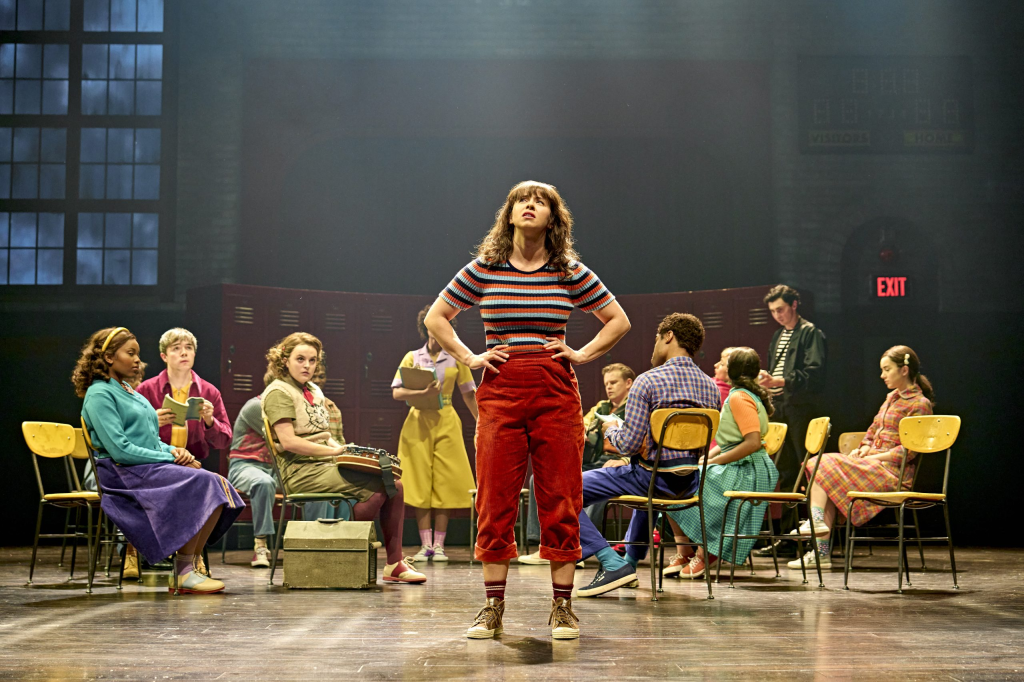
Henry Creel is new to Hawkins High, and befriends Bob’s adopted sister Patty (Miranda Mufema). Gaining Patty’s trust, he eventually tells her about his abilities, promising to use them to help her locate her birth mother. Mufema is fairly likeable as Patty, although her insecurities and shyness are a little unbelievable at times. The true extent of Henry’s powers are difficult to ascertain – partly a limitation of the staging, and partly due to Kate Trefry’s script which doesn’t seem to want to exactly define what Henry is capable of, presumably for fear of contradicting future TV episodes (although the play was created alongside TV series creators The Duffer Brothers).
The second act relies a little more on knowledge of the TV series, as the arrival of a young Dr Brenner (Luke Mullins) kicks the drama up a notch, although who he is is never really explained for newcomers. Whilst Mullins comes across at times as fairly menacing, we never see what he is truly capable of, and instead the play relies on you knowing the backstory already in order to feel intimidated by him. The plot becomes ever more confusing as it attempts to keep Joyce, Hopper and Bob involved in events, whilst ensuring they never encounter Creel’s alter-ego, constantly teasing their discovery in a promise that cannot possibly be fulfilled.
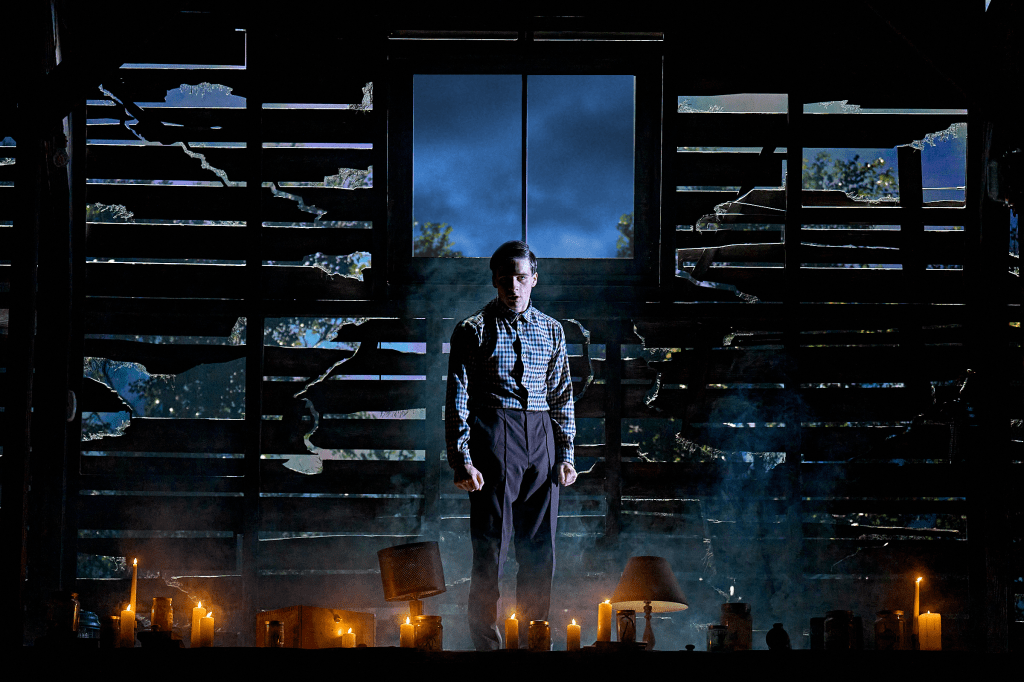
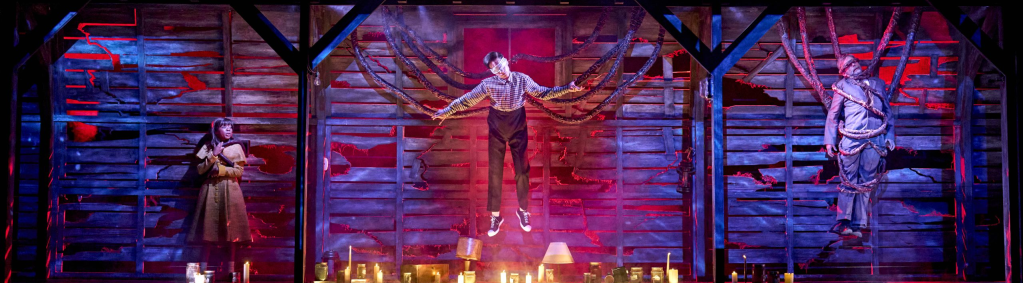
Technically, the show is a masterpiece. There are several set pieces throughout which will leave you wondering exactly how they were achieved. Jon Clark’s lighting design allows for simple stage trickery that will blow your mind, although the play feels like it is missing several much-loved aspects from the TV series that many fans will be craving to see. The Demogorgon appears in a blink-and-you’ll-miss-it cameo, and the show never properly ventures to the Upside Down, although we do get a glimpse of something akin to the Mind Flayer at one point. The play ends with a cameo that is sure to set the pulses racing of die-hard fans, and as the curtain falls, a trailer for the upcoming season plays which will definitely ensure the audience renews their Netflix subscriptions in time for the release in November.
For fans of the show, there is an awful lot to like here, and many of the audience members will leave feeling incredibly satisfied with a more in-depth look into some of the show’s minor characters. As a play in its own right, the story does not really stand alone, and is incredibly interlinked with the series in a way that suggests it will not have much of a lifespan – I cannot see it continuing in the West End once the hype of the final season has died down. The actors perform their roles admirably (there is a particularly fascinating portrayal of post-war shellshock from Andy Langtree as Victor Creel), but at over 3 hours, the show slightly overstays its welcome, the second half filled with too much exposition and not enough action to warrant such a long runtime. It is worth seeing for the first five minutes alone (I have never known the opening scene of a play to be greeted with such a huge round of applause), but beyond that, just make sure you temper your expectations.
Tom Morley, August 2025
Review Round-up:
The Guardian: Stranger Things: The First Shadow review – The Guardian’s 5 star review is full of praise for this play, saying “there is speed, action and scale, with one coup de theatre after another“
The Times: Stranger Things: The First Shadow – The 2 star review from The Times couldn’t be more different, noting that the play has “little sense of depth to the individual characters or how they relate to one another”
All That Dazzles: Stranger Things: The First Shadow – Ending on a positive, ATD’s 5 star review cannot compliment the special effects enough, saying that “while there are some great shows using spectacular visual effects in the West End at the moment, Stranger Things: The First Shadow takes this already ridiculously high bar and destroys it, with a revolutionary and mind-blowing implementation of them”







 Broken Legs Blog