

“A gruelling, hard-hitting play […] filled with love and kindness”
Telling the true story of Eyam, a village hit by plague during the 1600s, one of the greatest strengths of NODS’ “The Roses of Eyam” is the time taken to set up a sense of community, introducing a myriad of endearing characters that makes the audience keenly feel the losses when tragedy hits. Written by Don Taylor and directed by Elaine Sellors, the production explores the impact of plague on a huge variety of different people as the body count grows higher and the village decides to cut themselves off from everyone else in order to protect the people of Derbyshire. It is, ultimately, a tale of courage and compassion, yet when plague has been eradicated, the sense of victory is somewhat subdued due to the devastating death toll.
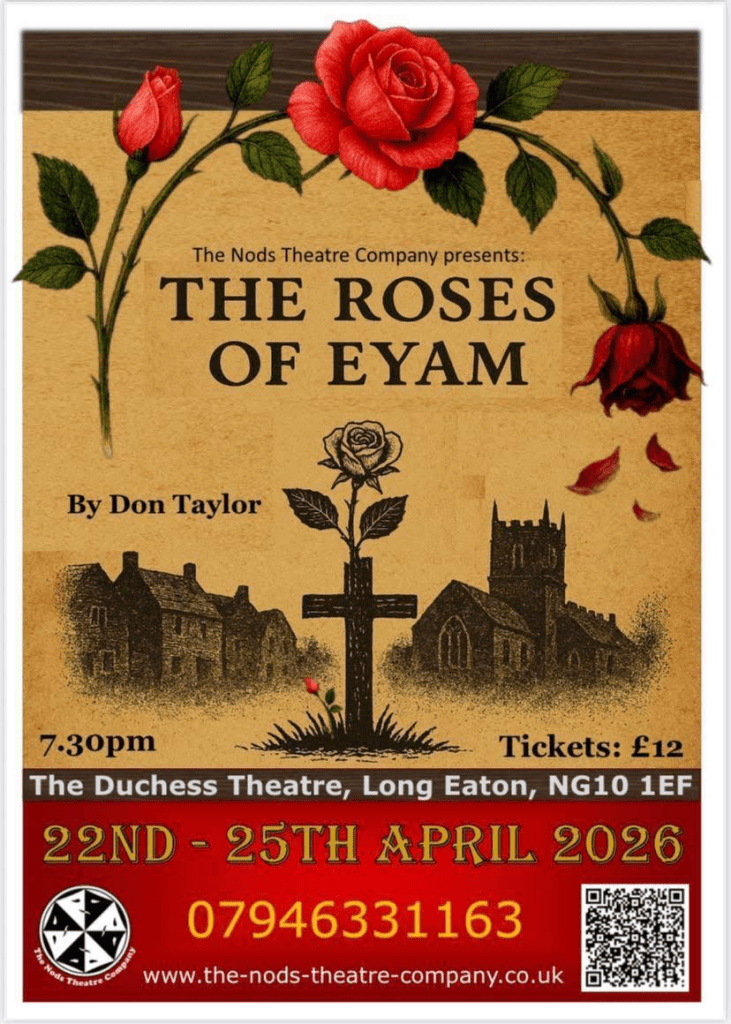
The play begins in happier times, with newly arrived rector William Mompesson (Richard Whitehorn) trying his best to fit in with village life and earn the respect of his parishioners. His arrival coincides with a festival, and it is here that we meet many of the characters who will stay with us throughout the evening. The sheer number of characters can be overwhelming, but NODS bring these characters to life with such naturalism that it is easy to keep track. Market stalls, music and dancing help create an excellent party atmosphere, but some foreshadowing courtesy of Pat McHugh’s Bedlam warns us that there is tragedy lurking around the corner.
Tailor George Viccars (Andrew Brown) is thrilled to receive some new cloth from London, and promises the rest of the village that he will hold a sale the next morning. Unfortunately, the damp material does not bring the happiness that Viccars’ had hoped for – mere hours after opening the package, Viccars has developed blotches on his skin, and by the next morning he is dead. The sheer speed with which plague takes its victims is shocking, and both the other characters and the audience struggle to grapple with the fact that Viccars, who Brown plays as a particularly spritely and fiery man, succumbs so quickly. As Heather Berry’s Mary Cooper tends to Viccars’ body, she notices strange marks on his cheek, which she refers to as a ring of roses, lending the play its title and also playing into the famous nursery rhyme.
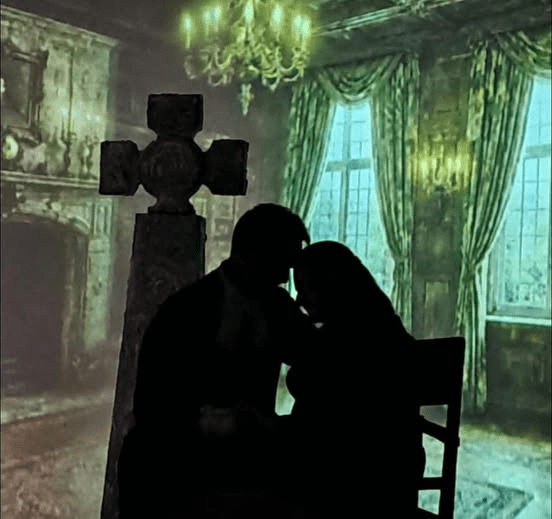
In attempting to deal with the plague, Mompesson faces challenge from ex-Rector Thomas Stanley (David Dunford), who has been forced out of his role and is now living as a beggar. Mompesson knows little about caring for the sick, and Stanley initially refuses to help, furious at the man who has stolen his job. But the plague has no time for petty squabbles. As more and more people fall ill at a worrying rate, Mompesson and Stanley are forced to put their differences aside. Both Whitehorn and Dunford take us on a fascinating emotional journey here, as the two men’s relationship goes from one of adversity to utmost respect.
Providing some comic relief are Brian Meese and Jonathan Wolff as Unwin and Merrill, two elderly men who constantly try to out-do each other with outrageous tales and arguments over who has a worse deal. Unwin is particularly stubborn in his reaction to the plague, insisting that those that fear it are more likely to become victims, and that drinking is the best way to fight it. Timothy Fryzer-Smith’s Edward Thornley has a different idea, sealing his family off from society in a move that feels very much like the self-isolating that we would all have experienced ourselves during the Covid-19 pandemic. Often it is easy to draw parallels with the 2020 pandemic, with villagers keeping their distance from each other, and being unable to attend to their dying friends and family.
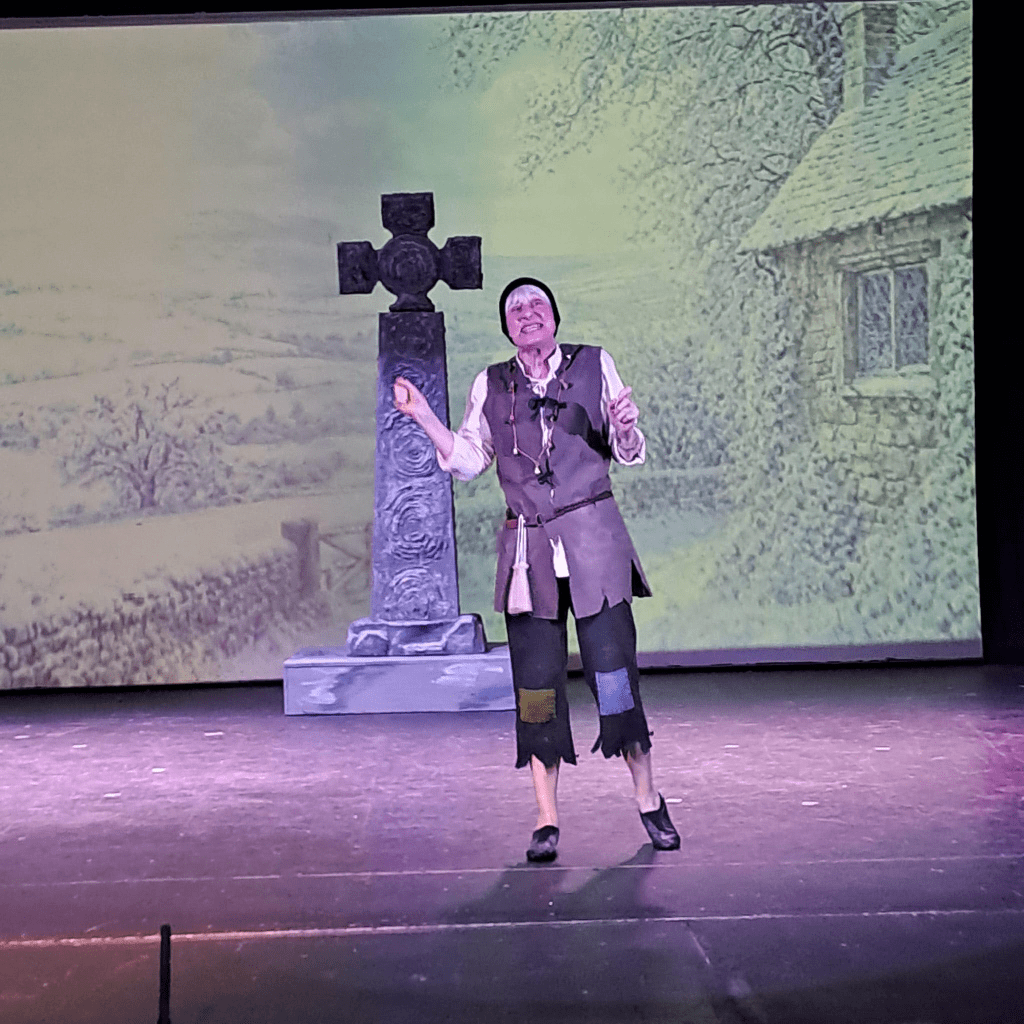
Young lovers Rowland (Alistair Ruddle) and Emmott (Victoria Herbert) are forced apart by plague when Emmott’s family falls ill. She insists that Rowland keeps his distance, yet Rowland ignores all warnings – this minor subplot definitely has aspects of a “Romeo and Juliet”-esque tragedy about it. The constant cycle of illness and death can feel a little repetitive, especially in the second act, though it hammers home exactly how devastating this plague was. Owen Anthony’s Marshall Howe provides some funny moments in act one as he gossips about his neighbours, yet takes on a more serious edge in act two, burying the bodies of his friends and family whilst trying to keep some level of sanity.
The emotional backbone of the story comes in form of Mompesson’s relationship with his wife Catherine (Louise Wiseman). After Mompesson insists that people should not leave the village for fear of spreading plague to the rest of Derbyshire, Catherine challenges him, arguing that sending their children away would give them the best chance of survival. It is an interesting dilemma and makes for one of the most absorbing scenes in the play. The relationship between Whitehorn and Wiseman is utterly believable, and it makes their tragic ending hit even harder.
At almost three hours, this is a long play, yet the story is well-paced throughout. Made up of lots of small scenes, each scene runs neatly into the next, with no need for black-outs or dead stage time, actors coming on swiftly to pick up the action and move the story on. The production makes use of very little set, instead relying on projections courtesy of Philip Rutland and Ray Harrison, which give a clear indication as to where the scene is taking place, whilst a faithful replica of Eyam’s Celtic Cross is ever-present at the back of the stage, a constant reminder of Eyam’s long history of worship.
This production offers an excellent slice of history wrapped up in what often feels like a medieval soap opera. There are clear messages here about the power of belief, and the importance of putting others before yourself, and whilst the final success of defeating the plague may feel a little hollow, there is a sense of relief nonetheless when the illness finally abates. It is a gruelling, hard-hitting play, but one filled with love and kindness. Amidst the awful disaster, there is a reassurance that humanity, ultimately, will do the right thing, and that is an important message to remember.
Tom Morley, April 2026










 Broken Legs Blog