

“Funny and thought-provoking in equal measure”
In the country house of a Tory MP, tensions are rising between husband and wife Robin and Diana, and the following 90 minute debate features multiple twists, turns and outrageous accusations that will grip the audience and hold them in its grasp from start to finish. It’s the 80s, at the height of Thatcher’s government, and anyone who remembers the time well will enjoy the references to important political figures, global news stories and TV programmes. There is an element of nostalgia here, but it is wrapped up in a darker, murkier past where views and ideology are not quite as progressive as they are today. The ways in which these subjects are discussed may strike a nerve at times, but that is the intention – allowing us to question these so-called “British values” and then reframe them in the context of today’s politics.
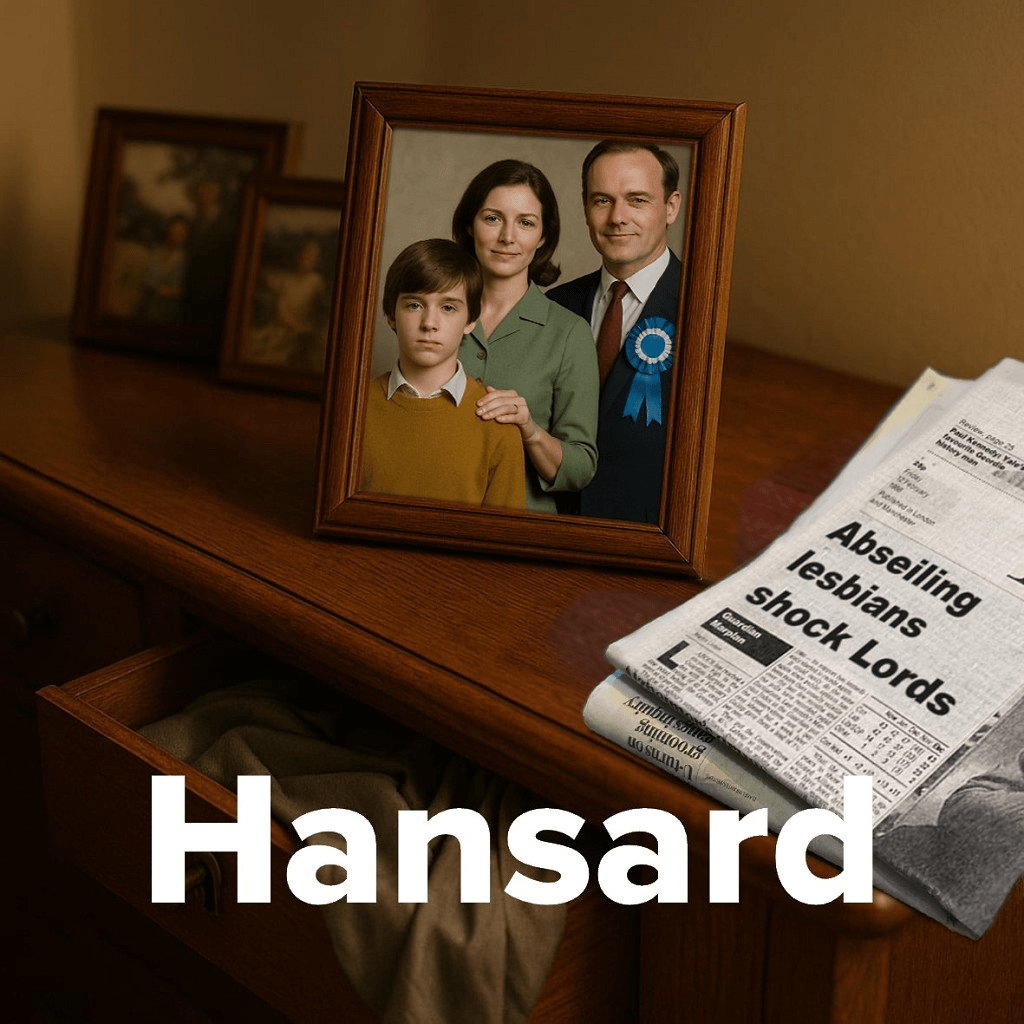
The main topic of conversation surrounds the introduction of Section 28 which banned schools and local authorities from promoting homosexuality and offering support to those questioning their sexuality. This is a subject that I have seen discussed in plays before (for example, last year’s Detention and The Last Stand of Mrs. Mary Whitehouse) yet here we are treated to two clear sides of the argument, with Robin (Charles Moss) having supported the Act despite the protestations of Diana (Melanie Hamilton). Robin’s argument mostly revolves around the fact that he is taking the same stance as his constituents, yet later on his views become abhorrently clear, as he reveals his own fears that allowing homosexuality (along with other things such as increased immigration and enhanced women’s rights) will result in less opportunities for the straight, white male. It is clear he feels his own sense of privilege being threatened – it is a stance that many of us will have seen before, and it does not help us see things from Robin’s point of view. Robin is a man that is difficult to support throughout, continually talking over and down to his wife, making this a frustrating watch at times.
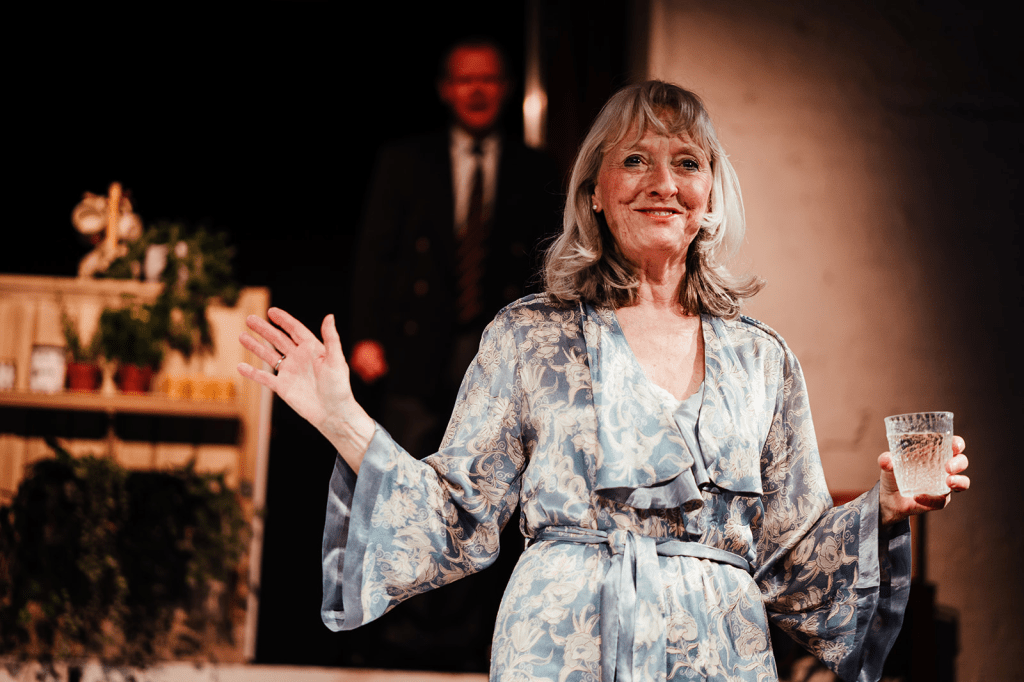
Yet Moss performs Robin with a comedic slant, his sudden outbursts and sarcastic comments often drawing laughs from the audience, making this an enjoyable watch despite the uncomfortable underlying arguments. This is a production that mocks Robin’s political views and is all the better for it – under Trev Clarke’s direction, this show never once suggests that what Robin is arguing for is acceptable. It helps, of course, that Hamilton’s Diana is incredibly likeable, her facial expressions helping to capture her frustration and increasingly short tolerance for her husband’s views. This is perfectly encapsulated in Robin’s reaction when he discovers Diana has not prepared any lunch for their visiting friends, to which Diana retorts “I thought it was your turn”. Robin’s argument is left with nowhere to go except to confess “It hasn’t been my turn for 30 years”.
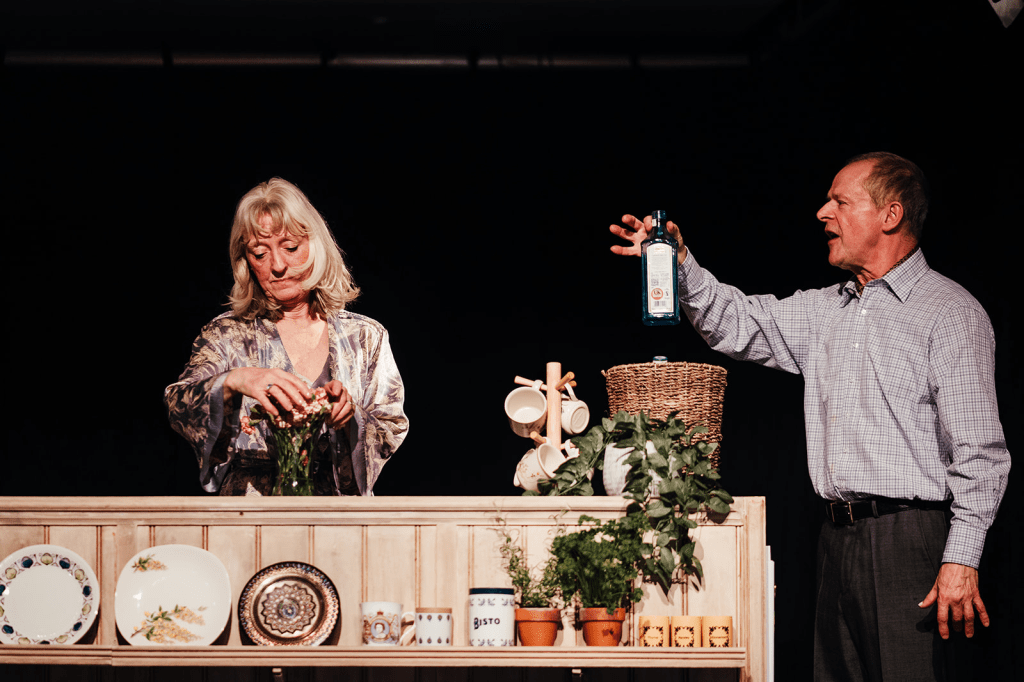
Throughout we are treated to snippets of Robin and Diana’s relationship, as both take turns to reminisce over their lives together. Hamilton is joyous in her depictions of Robin’s unbearable mother, who frequently looks down her nose at Diana and the way Diana chooses to bring up son Tom. Robin tries to explain this away as his mother simply being a “product of the time”, an argument that could be applied to Robin when viewed through a present day lens, and yet doesn’t quite allow us to forgive his clearly bigoted views. Despite the two of them constantly sniping and throwing barbed comments around, it is easy to see the love and care that Robin and Diana have for each other, half-smiles lighting up their faces as they remember the joyous days when Robin was preparing a cricket pitch for his son under Diana’s supervision. Their affection may have dulled over the years, but it is easy to see why the two of them ended up together – it is a relationship that we utterly buy into over the course of the play.
The play takes its named ‘Hansard’ from the record of Parliamentary debates, and is brought up early on by Robin when discussing his legacy. He is obviously proud of his role as an MP, and thrilled that he will be forever remembered in Hansard, even though his wife questions whether it is something he would want to be remembered for. The name is brought up again later on upon the discovery of a diary, which Diana refers to as their ‘personal Hansard’. As the two pore over the diary, family secrets come tumbling out, dialling up the drama a notch as simmering tensions finally boil over. The reveals are fairly predictable given the discussion up to this point, but it makes for fascinating viewing nonetheless, as the joy comes from the characters’ reactions to the revelations rather than the specifics of the story. It makes for an emotional climax to the play – one that doesn’t neatly wrap everything up in a nice bow or teach the characters the error of their ways, but one that allows them to question their views and in turn shines a light on the less privileged who are often the most affected by decisions made in Parliament.
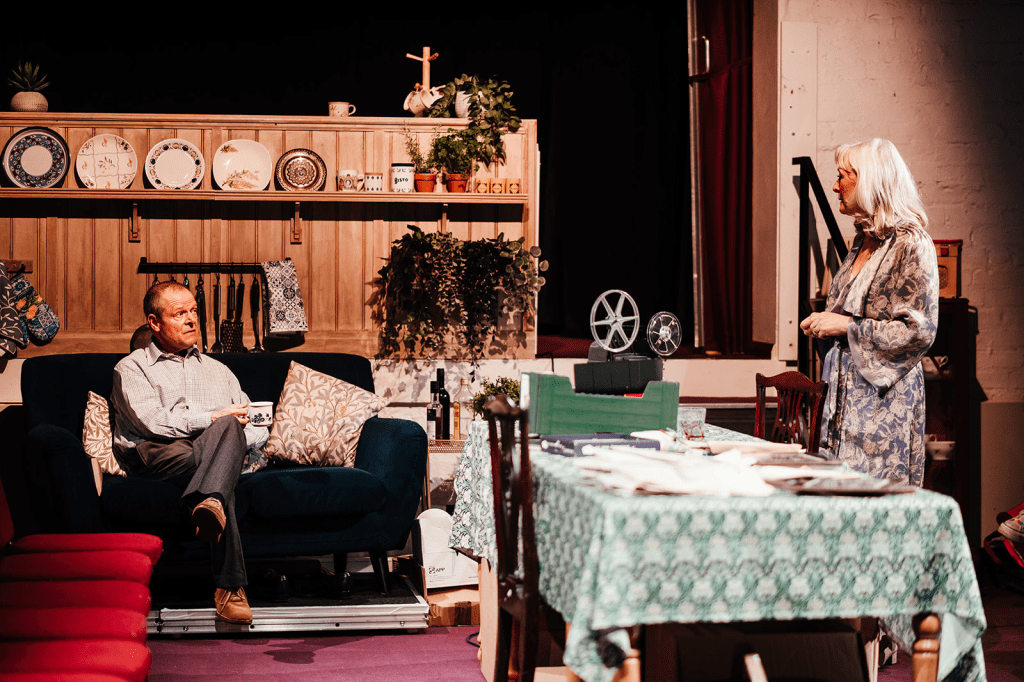
Angus Macrae’s set design makes excellent use of the Lace Market’s studio theatre, with the dining table set out amongst the audience, and the kitchen on the raised stage, allowing for some interesting dynamics as Robin stands above his wife, talking down to her both literally and figuratively. Throughout, the characters are always busy, making the show visually interesting and helping to hold the audience’s attention. Rather than just sitting and talking, Robin potters around making coffee and cocktails, whilst Diana spends some time setting up an old projector – a fascinating piece of kit sourced by Lesley Brown on props. It all feels incredibly natural and helps to put the audience at ease. Without these naturalistic flourishes, the play could be at risk of feeling like watching a parliamentary debate itself – instead, the entire conversation is given a domestic touch which is much more appealing.
With just two actors commanding the stage for 90 minutes, this is a serious undertaking for an amateur group, and yet Lace Market more than rises to the occasion, Moss and Hamilton both putting in superb performances in a show that is tightly paced and constantly absorbing. Funny and thought-provoking in equal measure, this is an evening of theatre that will not only entertain, but force you to draw parallels with the treatment of trans people in today’s society. The conversation has moved on, but it is still very much the same arguments, and the same privileged people making the important decisions.
Tom Morley, April 2026
Review Round-up:
East Midlands Theatre: Hansard – 4* from East Midlands Theatre, who says that this production is “very professional, confident, expressive and nuanced”
Kev Castle Theatre Reviews: Hansard – Kev Castle makes it clear that this play will be enjoyed by a whole range of people, saying “if you like political plays, you’ll love this play, but if you’re not politically driven, see this play for the gorgeous human element of the underlying storyline”








 Broken Legs Blog