

The RSC’s latest version of “A Midsummer Night’s Dream”, directed by Eleanor Rhode, seems to throw a lot of different ideas around in a way that shouldn’t work, but absolutely does.
The play is told in three different strands, and each strand has its own feel and “era”. The lords and ladies of Athens – led by Bally Gill as Theseus and Sirine Saba as Hippolyta – are very much modern dress. Gill’s Theseus is not as dominating as the character is usually played, instead appearing more subservient and aiming to please, making for some very funny interpretations of the lines. The main crux of this section of the story is told via the lovers – Ryan Hutton as the incredibly comical Lysander, Dawn Sievewright as the fierce Hermia, Boadicea Ricketts as the witty Helena and Nicholas Armfield as headstrong Demetrius. Their scenes are very physical, as a love potion-gone-awry leads both men to fall in love with Helena and spurn Hermia.
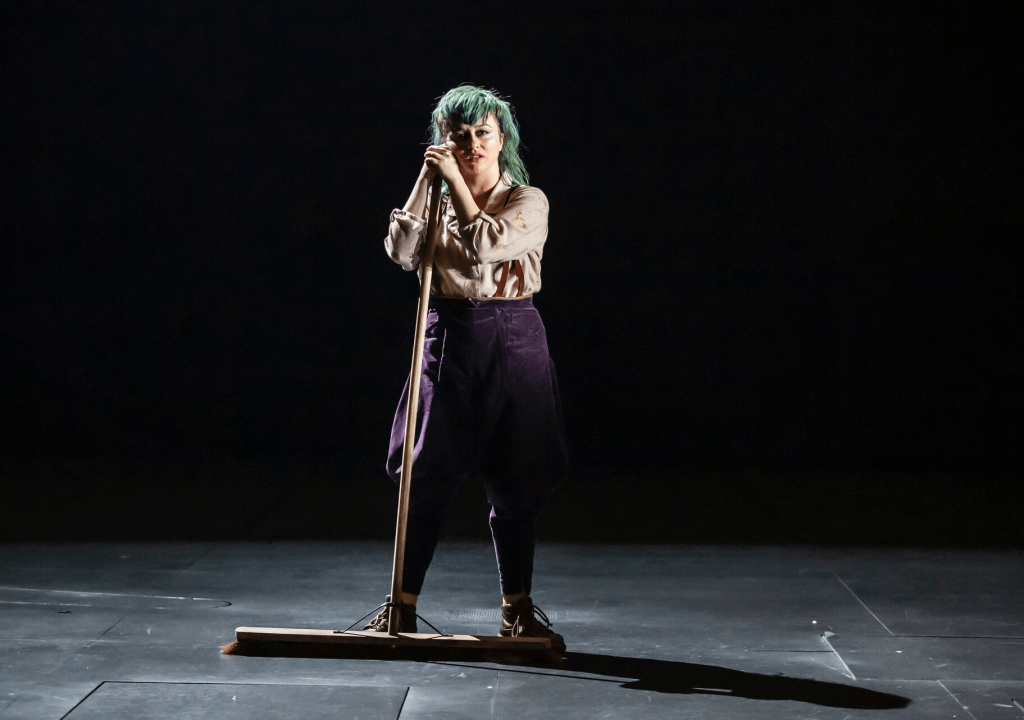
Responsible for all of this is Fairy King Oberon (also played by Gill), assisted by his assistant Puck (Rosie Sheehy, who played the role with a certain childishness and naivety that I wish she had previously brought to her role as Helena in All’s Well that Ends Well). The fairies have a rather scary introduction, with flickering lights, dancing lasers and Puck’s Heath-Ledger-as-The-Joker vibes. However, the relationship between Gill and Sheehy means that the spookiness quickly gives way to further laughs. Watching the two of them react during the lovers fight scene was a joy.
Oberon is in a battle with Fairy Queen Titania (also played by Saba), although their backstory (in which they fight over ownership of an Indian child) is glossed over – perhaps to avoid negative connotations in what is a full-throttle comedy. Still, it makes Queen Titania hard to empathise with (especially when Gill is afforded much better comedic moments). It doesn’t help that Titania’s entourage of fairies (Tom Xander as Mustardseed, Michael Olatunji as Moth, Esme Hough as Cobweb and Charlotte Jaconelli as Peaseblossom) are mostly voices and lights, in what seems an odd directorial choice and quickly becomes tedious rather than exciting.
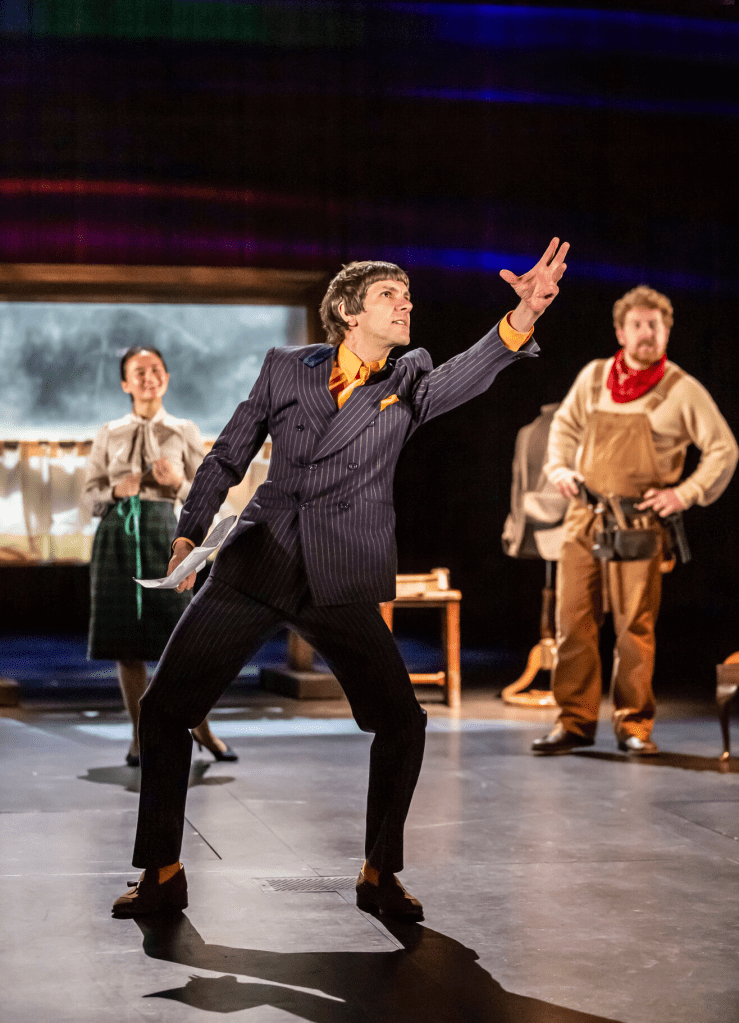
The third strand of the story centres around the Mechanicals, led by Mathew Baynton as Bottom. The Mechanicals have a 60s vibe to them, with Baynton looking as though he’s straight out of The Beatles. Their initial scenes didn’t do a lot to win me over, but Baynton came into his own as he was turned into a donkey to trick Titania – big teeth and moving ears helping to complete the transformation. The usual comedy beats are hit here, and nothing particularly new or different is done, but Baynton is so likeable that this is forgivable.
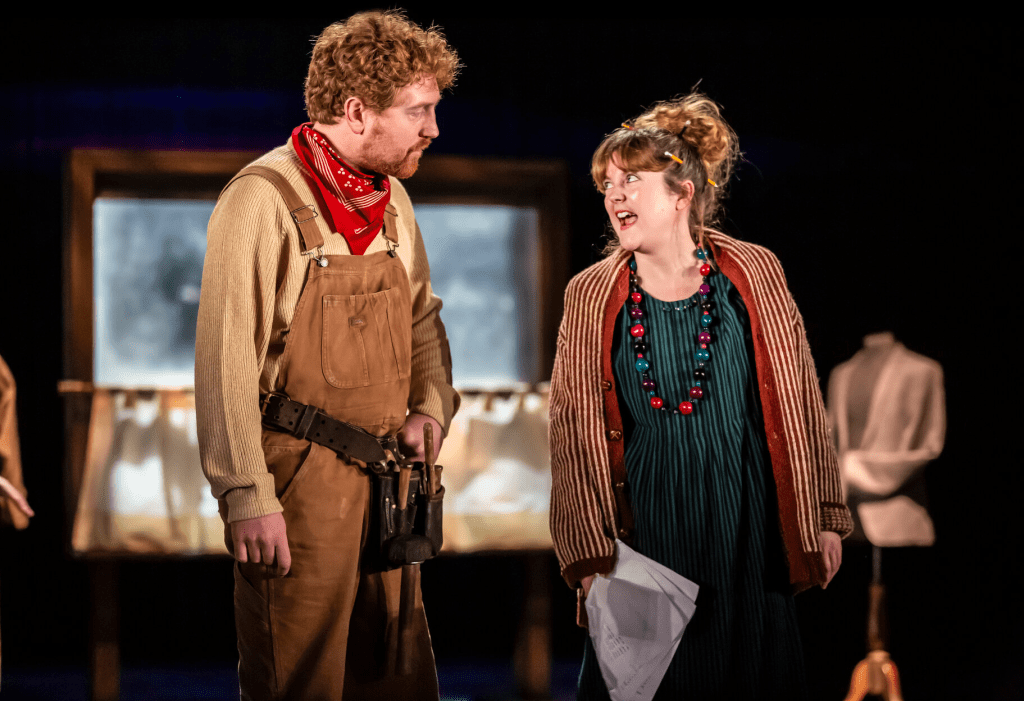
The Mechanicals finally get their moment in the spotlight at the end of the play, and they perform their rendition of “Pyramus and Thisbe” – and what an ending this was. Helen Monks as Peter Quince introduces the players with a rap (I wasn’t the biggest fan of this, but can appreciate that it was very funny). Emily Cundick makes a lasting impression as Wall/Snout – so much so that she reprises the role later on as Old Ninny’s Tomb! Premi Tamang’s Moon/Starveling tries her best to be spooky with hilarious results – although her lines are cut slightly, with no interruptions for the onlooking lovers. The lion (Laurie Jameson as… erm… what was his name? Oh yeah, Snug the joiner) warns everyone not to be scared – although with his bright yellow vest and hosepipe tail, there’s no danger of that!
The final scene between Bottom as Pyramus and Mitesh Soni as Thisbe/Flute was the best bit of all. Pyramus ends up covered in pink “blood” after a hilarious never-ending death scene, only for Thisbe to survey the scene and declare “Asleep, my love?” Brilliant, and there was not a dry eye in the house as the play ended – thanks to laughter, not sadness!
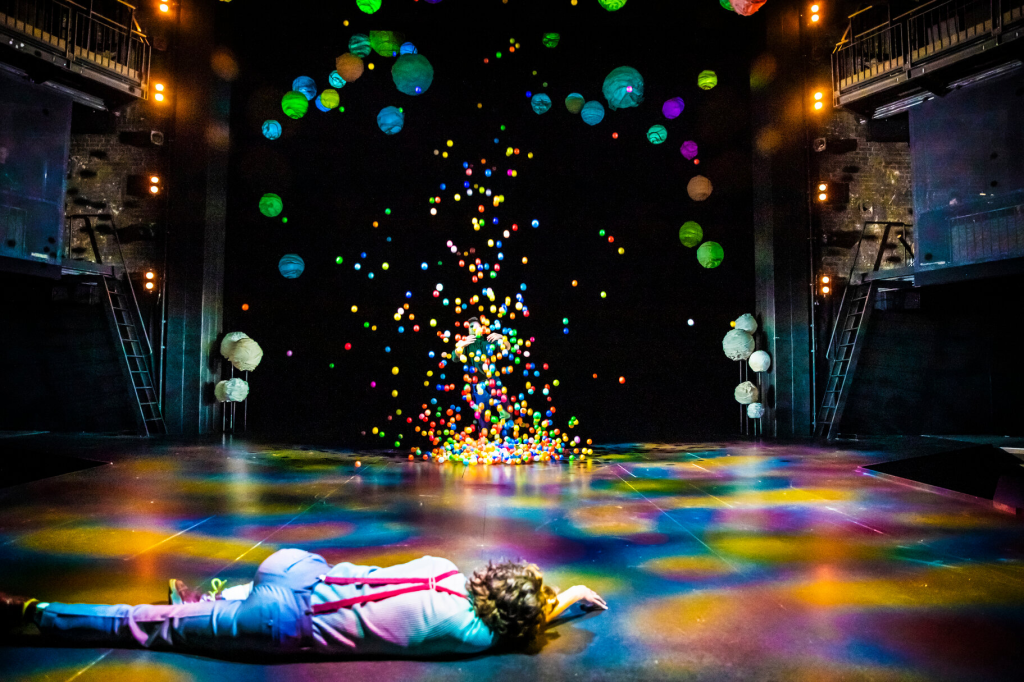
There are a number of very clever stage tricks littered throughout the production – with the entire stage being turned into a ballpit in the fairy bower – but the joy of this production is in the smaller character moments that bring everything to life. I have seen many versions of A Midsummer Night’s Dream, and have never enjoyed Oberon and Puck’s scenes as much, or laughed as much at the Mechanicals, as I have in this version. Superb and well worth a watch if you get chance!
Tom Morley, March 2024






 Broken Legs Blog