
“Energetic and perfectly executed”
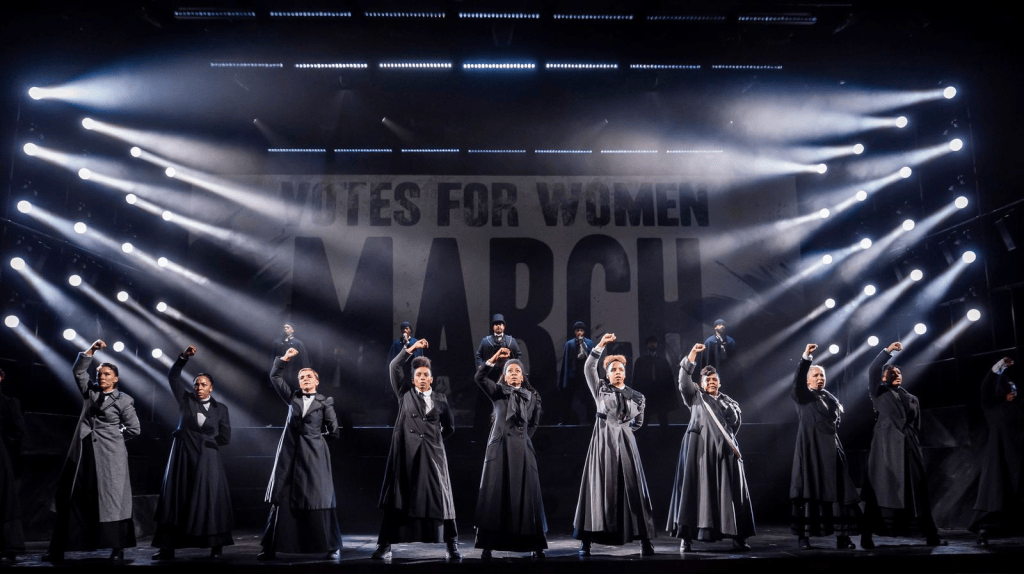
Inspired by hip-hop, R&B and soul, “Sylvia” shines a light on Sylvia Pankhurst, the daughter of Suffragette Emmeline Pankhurst who joined with her mother to campaign for women’s right to vote, although often disagreed with her mother’s violent and illegal methods of protest. The music, by DJ Walde and Josh Cohen, is an exciting, eclectic mix of styles that melds together into a near-perfect soundtrack, each song bringing something new that helps to keep the musical fresh and interesting, if a little overwhelming with very few quieter, more heartfelt numbers. Director Kate Prince is also responsible for book, lyrics and choreography, and that is evident in the fact that the story often seems to be led by dance as much as by its lyricism – the choreography is not only energetic and perfectly executed, but it is also vital to the show. In fact, the show is so jam-packed that it means it can feel a bit exhausting and over-stuffed, with some plot points, whilst being true to life, seemingly having very little impact in the overall storyline.
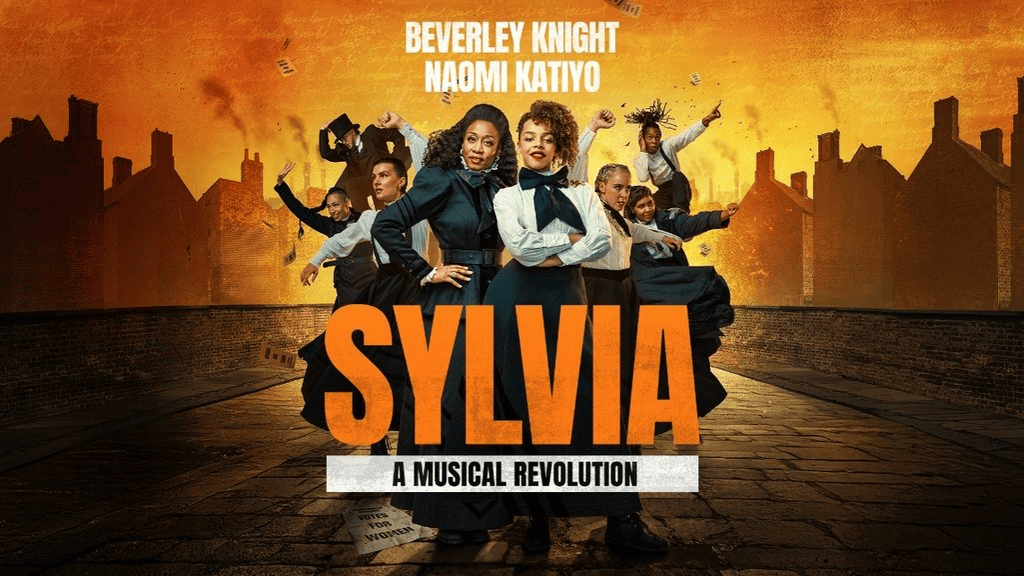
In the title role, Naomi Katiyo exudes a quiet confidence, presenting a strong-willed woman that also hides some insecurities that make for a complex and fascinating protagonist. There is a danger that, with soul legend Beverly Knight starring as Emmeline, Katiyo could be overshadowed, and whilst Knight brings an extra level of star quality, Katiyo more than holds her own, connecting with the audience so that we root for Sylvia not only in her political endeavours, but also in her personal and romantic life as well. Katiyo and Knight finally clash in the most impressive way in the song “You’ve Changed”, as Sylvia calls out her mother for losing sight of their original aims and instead becoming too ego-centric. It is a song that allows Knight a chance to show off her superb vocals, whilst Katiyo raps with such pace and diction that her verse earns her a worthy round of applause mid-song.
Emmeline and Sylvia are joined in their fight for the vote by Sylvia’s sisters Christabel (Ellena Vincent) and Adela (Kirstie Skivington) and brother Harry (Uzuazo O’David). Christabel is as feisty as her mother, constantly getting into trouble with the police in a way that makes Emmeline incredibly proud, whilst also enjoying a gay romance with Eloise Davies’ Annie Kenney, a storyline that certainly adds fuel to Christabel’s anger at the state of Britain in the 1910s, but is never afforded much stage time to be properly explored. Adela, on the other hand, joins with Sylvia to question her mother’s methods, but whereas Sylvia continues to stand up for British women, Adela is sent away to Australia, and whilst there is a recurring song called “Dear Sis” as Adela sends letters to her family, the character lacks any real impact in the second act. O’David brings some much-needed humour as the youngest child who is constantly trying to impress his mother but never quite succeeding.
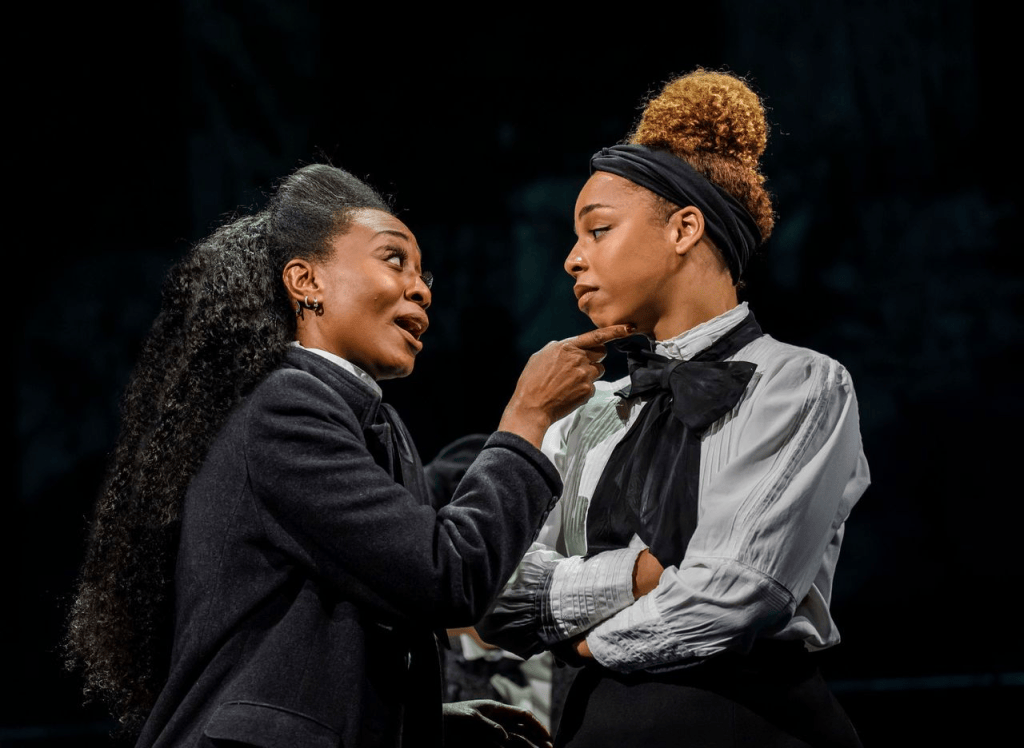
Scandal is never far from Sylvia’s life, as she begins to fall for the married leader of the Labour party Keir Hardie (Tachia Newell). Every brief touch and moment of eye contact between Newell and Katiyo is given a level of importance that means their scenes are brimming with chemistry, and although the lyrics constantly remind us of the age gap between them, Newell and Katiyo do not appear that different in age for it to have much impact. Hardie seems to disappear in act two, and by the time we learn of his death in 1915, we haven’t seen him for several scenes, and the tragedy is seemingly glossed over. It is one in a list of several deaths that are there for biographical purposes but have no impact on plot or character – a death of a family member in act one gives us emotional number “I’ll Stay By Your Side”, which allows us a break from the more energetic numbers but doesn’t particularly serve to propel characters into the next plot beat, whilst song “Way Down” explores Emily Davison’s (Ebony Clarke) tragic death at the Epsom Derby, but doesn’t quite hit the emotional highs that the musical is striving for.
Ben Stones’ set gives the impression of a Greek amphitheatre in that there is space for cast to sit and watch scenes that they are not in – think “Hadestown”, where the Greek chorus provide backing vocals whilst other characters take centre stage. It allows for quick scene changes, which is all supported by some excellent video design from Andrzej Goulding, that often announces scene titles with the help of dramatic captions, whilst the entire stage is framed by a projection that makes the whole theatre feel like it is moving in time with the beats. Costume is very much reminiscent of the period, characters often wearing blacks and greys that are highlighted with red motifs in the second act as Sylvia becomes increasingly socialist.
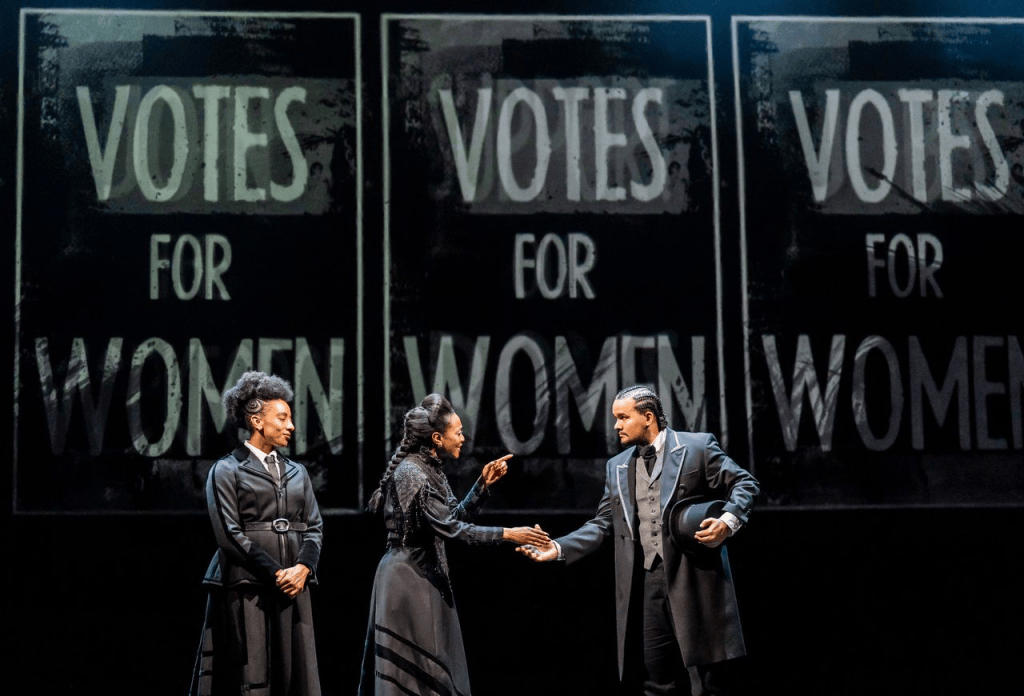
Often serving as the antagonist is Castell Parker’s Winston Churchill, who opposes the idea of rights for women, and constantly tries to put a stop to Sylvia’s campaigning. Churchill is constantly undermined by his wife Clementine (Collette Guitart, who brings a jazz vibe to proceedings with her song “One of the Doomed”), and his mother Jennie (Kenedy Small, who surprises us all with her rapping that for a moment turns the entire room into a Jamaican nightclub). It helps to make a mockery of Churchill’s sexist sentiment, which means that although his comments are often shocking, they bring additional humour to the show. It does, however, feel a little odd that the song “Clementine” seems to cast Churchill in the role of simpering puppy-dog as he falls for and then tries to pathetically woo his future wife. It seems like the type of song that you would give to a more likeable character (Ivano Turco’s Sylvio is given a similar number later on when he begins a romance with Sylvia), and it is jarring then when Churchill is turned into the villain of the piece.
This is a musical that is bound to have you tapping your feet and clapping along, with a soundtrack that is simply joyous and full of life. The play is subtitled “A Musical Revolution”, and it feels incredibly appropriate – this is a musical that is undoubtedly going to draw comparison with “Hamilton”, but there is a lot more going on here. In particular, it is the choreography that makes this worth seeing. I strongly encourage people to listen to the soundtrack (available on Spotify) but be aware that, without experiencing the accompanying choreography, you are missing half the story. As we continue to strive for equality for all, the messages of the musical still feel prominent today, making clear just how far we have come, and yet highlighting exactly how far we still need to go.
Tom Morley, September 2026
Review Round-up:
JackStage: Sylvia – 4* from JackStage, who says the “hip-hop musicality is grounded and fresh”, pointing out that “even the most mundane of conversations have a rhythm to them”
More reviews to be added as they become available.











Leave a comment