
“Filled with laughs, drama and bust-ups that are worthy of any soap opera”
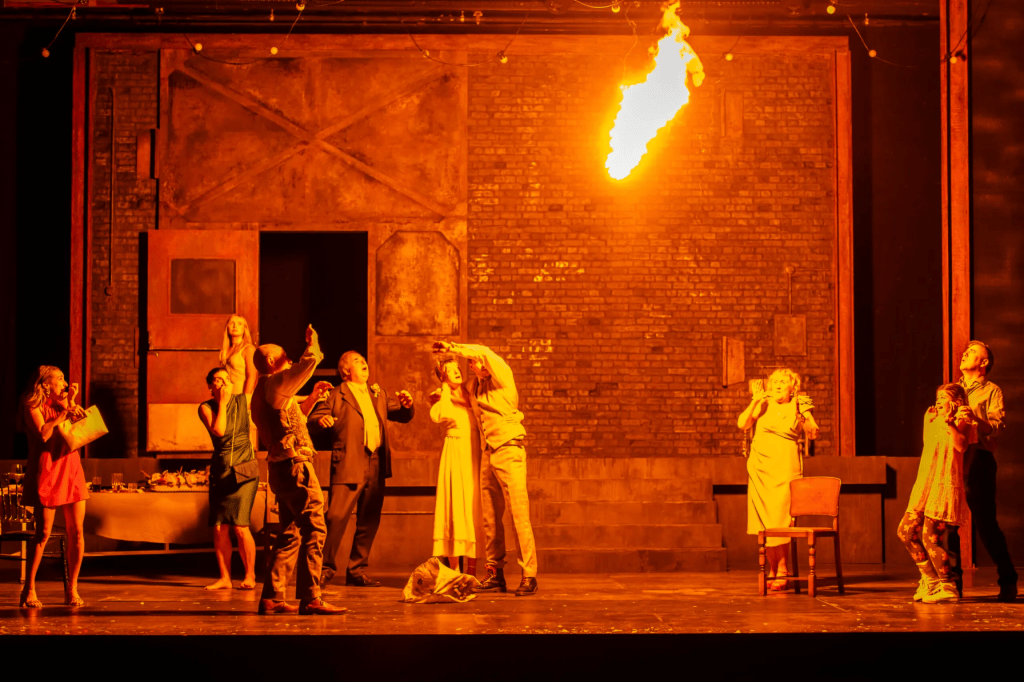
Get yer dress on duck, we’ve gorra weddin’ t’ get t’. Set in Mansfield, “Till the Stars Come Down” sees multiple generations and backgrounds clash amidst a family wedding, as the perfect day quickly descends into chaos. Written by Beth Steel, the play explores themes of immigration and ingrained racism, although this can at times feel a little heavy handed, and it is the characters that will likely have a greater impact, the whole range of larger-than-life family members on display instantly relatable and recognisable, especially to a Nottingham audience. The play premiered at the National Theatre last year, before transferring to the West End, and this non-replica production features some intriguing design choices from Oli Townsend, beautifully supported by Johanna Town’s lighting design which gives everything a slightly magical feel that is immediately shattered in the wake of some shocking revelations.
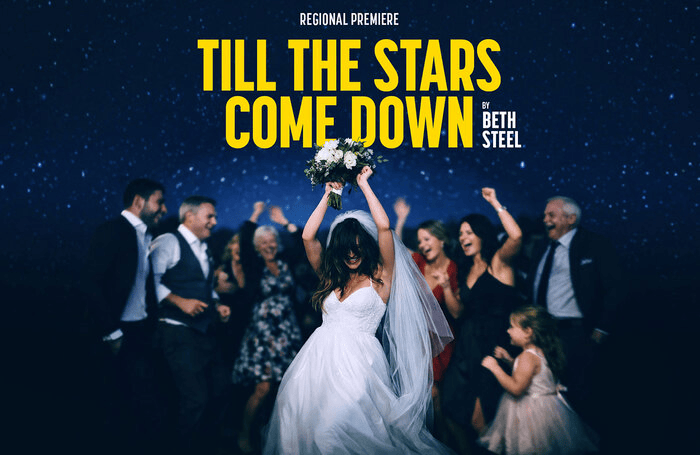
The play begins as Sylvia (AK Golding) prepares for her impending nuptials to Marek (Ivan Ivashkin). The opening scene is a true assault on the senses, with a large cast being thrown at us immediately, leaving us scrabbling around a little trying to make sense of how the family fits together. The entire scene takes place in front of large red curtains, giving the sense of this being a prequel, which is fitting – this is a chance for us to get used to the various relationships, before the true drama sets in. It is all downlit by golden lights which bask everything in an optimistic glow.
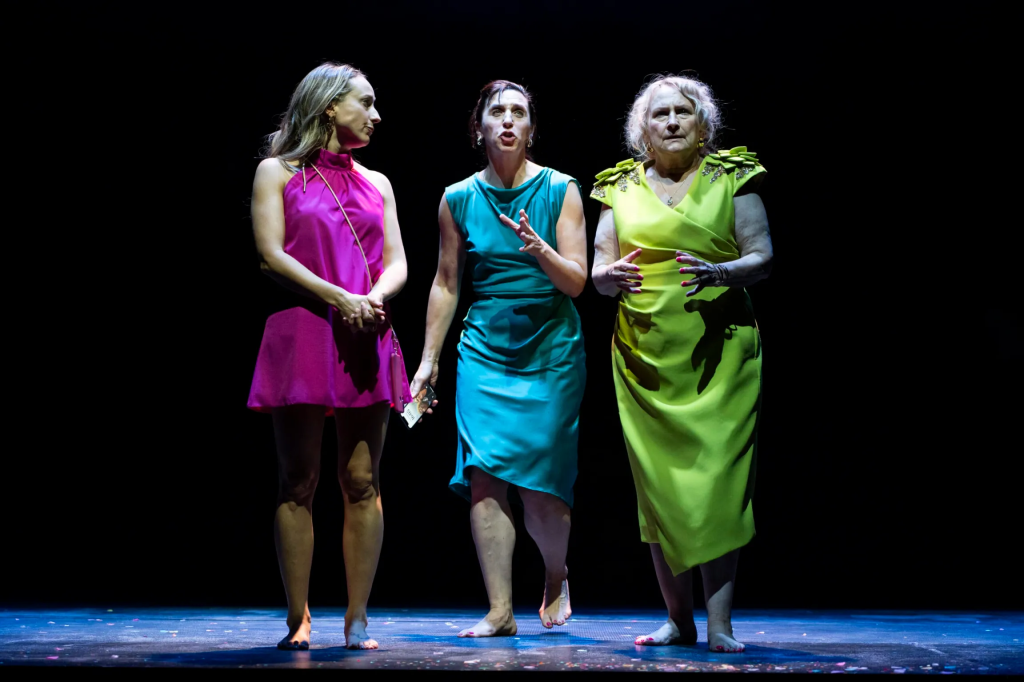
At the centre of this knotty web of hidden pasts and dark secrets are three sisters – Sylvia, Maggie (Leah Brotherhead) and Hazel (Emma Pallant) – who all find themselves at different stages of their romantic lives, with Maggie divorced several times and Hazel stuck in a loveless marriage with Graeme Hawley’s John. Maggie and Hazel undoubtedly have more interesting dynamics with other characters than Sylvia, which can often leave her as the blandest character on stage, occasionally fading into insignificance despite being the bride-to-be, although there are some faint hints at past struggles with mental health. Maggie and Hazel each have far more interesting storylines which incite some excellent drama in the second act.
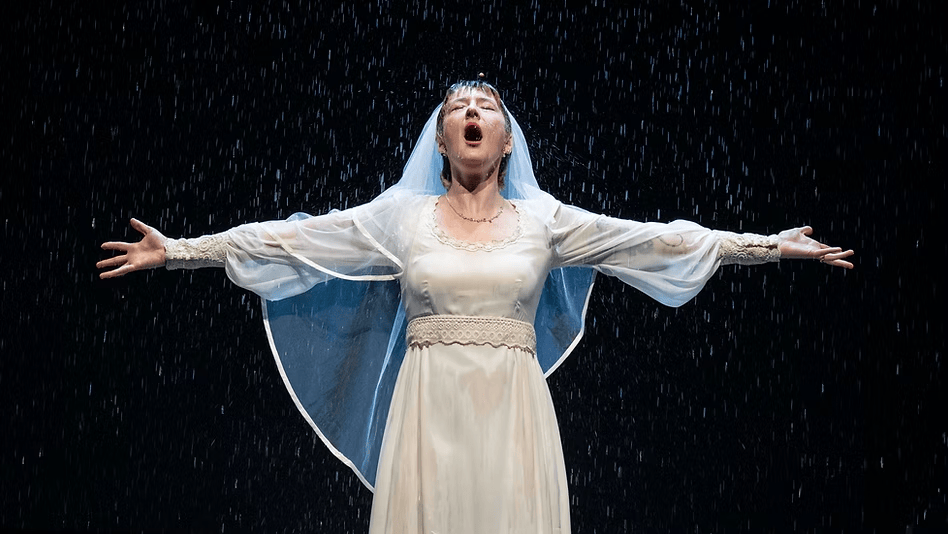
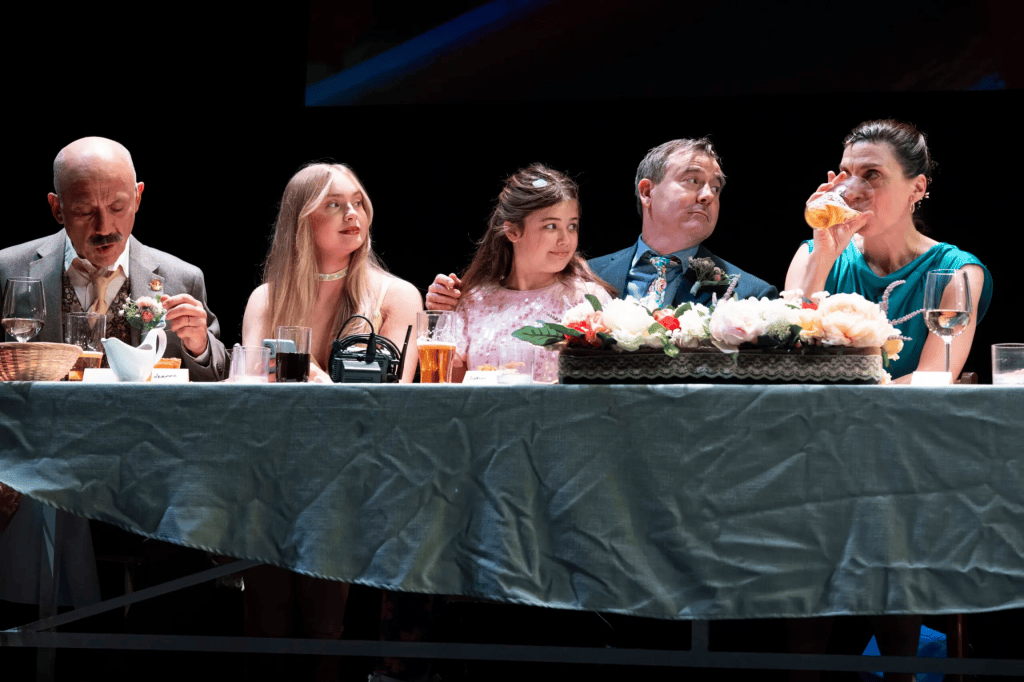
Things don’t get off to the best start as Sylvia discovers she can no longer fit into her wedding dress (the suggestion of “going for a big poo” doesn’t help), but the first hints of true drama arrive as the curtains open to reveal the table set for the wedding breakfast – the first source of contention due to the fact that Joe Alessi’s Uncle Pete has been booted off the top table, something that doesn’t sit too well with his wife Carol (Sadie Shimmin). Things take a decidedly more uneasy turn, however, with the arrival of Polish groom Marek, where it becomes clear that certain members of the family have taken against him, in particular Hazel – and in these early scenes, Pallant is deliciously vicious at times, making her a character that isn’t likely to find much support from the audience.
The racism against Marek is never particularly overt, instead hidden in passing comments or certain reactions, which is testament to Steel’s writing – it constantly feels grounded and realistic. In fact, the most explicit racist comments come courtesy of Hazel’s young daughter Sarah (a role shared by Anya Marshall and Amelia Yates), who unwittingly repeats some phrases she has heard at school without understanding the true meaning of them. It is quite an eye-opening moment, and hammers home how racial bias can be ingrained from an early age.
At other times, however, the writing can leave a little to be desired – in particular, some of Sarah’s lines don’t always come across naturally, and leaves us questioning exactly how old she is meant to be, speaking like a five year old at some points, and at others much older. Ellie Daley’s Leanne is given a monologue that closes the first act, but it is a bit on-the-nose and overly dramatic. Elsewhere, some of the commentary feels a little too earnest, particularly with regards to the degradation of old mining towns. When Alessi stands at the wedding breakfast and names all of the local mining towns that have fallen into deprivation, it is a sobering moment, but one that doesn’t feel properly earned, and the script fails to capitalise on these ideas in the second act.
The story moves on to the wedding reception, where the plot begins to trip over itself a little, as characters constantly cycle between each other, allowing for various combinations of people to have conversations. It makes for some truly beautiful moments – a short scene between patriarch Tony (Howard Ward) and Sarah is especially moving, whilst Hawley’s speech about fireflies is matched with twinkling lights and Pete’s monologue about the solar system provides a perfect metaphor for the complicated family and lends some meaning to the title – but they all add very little to the plot, which is our main source of interest by this point. It instead feels like the script is playing for time, slowly building things up ready for everything to hit the fan in the final scene.
And rest assured, when it does all hit the fan, it does so in the most satisfying way, with a final scene that is incredibly tense, as secrets come spilling out and we are treated to a truly visceral performance from Pallant. For those hoping for everything to be wrapped up in a neat bow, you may be disappointed, but the point of the story is that nothing ever truly ends – harking back to Pete’s solar system metaphor, the world keeps spinning no matter how much your life changes, and so the fact that we are robbed of any definitive ending is perhaps suitable.
Despite some slightly forced messaging, what makes this show so enjoyable is its characters and humour, which comes mostly courtesy of Shimmin’s Carol, who spends most of the show incredibly drunk (or to quote Carol “arse’oled”), and delivers some filthy lines which are fabulously funny. Ward’s Tarzan impersonation is also a standout moment. A fantastic evening filled with laughs, drama and bust-ups that are worthy of any soap opera.
Tom Morley, September 2026
Review Round-up:
JackStage: Till the Stars Come Down Review – 5* from JackStage, who says “the play’s storylining is remarkably intelligent” and calls the show “riotously funny and relatable”
Elemental Theatre: Till the Stars Come Down Review – Elemental Theatre gives the show 4*, with reviewer Thomas Levi pointing out that “when the laughter stops, and the drama takes over, the impact is immediate; after so much laughter, its absence becomes almost deafening”
WhatsOnStage: Till the Stars Come Down Review – 3* from WoS, who say “there is plenty to admire […] yet the sheer number of competing strands never allows any single theme to resonate fully”






 Broken Legs Blog
Leave a comment