

“Fun, frivolous and incredibly clever.”
This week marks 29 years since “Midsomer Murders” first premiered on ITV, with its first episode “The Killings at Badger’s Drift”. There’s no better timing, then, for the stage adaptation of that same story, based on the original novel by Caroline Graham, to arrive at Derby Theatre. Filled with Graham’s usual eccentric characters, and leaning into the comedy more than one might expect, this murder mystery begins with octogenarian Emily Simpson being found dead in the chocolate box village of Badger’s Drift. Jumping straight into action is Daniel Casey’s Inspector Tom Barnaby (the original TV sidekick here promoted to lead role), trying to unravel a particularly knotty mystery that has many twists and turns in store for the audience.
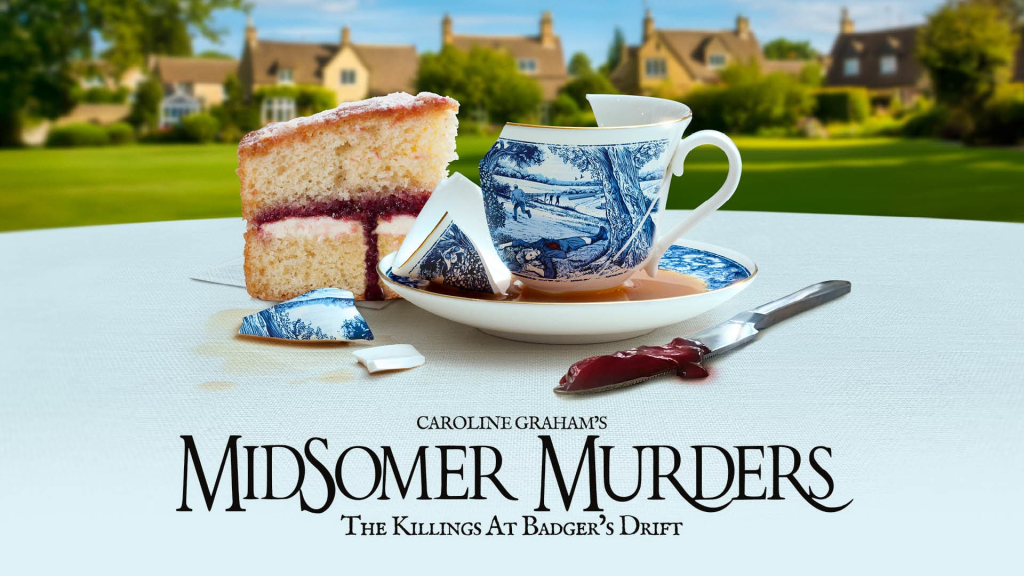
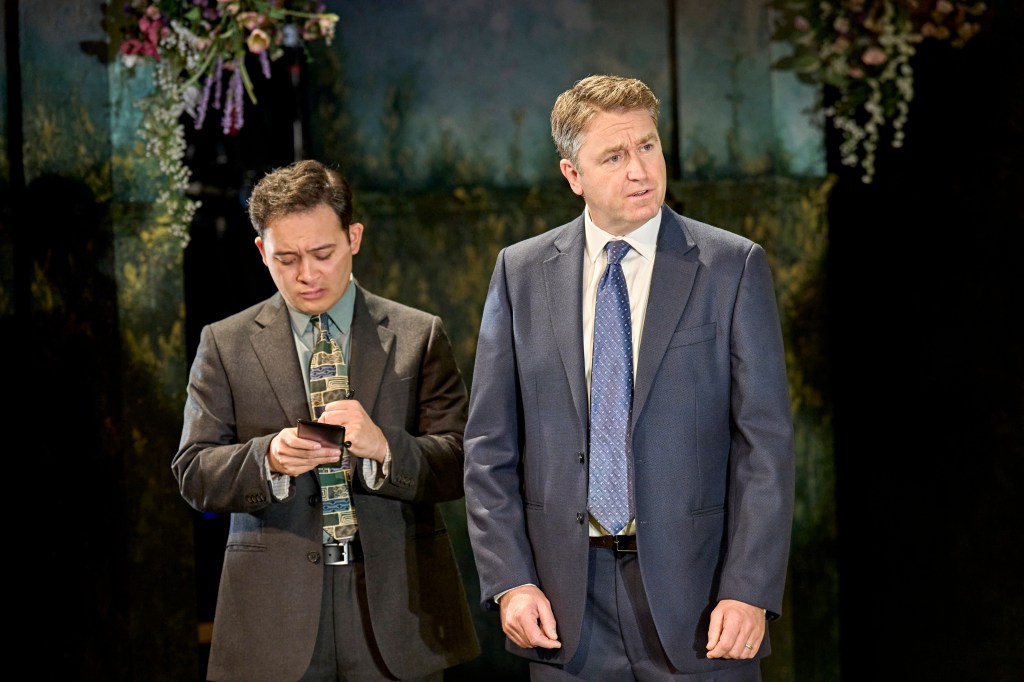
The set-up is as any fans of the ITV series would expect – a dead body, foul play suspected, and a host of interesting, larger-than-life suspects. The play even features the memorable theme music to launch us into the investigation, and an ever-changing set design that helps to bring to life a whole host of different locations as Barnaby and Troy (James Bradwell) set about their inquiries. Casey is superb as Barnaby – the no-nonsense, moral pillar of Midsomer County, a refreshing take on a detective with no shady past or traumatic backstory. Casey mimics John Nettles’ (the original TV Barnaby) mannerisms at times, particularly in his sarcastic putdowns of sidekick Troy, which are all delivered suitably tongue-in-cheek. Bradwell brings a youthful energy to the Detective Sergeant, acting as the audience’s insight to the goings-on in Midsomer, convincingly agog at some of the residents’ habits and quirks. Casey and Bradwell make for a formidable double-act, their light-heartedness and friendly chemistry helping to make the two-and-a-half hour play feel pacey and fun.
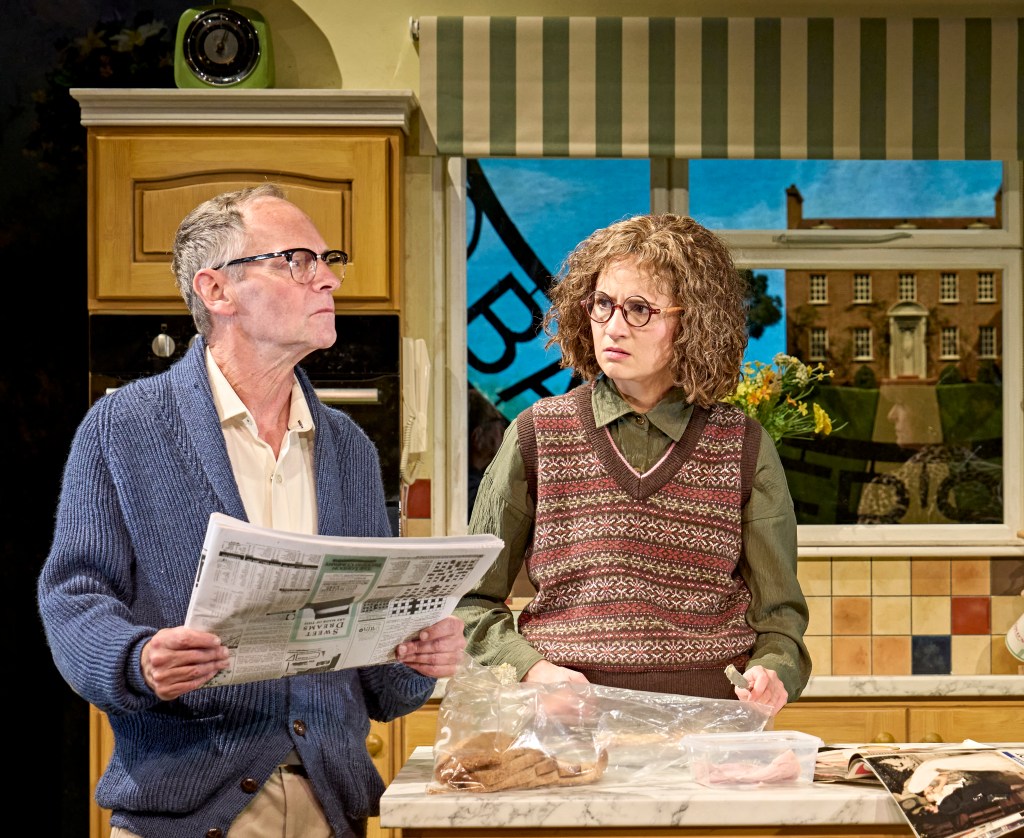
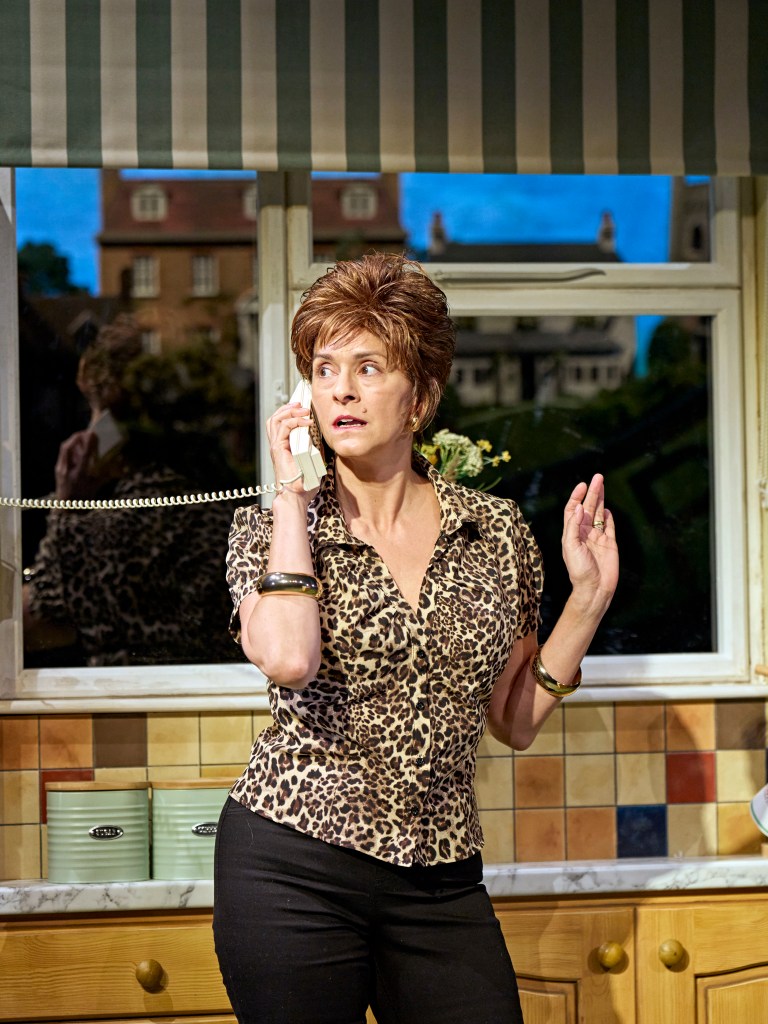
Under the direction of Guy Unsworth, this production is incredibly self-aware and doesn’t try to take itself too seriously. Much of the comedy comes through the extensive use of multi-role, a fairly small cast working incredibly hard to make Badger’s Drift feel like an entire community. The multi-role is effective simply because each character is over-played, the cast leaning heavily on stereotypes which are welcome comedic distractions rather than tired tropes. This is particularly notable in the case of John Dougall, who takes turns playing wearisome Dr Lessiter, the elderly, rich Henry Trace and the outlandish Iris Rainbird, in a superb drag act that seems to echo Wilde’s Lady Bracknell. These transformations are helped by the array of costumes and wigs, an entire army of backstage dressers on standby to help actors constantly switch clothing, all overseen by head of wardrobe Chloe Willis.
This brand of comedy might not be for everyone – at times, the residents of Badger’s Drift feel more akin to those from The League of Gentlemen‘s Royston Vasey rather than Midsomer County – and the comic tones definitely grow more offbeat as the play continues. One particular highlight sees Chandrika Chevli expertly switch from loud-mouthed housewife Barbara to groundskeeper Dickie in the blink of an eye, thanks to a quick blackout and a simple turn of the head. It is a masterclass in character transformation, Chevli changing not only her appearance but also her mannerisms and her voice, allowing her to become a completely different character instantaneously. These sleight-of-hand tricks are blatantly called out by the production, the end of the scene revealing exactly how the transformation was accomplished (although it takes no great amount of genius to work it out). It is refreshing for a show to not try to cover these transitions with extensive blackouts and curtains – the show continually breaks our immersion and it is all the better for it, finding extra laughs in the fourth wall breaks and never slowing the pace.
Also putting in solid performances are Rupert Sadler as Iris’s oddball son Dennis and heart-throb artist Michael, and Julie Legrand as Lucy Bellringer, a friend of the deceased Emily who joins Barnaby and Troy in helping them solve the mystery, taking on a sort of crazed Miss Marple-esque role at times. Legrand manages to squeeze every ounce of comedy from every scene, although there is an ongoing joke where, upon discovering evidence of a sordid affair, Barnaby and Troy try to protect Bellringer by using suggestive innuendos, which Bellringer immediately calls out with some blunt terminology – this joke is a little overused and drawn out, becoming fairly tiresome by the end of the scene.
There are some rather odd moments thrown in here for good measure. A scene where Troy re-enacts a murder scene with the help of garden gnomes works well, but later when he begins talking to the gnomes it all feels a little out-of-place and cringe-worthy. Perhaps most inexplicably is a scene which sees Barnaby struggling to piece together all the evidence, at which point Bradwell appears wearing a large gnome head and proceeds to waltz with Casey around the stage (I’m not joking, this actually happens). The purpose of this is unclear, and the audience reaction suggests this is a step too far into the absurd. Having a brief musical montage is probably useful at this point of the play, to help with pacing, but the manner in which it is done is just downright weird.
Overall, this is a play that knows exactly what it is trying to be, and doesn’t attempt anything more or less. It is testament to Unsworth’s direction, who has clearly understood the tone of the TV show and stuck to his guns, where there might have been temptation to make the play a little darker or more serious in tone. On top of this, the mystery is well-plotted and everything is wrapped up neatly by the end. The cast are all on top form and David Woodhead’s set and costume design keeps everything visually interesting. Fun, frivolous and incredibly clever. Midsomer County might have one of the highest murder rates in the world, but there are plenty of laughs to be found between the blood-drenched begonias.
Tom Morley, March 2026
Review Round-up:
The Guardian: Midsomer Murders – 3* from The Guardian, who go so far as to call this “a new genre of homicidal panto”
Northern Arts Review: Midsomer Murders – 4.5* from NAR, who warn theatre-goers “don’t go if you want a serious whodunnit with all the charm of a challenging cryptic crossword. But if you want a fun night out, with mystery and the challenge of clues you know you won’t get, then The Killings at Badger’s Drift is for you.”
Lisa in the Theatre: Midsomer Murders – And another 3* review from Lisa in the Theatre, who says the show “falls over into the ridiculous on occasion, but it’s all done knowingly with tongue firmly in cheek”


 Broken Legs Blog