
“So natural, so believable, and so incredibly tragic”
James Graham’s masterpiece “Punch” returns to its original home, after stints on both the West End and Broadway. There is something particularly moving about watching this emotional story play out on a Nottingham stage, amidst the surroundings where the play is set, a mere ten minute walk from the spot where, in 2011, 28-year old paramedic James Hodgkinson’s life was tragically cut short by one punch. The play features many, many references to well-known Nottingham locations – Trent Bridge, Slab Square, numerous pubs and bars – that can be properly appreciated by local audiences. It is refreshing to see local accents on the stage, especially given Graham’s superb skill for writing realistic, gritty dialogue. It is all so natural, so believable, and so incredibly tragic.

The story focuses on young wayward teenager Jacob (the indomitable Jack James Ryan), who, after a day of drink and drugs, ends up randomly lashing out at a man outside a pub, knocking him out with a single punch that culminates in the young man passing away a few days later. The play is initially framed as Jacob recalling the events at a group meeting that takes place years later, and as such the narrative is messy, muddled, jumping backwards and forwards in time as Jacob recalls different events and key pieces of information. It sounds confusing, but it isn’t – each new memory unlocks an extra level to Jacob’s character, helping us understand the moments that lead him to throwing the fateful punch. Ryan gives a powerhouse of a performance, racing around the stage with manic energy, his words and phrases drawing laughs from the audience but carrying with them an extra level of danger and menace – we’ve all seen, and probably avoided, men like Jacob.
Jacob’s life feels exciting, loud music and flashing lights helping to create an energy that gets the blood pumping, Robbie Butler’s lighting design and Alexandra Faye Braithwaite’s sound design recreating the atmosphere of the type of night that can leave one looking for a fight. Yet it is more than just the night in question that is explored in this opening act – we see glimpses of Jacob’s childhood (Ryan effortlessly becoming an excited 5 year old on his birthday, a nervous young boy eager to please his teacher at Sunday school), and get an idea of his upbringing. Nothing is ever presented as an excuse for Jacob’s later actions, they are merely stated as facts – the play doesn’t attempt to use his autism, his mother’s alcoholism or the gang dynamics of The Meadows to explain why Jacob ends up as a murderer; instead the facts are laid out and any conclusions are left for the audience to draw themselves.
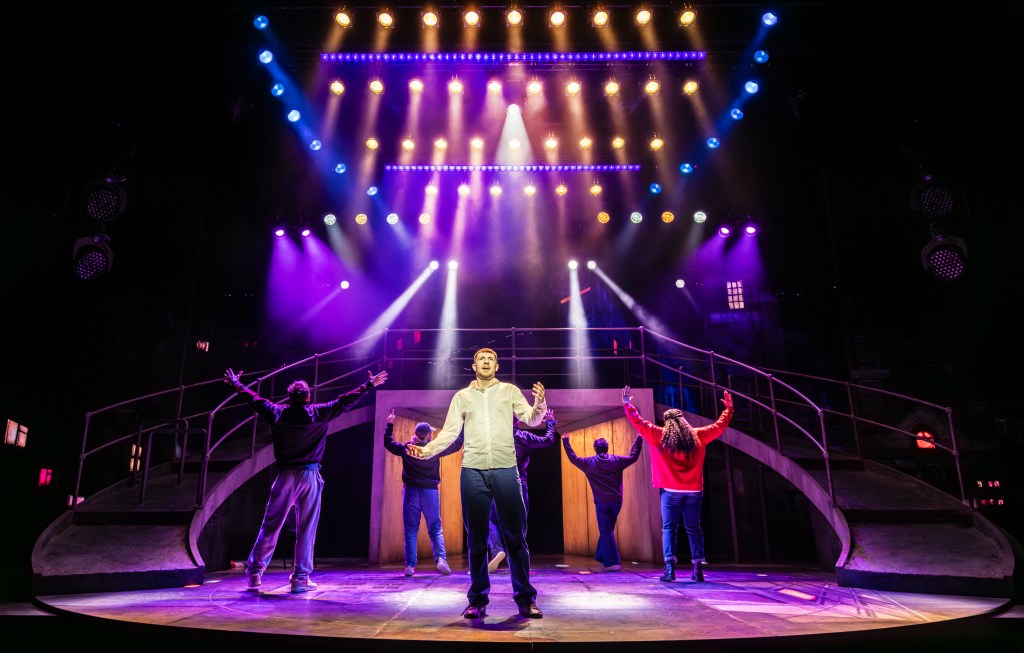
It should also be made clear that Jacob is not made out to be any sort of sympathetic character. Although he is quite definitely the protagonist of this piece, and the play goes on to show how, thanks to the restorative justice scheme, Jacob was able to turn his life around and use this tragedy to educate others about the danger posed by a single punch, he is not presented as an altogether “good guy”. His actions are questionable, he is easily led astray, and he makes decisions that will frustrate and upset some audience members. Theatre goers are likely to leave with mixed opinions of Jacob, as Graham’s script doesn’t attempt to lead us in any specific emotional direction.
The restorative justice scheme offers Jacob that chance to meet with the parents of James, the man that he killed. We are first introduced to Joan (Finty Williams) and David (Matthew Flynn) through a series of phone calls, as James remains in hospital and his health quickly declines. There are flashes of normality here, nothing is treated as overly dramatic – David’s brief line of having to put away the lawn mower before he heads to the hospital serves to remind us that these are normal people leading normal lives, that this awful scenario could happen to any one of us. It immediately endears us to them. It helps that Williams gives perhaps the most natural performance of the night, a mother who deals with her grief in a particularly internalised way. There is no melodramatic crying or wailing or shouting. She quietly listens to past voicemails, reminisces about James’ adrenaline-fuelled lifestyle, and begins to question how and why Jacob attacked her son.
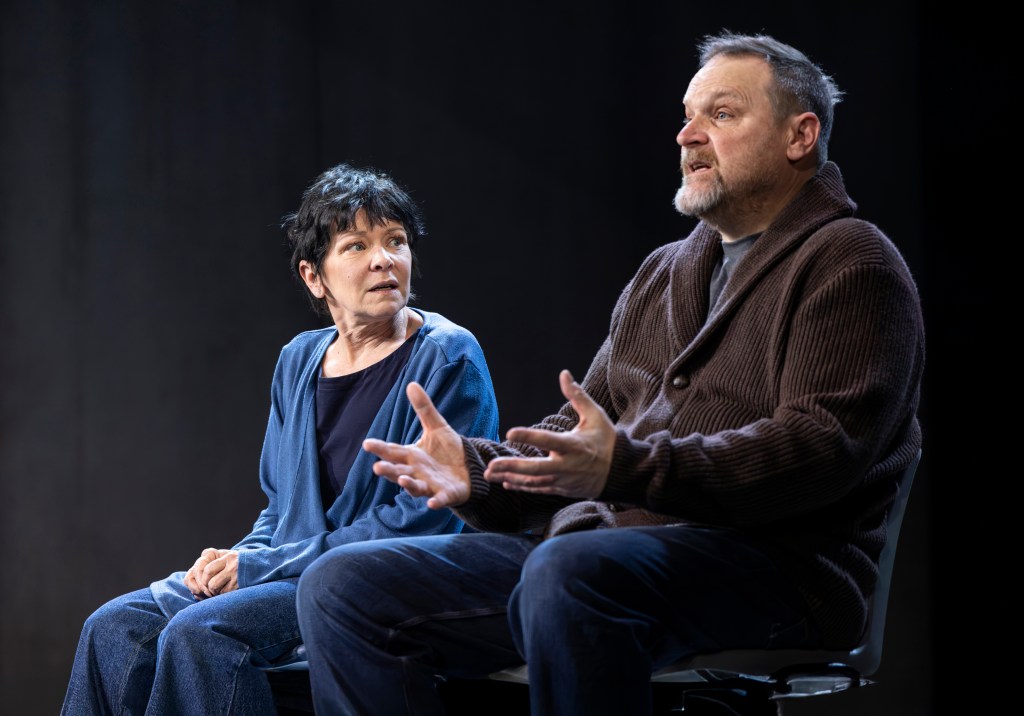
As her estranged husband, Flynn’s grief is also handled quietly and reservedly, yet there is more anger bubbling beneath the surface. He talks about wanting to kill Jacob for what he did to his son. The intention is there, but there is an insincerity to it – David is not a man who would ever go through with it, but he feels he has to say the words to retain his masculinity. It is refreshing to see such emotions played out in this understated fashion. It adds an extra level of realism to the piece, and it is testament to the actors belief not only in themselves but in the script and the story that they are telling that they don’t feel the need to overact or keep pushing for new emotional highs.
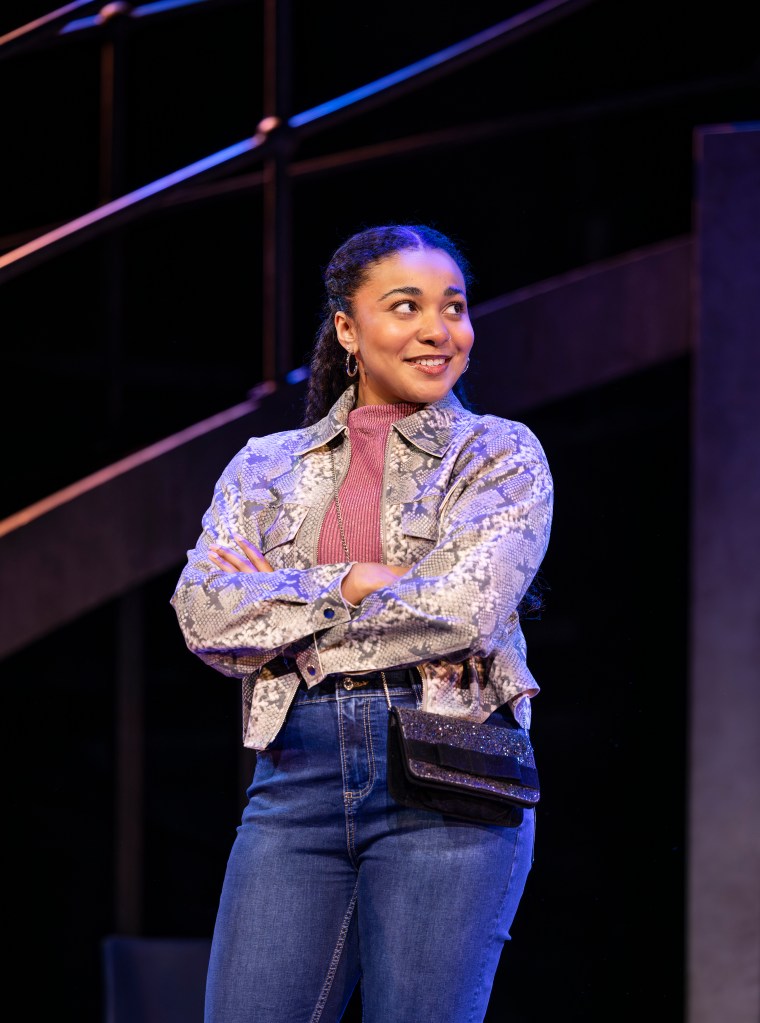
At times, the script takes on a clinical edge, offering additional exposition to help explain very clearly what is happening. This is particularly important in explaining the restorative justice scheme, as Grace Hodgett Young’s Nicola describes to the audience how the first meeting between Jacob, Joan and David is meticulously planned to ensure that all parties are comfortable and all possible outcomes are prepared for. The scene where the three first meet is long and intense, no background noise or sound necessary, the lighting stark and white and static throughout. It is Young who draws the eyes the most here, despite her character being removed from the emotional stakes. She is the outsider looking in, holding her breath when things become tense, willing both sides to stick to the strict rules she has put in place. She is our window into this scene, and Young’s performance throughout is engaging and captivating – there is nothing harder for an actor than being present throughout a scene where you have relatively few words, and very little action.
When I saw this show previously, in 2024, I raised a question about the inclusion of a scene featuring Jacob’s brother Sam, here played by Elan Butler, in which he comes out as gay. In this latest production, it still feels a little odd (the sudden announcement regarding Sam’s sexuality is so unexpected it can draw laughs from the audience, undermining the seriousness of the scene), but it makes more sense here, thanks to the way in which the news is received by Ryan. Every moment throughout the second act is about showing how Jacob is maturing, learning from his surroundings and his experiences, beginning to grow as a person. His reaction to Sam’s announcement is one that shows true emotional depth, treating the revelation with the response it deserves, before reducing it to a joke that helps put Sam at ease and remove any tension. It is one of many moments that show the promise of redemption, and its inclusion feels necessary and less shoehorned.
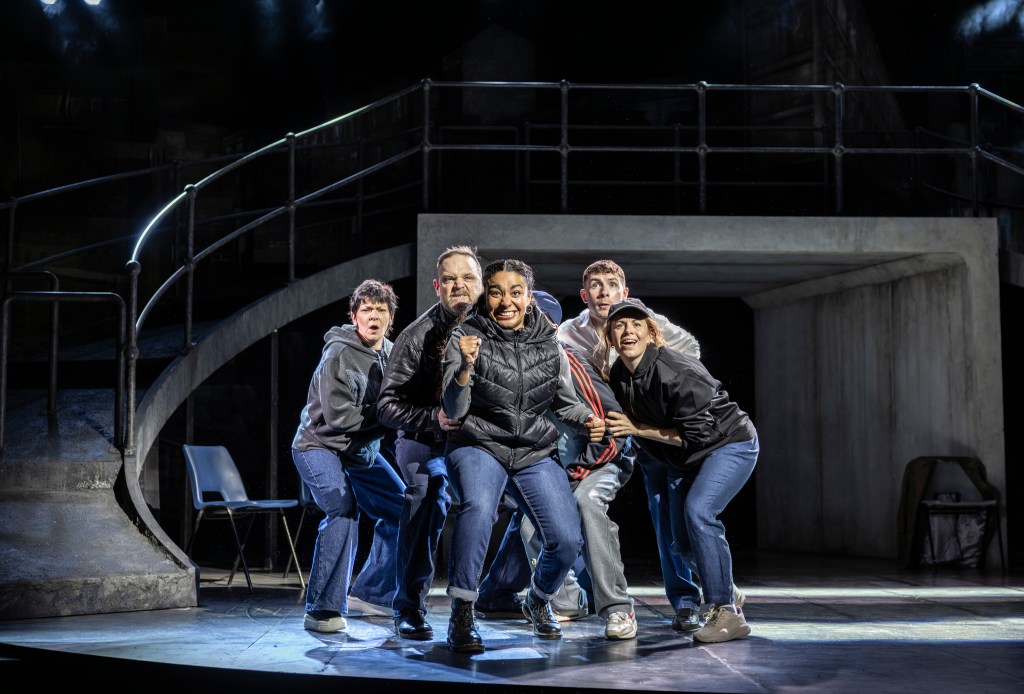
Throughout, the cast jump between characters, a vast array of multi-role supported by quick, simple costume changes. Perhaps this is most notable for Laura Tebbutt, who jumps between Jacob’s mum and social worker Wendy seamlessly. This is maybe a little less successful for Flynn, who lacks authenticity with some of the less serious characters from the Meadows Estate, but the pace at which these transitions are made helps to keep the energy up throughout, making the two-and-a-half hour play fly by in the blink of an eye.

This is a play that is undoubtedly entertaining, moving and extremely well produced, yet it will likely leave an audience divided in their reaction to it. Whether you end up rooting for Jacob, agreeing with the forgiveness offered by Joan, or standing by David who refuses to forgive, the important thing is that it is impossible to leave without forming an opinion, and that is the highest accolade one can give a theatre production. That is not only testament to Graham’s writing, which I referred to as a masterpiece in my opening paragraph and will reiterate here, but also to the actors, who bring such authenticity and sensitivity to this tale that you cannot help but be blown away by the impact.
Tom Morley, March 2026











 Broken Legs Blog
Leave a comment