

“Emotional, inspiring […] frantic and upbeat”
Malawi in the ’90s, a country of immense beauty and spirited people, yet fraught with difficulty as bad weather and political upheaval create a recipe for disaster. Telling the true story of William Kamkwamba, “The Boy Who Harnessed The Wind” is a brand new musical that recreates the uplifting yet often distressing tale of a young boy trying to do the impossible – convince his elders that he knows better. William is gifted with scientific understanding, and sees how the village can harness wind power to generate electricity for a water pump and therefore solve any problems caused by the devastating drought that is affecting his small village of Wimbe. With music influenced by the rich indigenous culture of Malawi, this musical is filled with energy and passionate characters, with a final scene that proves to be incredibly uplifting and brimming with hope, yet with a story that meanders just a little too much and songs that are not particularly memorable.

The opening of the musical is a whirlwind of introductions – there are a vast array of characters here, and it can at times feel overwhelming, especially amidst the bombastic opening number. William (Alistair Nwachukwu) is down-to-earth and quietly determined. His shyness and tranquil nature is unusual for a musical lead, and this aspect is mirrored in many of his songs – Nwachukwu often delivers songs at a slower pace, the music softer and less frenetic. Throughout, projections on both the walls and the floor of the set give us insight into William’s mind, presenting hand-drawn diagrams that help us to visualise exactly what William is describing. It is a genius move by director Lynette Linton, bringing the audience inside William’s mind, taking a difficult concept such as kinetic energy and making it feel simple for audience members of all ages.
William’s accomplice in this endeavour is his best friend Gilbert Mofat (Idriss Kargbo), the son of the village Chief (McCallam Connell), who might not be as academic as our protagonist but is just as enthusiastic. Nwachukwu and Kargbo have excellent chemistry together, often bringing plenty of hilarity to their scenes through their cheeky interactions. Shocking events at the end of act one serve to distance the friends in the latter half of the play, although this distance is never properly explored, and seemingly any tension between the pair is resolved fairly easily, when it could have formed an emotional backbone to the show.
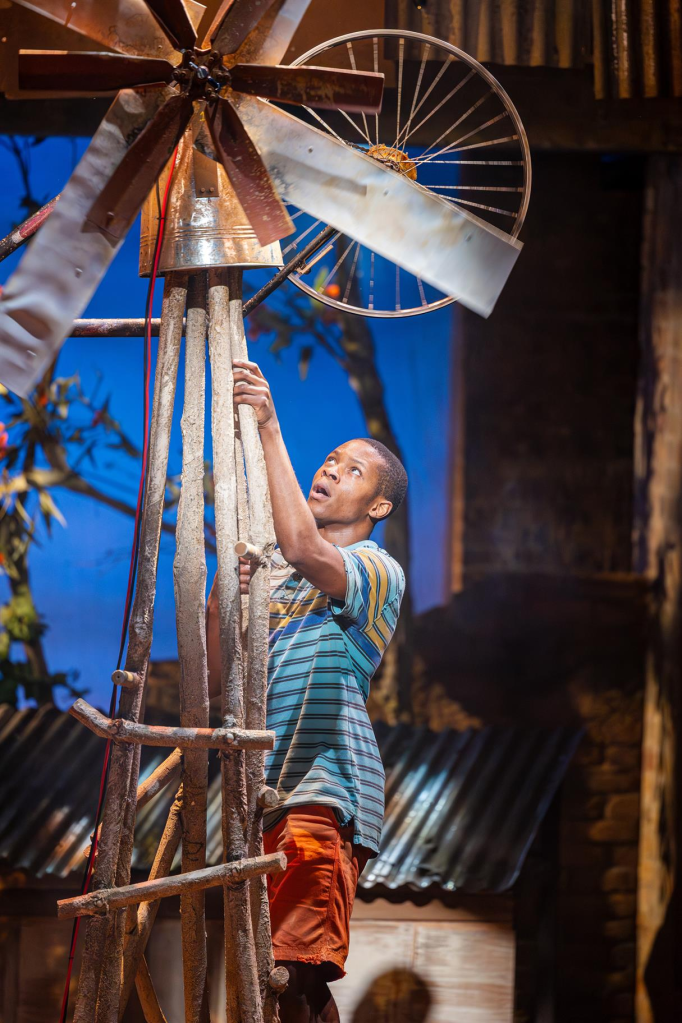
Instead, the focus of the second act is the relationship between William and his father Trywell (Sifiso Mazibuko), which boils down to William needing to convince his father to sacrifice his bicycle so that William has the parts needed to build his windmill. The scenes between the two of them are some of the most electrifying of the show, and Trywell’s desperation to do right by both his son and his wife Agnes (Madeline Appiah) is incredibly touching. Mazibuko gives one of the strongest vocal performances, his solo in Act One that focuses on the importance of farming in the village proving to be incredibly poignant, and turning what could be a stereotypical “angry Dad” into a much more complicated and realistic individual. The line between what is the wrong and right thing to do is blurred here, and it makes the story much more engaging – there is no obvious villain of the piece, and the audience may find themselves torn between the father and son as both are motivated by loyalty and family, yet their motivations manifest in different ways.
The plot of the second act becomes a little repetitive, Richy Hughes’ book labouring the same points about William’s contemporaries not paying him any attention, whilst Tim Sutton’s music all begins to feel a bit too similar. This is not a criticism of the style – it is nice to see a musical that picks a style of music and sticks with it – but more a comment on the narrative; too many of the songs revolve around William having a new idea, and feel like they continually hammer home the same points. By contrast, Act One is much more varied in terms of ideas – one particular song explores the relationship between William’s sister Annie (Tsemaye Bob-Egbe) and science teacher Mike Kachigunda (Owen Chaponda) by comparing it to the meeting between Trywell and Agnes. It is a genius move that allows us to explore the relationships of two sets of characters at the same time, whilst also offering us a glimpse into the past, humanising Trywell which is superb groundwork for the moral dilemma faced in later scenes.
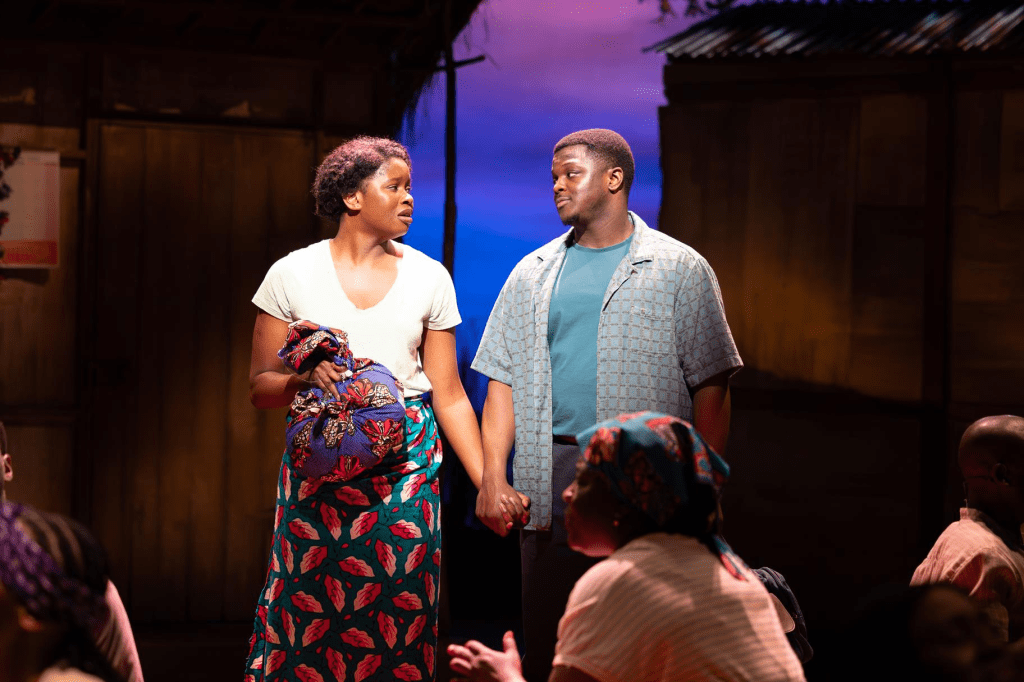
Aspects of Malawi’s political landscape are touched upon, the election of President Muluzi, and the subsequent selling off of maize to other countries, proving to be the igniting factor that leads to the famine that drives the narrative of the second half of the musical. There isn’t too much time spent on this background detail, just enough to set the scene without becoming too confusing for the younger members of the audience. For a musical that is ostensibly aimed at families (an interview with the real-life Kamkwamba in the accompanying programme describes this as “a production that you can see with your family”), there is a little too much swearing that feels at odds with the rest of the design, especially when so much work has gone into explaining the Malawi culture and enhancing scientific understanding to make the play suitable for children.
Shelley Maxwell’s choreography is frantic and upbeat, but proves to be a little too overbearing in places. This is not helped by the fact that all performers are wearing trainers that squeak too much on the floor and can prove distracting from the lyrics. Ashton Moore’s music occasionally overwhelms the actors, and it is not always easy to pick up on every word that is sung. The Swan Theatre being a thrust stage doesn’t help matters either – it can be difficult to follow lyrics when actors are facing the other side of the audience and you can’t see their mouths, so the music probably needs to be a little quieter to combat this.
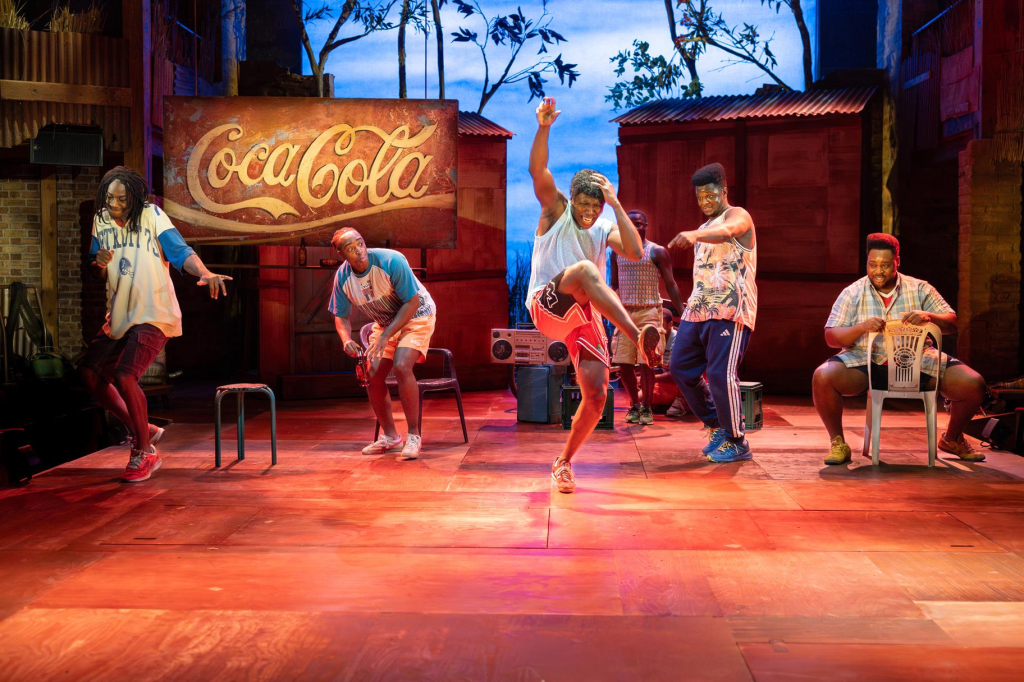
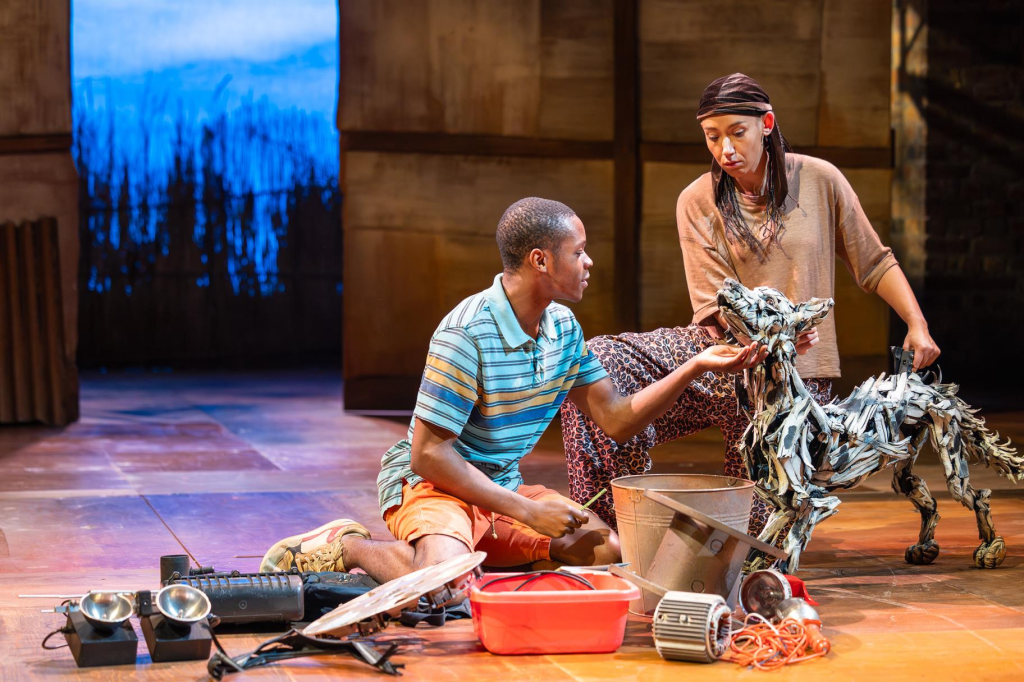
This is a promising musical that, with a little extra polish and bit of trimming, could be a superb piece of theatre that will resonate with people of all backgrounds. The play heads to the West End in April, and it is nice to see a story of African origin being given such an important space in British theatre (and not one that reduces its African characters to stereotypes such as The Book of Mormon). At times it feels like too many ideas are crammed in here – William’s cousin Jeremiah (Eddie Elliott) basically disappears in later scenes, and there is some wonderful puppetry with William’s dog Khamba (Yana Penrose) that ultimately adds nothing to the plot. This is a simple tale that is complicated by the musical trying too hard. Sometimes less is more, and I think that is key here. When the windmill is erected in the final scene, it is the perfect culmination of William’s hard work. It is emotional, inspiring and will leave you with the realisation that, even in the face of impossible adversity, incredible things can be achieved. It is a story that all of us can learn from, and a musical that, with a bit of work, deserves an extended West End run.
Tom Morley, February 2026
Review Round-up:
WhatsOnStage: The Boy Who Harnessed The Wind – A four star review from WoS, who say the show “is much too big a production for the Swan Theatre and suffers somewhat because of it”, but that “the colours, vibrancy and sheer exuberance of everyone on stage are infectious”
All That Dazzles: The Boy Who Harnessed The Wind – 3 stars from ATD, who call the show “inspiring” but say the Nwachukwu’s “vocals don’t match the demands of the score”
Elemental Theatre: The Boy Who Harnessed The Wind – Finally, 4 stars from ETC, who call the show “ambitious”, “heartfelt” and “powered by a remarkable ensemble”








 Broken Legs Blog