

“Lively, vibrant and incredibly loud”
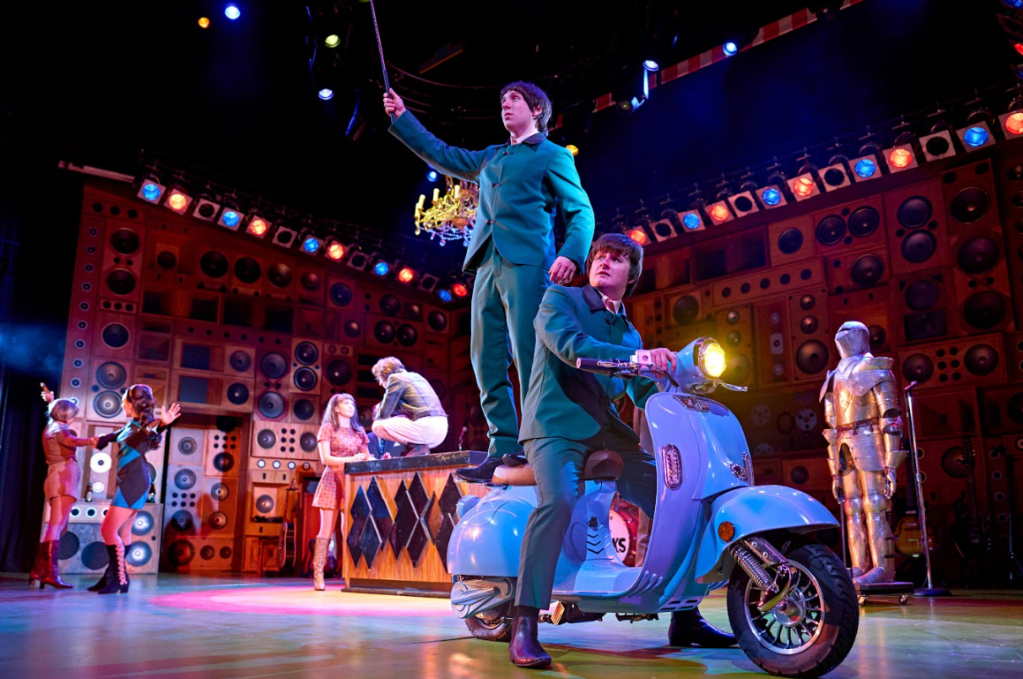
It’s back to the Swingin’ Sixties at the Theatre Royal Nottingham for “Sunny Afternoon”, featuring the music of British rock ‘n’ roll band The Kinks, and telling the true story of their rise to global fame. Offering a glimpse into the lives of the four young men who are often known as the original bad boys of the rock industry, this musical begins in ’64 as The Kinks (then known as The Ravens) find themselves under new management and about to launch music careers to rival The Beatles. It’s not all smooth sailing though – brothers Ray (Danny Horn) and Dave Davies (Oliver Hoare) often end up at each other’s throats, whilst drummer Mick Avory (Zakarie Stokes) gets into fights and bassist Pete Quaife (Harry Curley) begins to question his role in the band. Featuring a talented cast of actor-musicians, this is a proper slice of life in 60s Britain, with a killer soundtrack that is sure to have you on your feet by the final curtain.
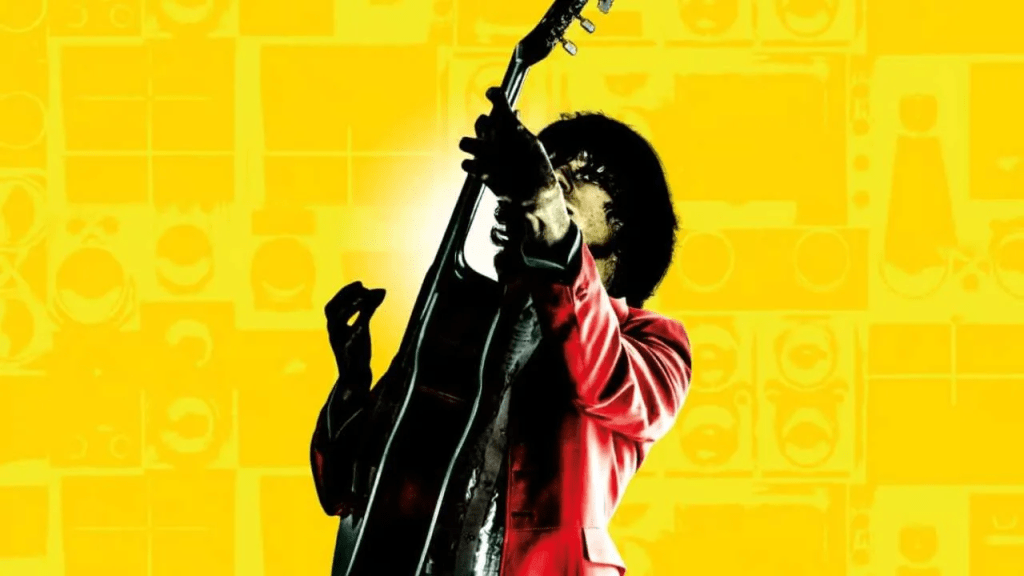
The focus of the musical is most definitely on the Davies brothers, whilst Avory and Quaife often take backseats, although they do have their own storylines playing out in the background. As Ray, Horn’s portrayal is carefully balanced between outlandish, in-your-face performances and more internal battles. The opening segment of the show sees Ray trying to write a best-selling song, knowing he is onto a hit with the original riff from “You Really Got Me”, but struggling to find the rest of the lyrics to make the song work. The riff is a repeated motif in these early scenes, the excitement slowly building as we patiently await the full-blown performances that are to come. The first time we hear the lyrics, they are quiet and understated. Before long, the speakers are blaring and the guitars are squealing. The Kinks’ first Top of the Pops performance kicks things into another gear, as “You Really Got Me” becomes a hit and the band find themselves in demand. The music is loud, offensive and exciting. It truly feels like we are witnessing a brand new era of music being born.
As the band’s popularity increases, so does the scandal surrounding them. Before long, the band are out of control, Dave swinging from chandeliers and showering the audience with champagne. Hoare’s guitarist is exhausting and obnoxious, and the result of many falling outs amongst the band. He is definitely the most controversial of the group, and it is not always easy to side with him – that is, until the end of act two when the layers are slowly peeled away and we learn about his insecurities. It is an excellent performance, but for some in the audience, it may be too little too late to root for this character that seems utterly destructive in the earlier scenes.
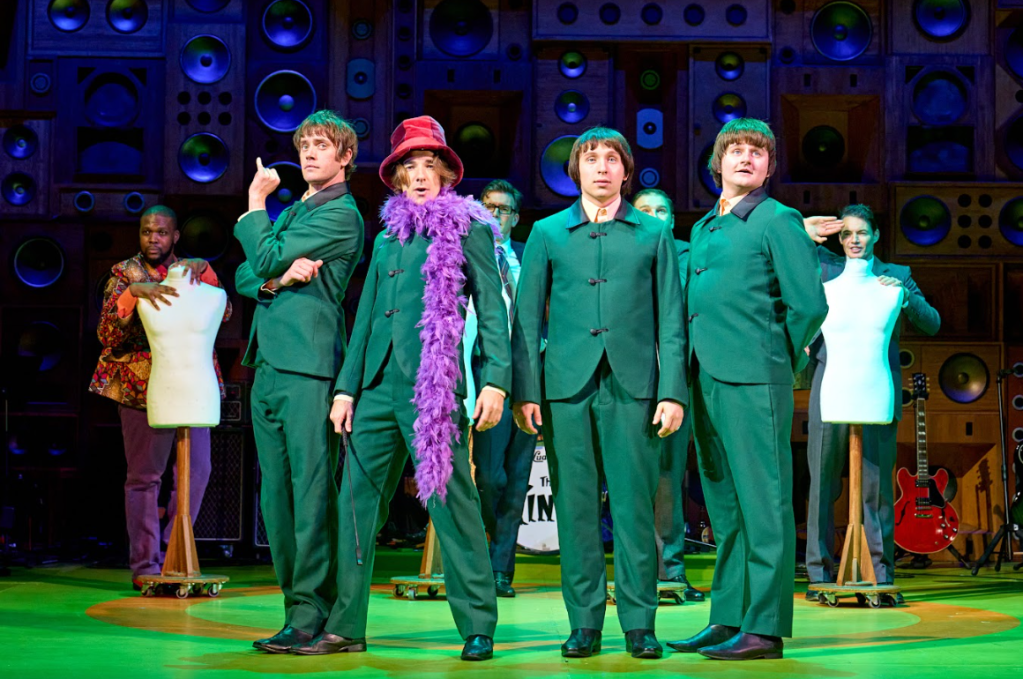
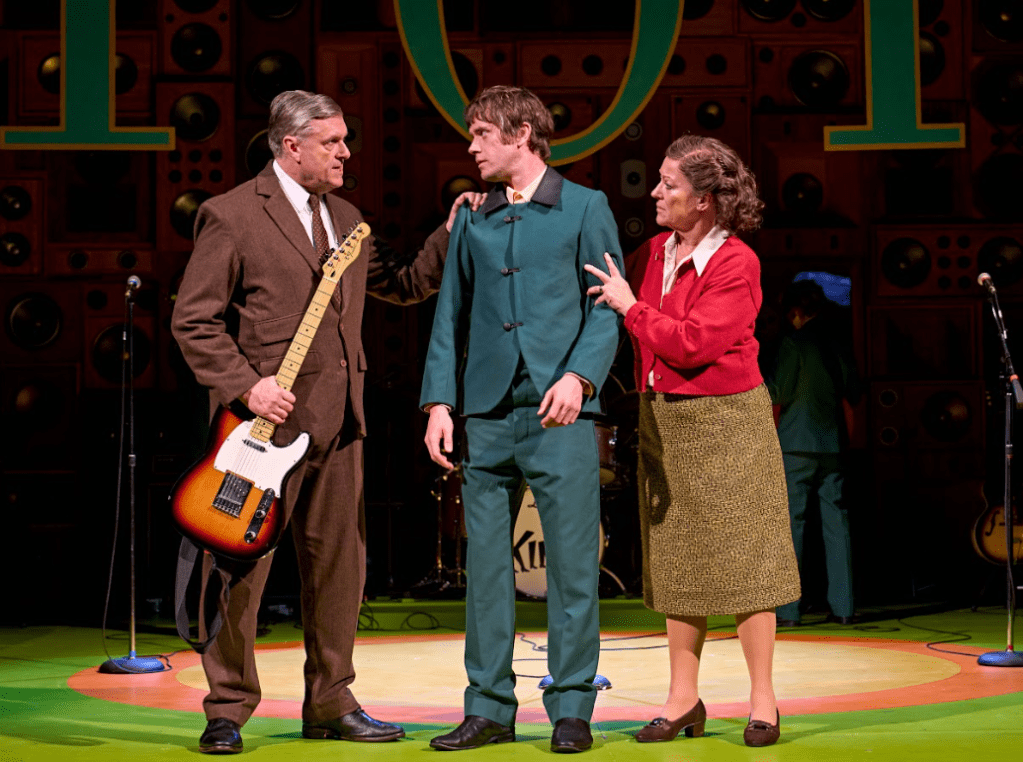
The musical performances are excellent throughout, each cast member taking turns on various instruments, but some of the songs feel a little shoe-horned, especially at the beginning of the show, as “Dedicated Follower of Fashion” accompanies the band’s first meeting with a top-end tailor (James Chisholm), and “A Well Respected Man” sees the boys gently poking fun at managers Robert Wace (Joseph Richardson) and Grenville Collins (Tam Williams). The inclusion is more successful in “Dead End Street”, one of the first major musical numbers of the show, which sees Ray and Dave’s dad (Phil Corbitt) offering an insight into family life in Muswell Hill, and how it contrasts to the upper class producers that are keen to take his boys to the top.
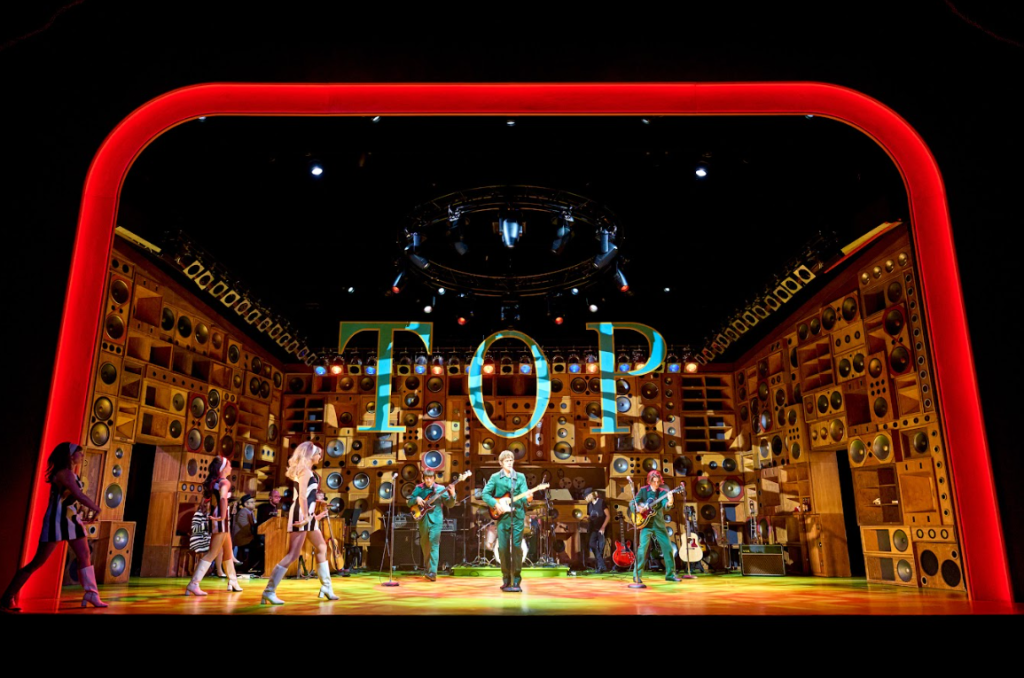
It is this class divide that often drives much of the plot, Ray keen to stick to his roots whilst facing bombardment from the press, who in particular begin asking difficult questions about his wife (Lisa Wright as Rasa), whose Lithuanian parentage raises concerns that she has a communist background. This leads to a disastrous US tour, the stage draped in star spangled banners in such a way that makes the boys from North London look increasingly out of place. Back in the UK, Miriam Buether’s set design is filled with 60s tech, the walls adorned with all types of vintage wooden speakers, and the back glass wall offering a peek into a recording studio, which is used in a couple of the numbers to feature backing dancers and vocalists.
The second act sees a few quieter moments, with some softer numbers such as “Sitting in my hotel” and “I go to sleep” interspersed amidst the rock’n’roll ballads, as Ray begins to slip into a depression, all the while facing increasing demands for more music. As producers Robert and Grenville decide to part ways from the band, we are treated to an excellent acapella version of “Days”, a nice change of pace from the loud tracks of the opening act, whilst a separate scene sees a wonderful drum solo courtesy of Stokes as Avory. The storyline revolving around Ray’s mental health battles never reaches a proper conclusion, with the play ending in 1970 as The Kinks release their hit record “Lola”. It can feel a little unsatisfying but it is true to life – Ray’s depression continued well into the seventies, with a drug overdose landing him in hospital in ’73.
There is a lot to enjoy here both for fans of The Kinks, and for those new to their music. A segment in Act Two sees the band slowly put together one of their most famous tracks, “Waterloo Sunset”, beginning with Pete’s bassline, and then slowly bringing in drums, guitar, vocals in a segment that is reminiscent of last year’s hit play “Stereophonic”. The icing on the cake, however, is the performance of the titular “Sunny Afternoon”, released to coincide with England’s 1966 World Cup win, that sees red, white and blue confetti rain down from the ceiling as cast members dance throughout the audience. It feels like a rousing end to the show – it is peculiar, then, that there is still another 30 minutes to go, the musical lasting for 2 hours 45 minutes but failing to live up to the air-punching ecstasy of “Sunny Afternoon” – it all seems to peak a little bit too soon.
There are so many aspects to like here, the story of The Kinks explored in such intricate ways that it is the complicated characters that will shine more than the music. Beneath all the glitz and glam of the rockstar lifestyle are four men struggling to keep up with their sudden fame, and it is a pattern we have seen repeated multiple times over the past 60 years with different bands and popstars suddenly thrust into the spotlight. Ultimately, this is a triumphant musical, one that will leave you with a smile on your face and humming those 60s classics all the way home. Lively, vibrant and incredibly loud. A slice of sunshine to warm up these cold February nights.
Tom Morley, February 2026
Review Round-up:
Spy in the Stalls: Sunny Afternoon – Three and a half stars from SitS, who say that the musical “occasionally struggles to reconcile musical theatre convention with the sharper edge of The Kinks’ songwriting”
Front Row Frankie: Sunny Afternoon – Four stars from Front Row Frankie, who say the show “towers above its genre”, and that is “doesn’t just shine – it dazzles”
Elemental Theatre: Sunny Afternoon – And a measly two stars from ETC, who complain that the musical feels “sanitised and frustratingly safe”, calling it “entertaining but dramatically lightweight”



 Broken Legs Blog