

“Smooth, stylish and sophisticated”
Light a cigar, pour a whisky and don a fedora – Nottingham Theatre Royal’s latest touring production takes us back to 1920s LA for a slice of classic noir fiction. Based on the novel by James Mallahan Cain, “Double Indemnity” tells a story filled with murder, intrigue and exposition, with the play heavily leaning on the usual stereotypical tropes, and on the whole being largely successful in its endeavour. We are immediately thrown into the black-and-white world of early Hollywood, with a lengthy monologue from our main protagonist Walter Huff (Ciaran Owens) drawing us in and setting the scene, all underscored by a smooth jazz soundtrack which adds a touch of glamour to the piece. From here, we are catapulted into the world of insurance sales – and who knew it could be so dangerous?
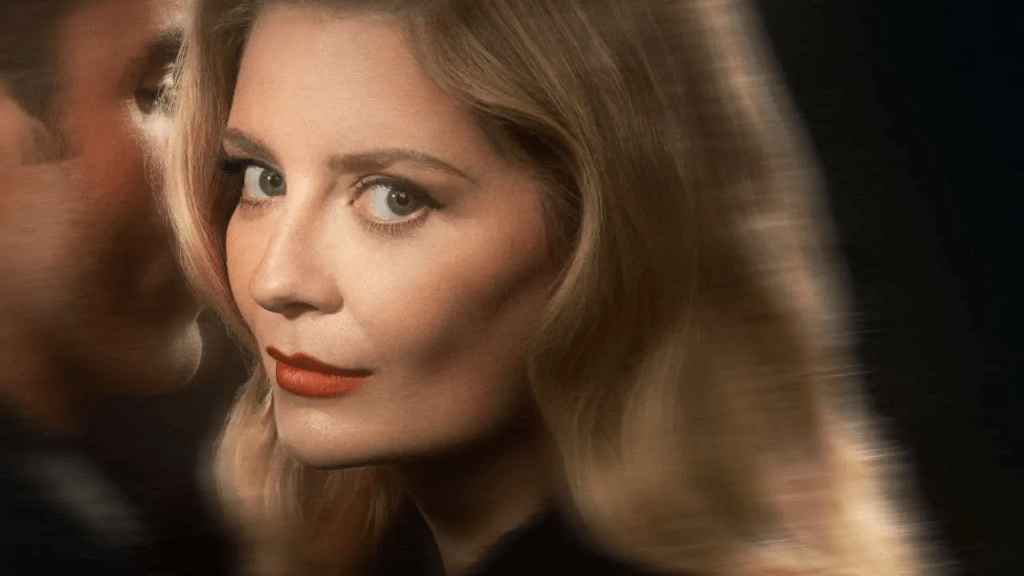
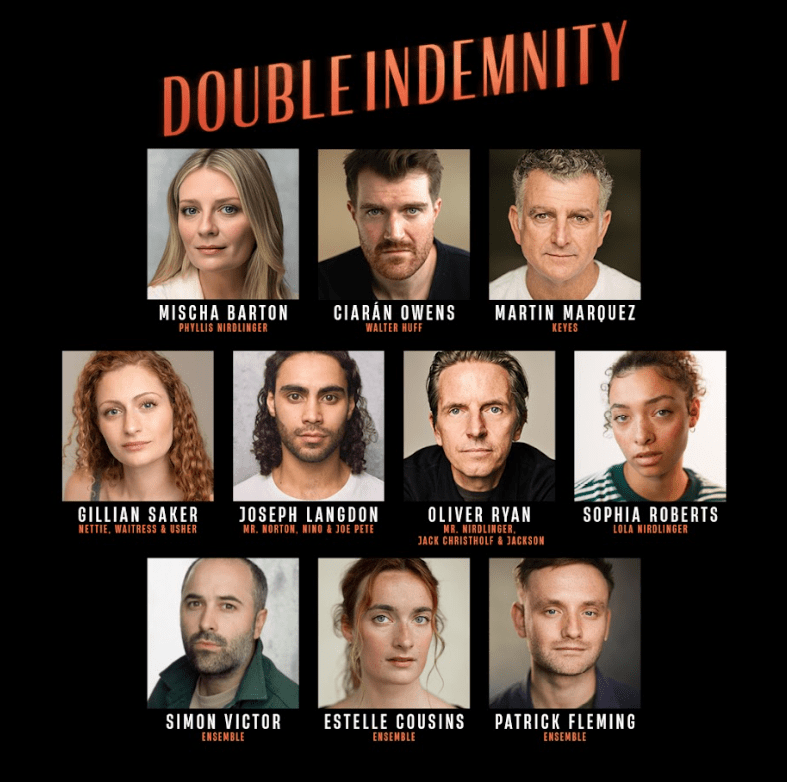
Huff comes into contact with Phyllis Nirdlinger (Mischa Barton), an actress who is keen to take out life insurance on her husband’s behalf, and thanks to her flirtatious nature, Huff is gradually lured into a plot to dispose of Phyllis’s husband, and reap the rewards – the money and the wife. Barton gives an understated performance here, quietly manipulating Huff in such a way that makes it seem as though he is in charge, when in fact she is the one driving things from the backseat. The entire play is seen from Huff’s point of view (Owens never gets a break from the stage throughout), which gives Barton the difficult job of conveying motives that are hidden not only from other characters but from the audience as well. Thankfully, she does this admirably, in such a way that when certain secrets are revealed in the second act, it is believable yet still surprising. The scenes that Owens and Barton share together feel a little too on-the-nose, the language too poetic to be believable, yet it plays into the idea of a classic Hollywood film, even if some of the romantic metaphors are a little cringe-worthy.
Their target – Phyllis’s husband Mr Nirdlinger (Oliver Ryan), who has a short-temper and treats his wife with utter disdain. He is not particularly likeable, which makes it easier for us to root for our murderous protagonists. The plan – get Nirdlinger to sign a double indemnity life insurance clause that will make for a huge pay out should he come to harm in a very specific accident. This leads to one of the most tense scenes of the production, as Huff attempts to get Nirdlinger to sign the clause without him realising – Owens and Ryan enjoy a quick back-and-forth, a verbal tennis match that is enough to have you on the edge of your seat. To add to the tension is Nirdlinger’s daughter Lola (Sophia Roberts), a necessary addition to ensure there is a witness to the signature, but her presence does nothing to steady Huff’s nerves.
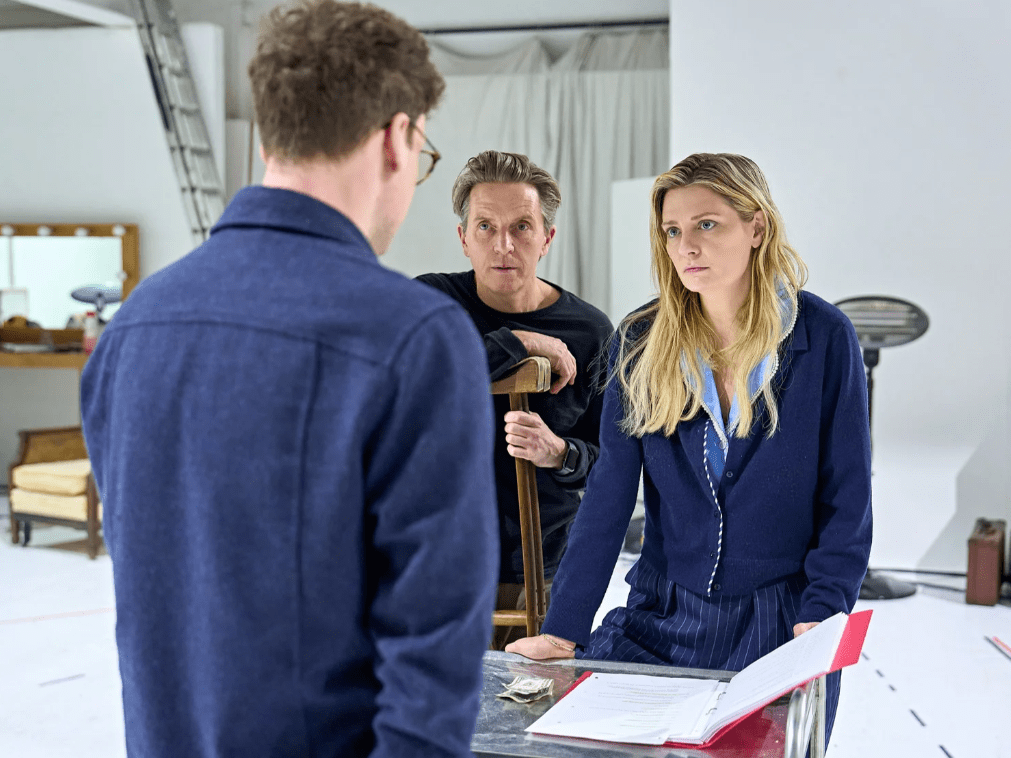
The set (Ti Green) is a concrete box, full of sharp angles and harsh lines, a seedy underworld of Hollywood that many might not associate with the golden age, but that is entirely suitable for this dark story. The famous sign stands above the set, albeit seen from behind, and partially obscured – this is definitely not the Hollywood any of us usually imagine. Joshua Gadsby’s lighting design is delicious, casting shadows across the stage in various different ways that make many of the static scenes come to life. Despite being of smaller stature that Owens, Ryan is able to tower above him thanks to some clever lighting placements, adding to the claustrophobia of certain scenes. Later, sweeping lights imitate the movement of traffic during a tense car journey – there is no need for any particularly impressive set pieces when the lighting is this good, although the lack of some aspects of scenery make for some interesting decisions at points (one moment that sticks in the mind sees Owens forced to place his whisky glass on the floor due to the lack of a table).
The second act builds on the drama of the first, with the story becoming more fast-paced, and even leaning into comedy at points as Owens nails the “rabbit-in-the-headlights” glances to the audience. Huff’s colleague Keyes (Martin Marquez) begins to get a little too involved in the Nirdlinger case, Marquez bringing an extra level of grit to the performance with a husky, gruff delivery that ensures the audience hangs on his every word. Joseph Langoon puts in a solid turn as boss Mr Norton, but it is as Lola’s silent boyfriend Nino that he truly shines, his hard exterior slowly peeled away to reveal something a little more tender underneath.
The dialogue can be difficult to follow at times, filled with technical jargon and rattled through at such pace that it can be hard to keep up, at least to begin with. You can be forgiven for not understanding every aspect of Walter and Phyllis’s plan, but rest assured that everything will become clear as they begin to put their plan into action, making for some exciting scenes towards the end of act one. The final scenes are slightly baffling, drawing from the novel rather than the 1944 film (where the original ending was changed), and it all culminates in a sudden blackout that might leave you in an air of confusion with a slightly sour taste in your mouth. You may have to do some extra puzzling on the way home to work out exactly what has just unfolded. Despite headlining on most of the promotion, Barton is criminally underused in the second act, and it is a shame that we don’t get opportunity to understand more about her motivations.
Underlining it all is Dan Balfour’s sound design, which pretty much plays throughout, jazz tracks with jangling keys and light cymbals that help to keep the pace up even when the script gets bogged down in the language. Halfway through the first act we are treated to a stunning montage which gives us a glimpse of each of the characters as Huff sets his plan in motion. The soundtrack soars, and it adds an extra energy to the piece. A few more montages like this would not have gone amiss, to help break up the more static scenes. There are still some odd soundtrack choices though – particularly the inclusion of Johnny Cash’s “God’s Gonna Cut You Down” in the second act that feels out of place.

For a show that is still at the start of its tour, there are a few teething problems here and there – opening night in Nottingham saw the start of the show delayed by 15 minutes, actors occasionally stumble over lines, and part of the set falling open, distracting from the action. Supposedly these kinks will be ironed out as the tour continues. With a bit more polish, this could be an excellent piece. Smooth, stylish and sophisticated, this is a night of theatre that is sure to take you on a wild ride, but perhaps leave you with a few too many questions when the final curtain falls.
Tom Morley, February 2026
Review Round-up:
Elemental Theatre: Double Indemnity – 3* from ETC, who say “the pacing […] is brisk and undeniably engaging, [yet] occasionally leaves audiences scrambling to keep track of the numerous revelations and plot threads“
Kev Castle Theatre Reviews: Double Indemnity – Kev Castle’s write up questions the lack-lustre ending, saying “I was expecting a rather different, and possibly more dramatic ending. I say more dramatic because nothing actually happened; the lights faded to blackout and someone at the back of the theatre started the applause”


 Broken Legs Blog