

Disney Theatrical Group’s “Hercules”, based on the 1997 Disney film, re-tells the tale of the Greek legend, with the usual expected Disney twists, though featuring a few surprising departures from the original. With an extended soundtrack from Alan Menken and David Zippel, and a brand new book courtesy of Robert Horn and Kwame Kwei-Armah, this theatrical spectacle is a fun family treat that feels a little too by-the-book in places. Some plot points feel rushed, and characters fall into classic stereotypes in a way that feels lazy and predictable. The most damning criticism is that this show lacks heart, filled with too much exposition that just makes it hard to care about any of the characters involved.
The story begins with Zeus (Joel Benjamin) and Hera (Ellie Mitchell) giving birth to a new god, which they name “Hercules”. Zeus’ brother Hades (Stephen Carlile) is worried by a prophecy that says that Hercules is destined to become the most powerful God, so he poisons him, hoping to turn him into a human. The poison doesn’t quite work, however, and Hercules ends up half-human, and banished to Earth. The opening section is hurried, perhaps necessarily (after all, we don’t want to spend too long without being introduced to our main hero), but with so much set-up, it is a particularly lack-lustre start to the show. There is too much narration here (courtesy of the Fates – more on them later), and it is a case of being told rather than shown the situation. We are told that Zeus is all-powerful, but Benjamin’s performance is too bouncy and pantomime-esque to give this impression, and we are told that Hades is evil and malicious, but there are no clear motivations for his actions. The show uses too many shortcuts, and as a result, the characters are woefully under-developed.
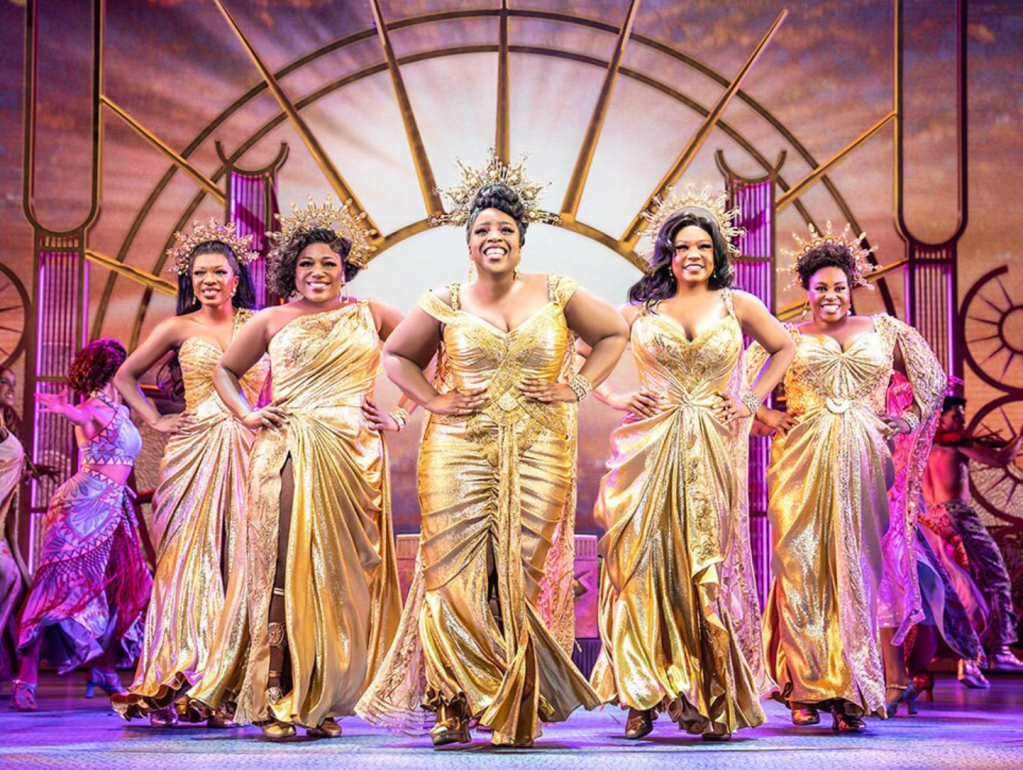
The Fates act as our narrators for the play, returning to deliver their “Gospel Truths”, a recurring theme throughout and sung in a gospel style. The Fates are all named – Leslie Beehan as Calliope, Candace Furbert as Thalia, Sharlene Hector as Clio, Brianna Ogunbawo as Melpomene and Robyn Rose-Li as Terpsichore – but beyond that, there is little to distinguish them from each other. They are not really given any characterisation beyond “sassy” and do not interact with the story in any way. Still, the vocal acrobatics on display are certainly impressive, and the quick costume changes and numerous dance numbers, supported by a huge chorus, make for a wonderful visual spectacle that is sure to keep children engrossed throughout.
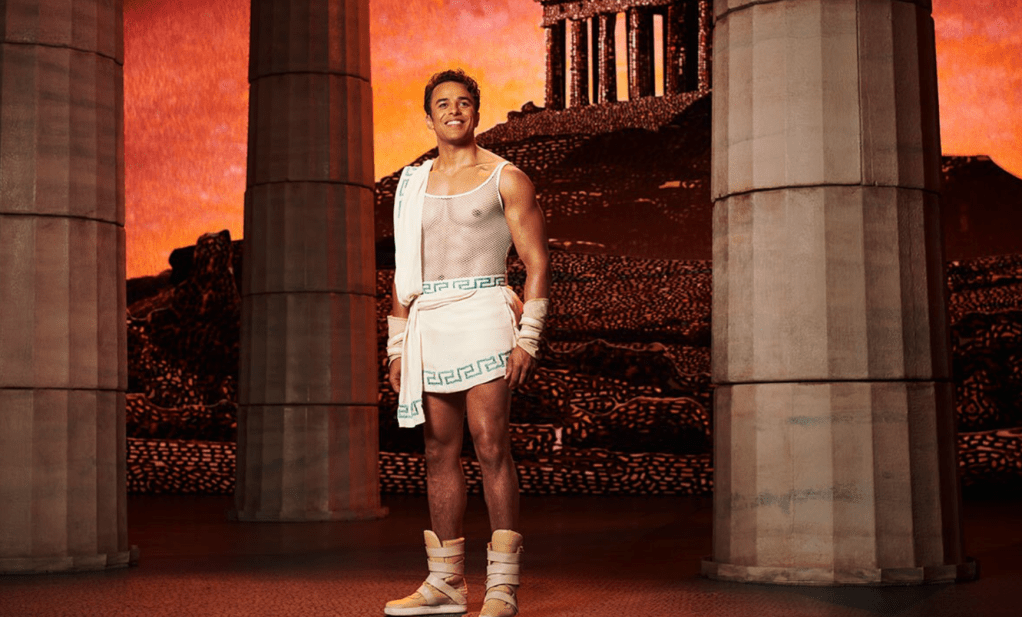
Several years later, we are introduced to a grown up Hercules in the form of Luke Brady, and a fun number Today’s Gonna Be My Day sets the scene, with Herc causing a ruckus in his village thanks to his super-strength, although the props that he throws around are clearly incredibly light-weight, with the design leaning into a cartoonish-style, perhaps trying to evoke the original animation. Hercules quickly discovers his heritage (yes, we are treated to a recap of the opening scene a mere twenty minutes after we have watched it), and starts to train to be a God under the tutelage of Phil (Trevor Dion Nicholas), a character which comes off best in this stage adaptation, with plenty of funny lines and a new song I’m Back, which opens act two and is an excellent addition.
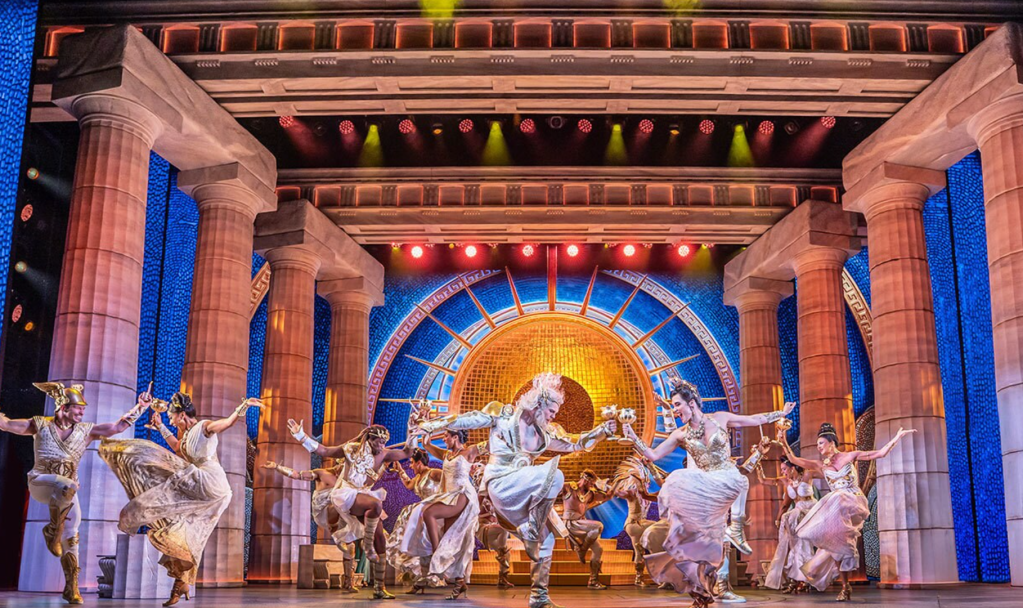
There are several new songs added to this stage adaptation, included a tap-dancing number for Hades (Getting Even), and a new song for Hercules (To Be Human), but it is the original big-hitters Zero to Hero and Go the Distance that will stick in the mind the most, with the latter delivering a rip-roaring conclusion to the first act. The choreography throughout (from director Casey Nicholaw) is lively and energetic, but doesn’t offer anything particularly original, and feels a little unpolished in places. The set design is mostly simple, featuring six large pillars whilst most of the stage is left empty, and the show relies on George Reeve’s video design, projected as a backdrop, to do most of the heavy lifting when it comes to changing the mood of the scene. The video design is one of the highlights of the piece, however, often in the style of a glittering mosaic, offering a feast for the eyes and a useful shorthand for the scene changes.
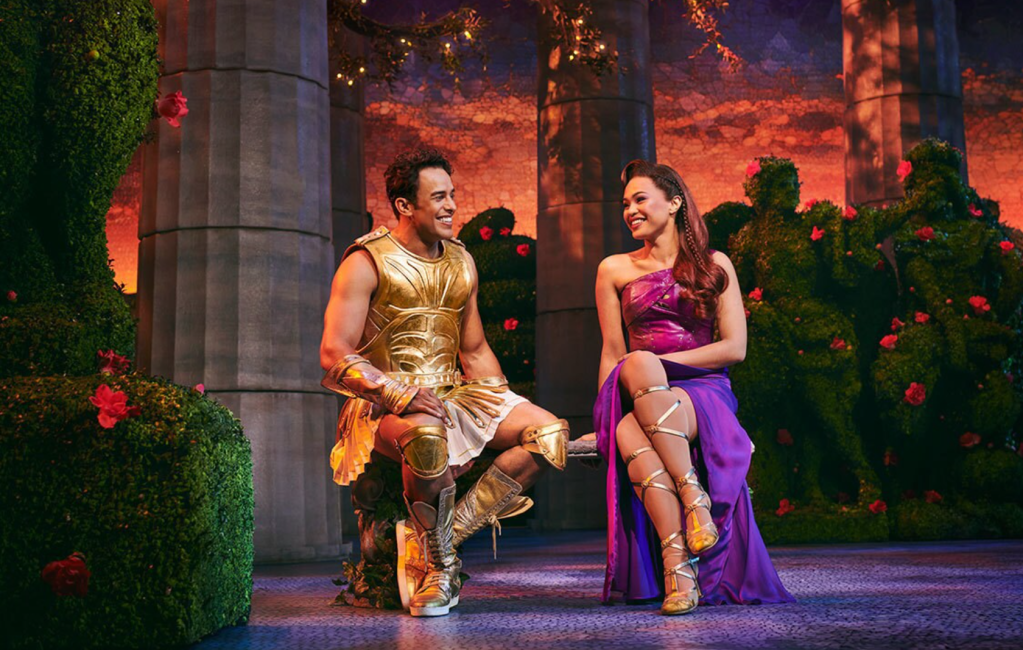
Whilst completing his training (the twelve labours of Hercules are completely glossed over in a montage that features a blink-and-you-miss-it appearance from a minotaur), Hercules meets and falls in love with Meg (Mae Ann Jorolan), not realising that she is working for Hades (and is presumably quite a bit older than him, given that we see Meg colluding with Hades when Hercules is still a baby). This makes for an interesting set-up, with Meg torn between her feelings for Herc and her desire for freedom (Hades promises to free her once Hercules is made fully human), a dilemma explored in the song I won’t say I’m in love. Meg has one of the more interesting character arcs in the show, yet there still feels like there’s room to explore more here. Although the show is squarely aimed at families, that doesn’t mean everything has to feel so superficial, and a little deeper exploration of some of the themes at play would not go amiss, and enhance the enjoyment of children and adults alike. There is also the inclusion of Hades’ pathetic henchmen Bob (Craig Gallivan) and Charles (Lee Zarrett), who provide some laughs (there is a running joke about an imaginary girlfriend that is a lot of fun) but ultimately don’t really add to the plot.
What the show lacks in character and plot, one would hope it would make up for in spectacle, but again the production falls short of expectations. The mighty battle with the hydra in the opening act sees Hercules continuously chop off heads of the almighty beast, which then begin to multiply, creating a nightmare scenario that could have made for an incredible end to Hercules’ training. Instead, we are treated to Brady leaping around the stage surrounded by several disembodied heads with some lacklustre choreography. This is then repeated in the second act, with the disembodied heads of the Hydra replaced with disembodied body parts of Hades, as he inexplicably turns into a giant puppet for reasons unknown. It is not exciting, it does not feel in any way dangerous or thrilling – it is, dare I say, simply quite boring.
For fans of the film, and those looking for the nostalgia of classic Disney animation, there will be bits to enjoy here, although even then there are some shocking omissions – don’t expect to see any flying horses here, the closest we get is a topiary in the shape of Pegasus. “Hercules” seems an odd choice for a stage adaptation, being hardly the most-loved or well-remembered film of the Disney franchise. It provides a fun afternoon of entertainment if you’re looking for something shiny to tap your feet along to, but other than that, there is simply not that much to write home about.
Tom Morley, January 2026







 Broken Legs Blog