

“Hamlet: The Rest is Silence” was a huge project that began in 2024, with two performances in Nottingham’s Royal Concert Hall in June 2025. As such, this article is a follow-up to an article I wrote last year. Whilst last year’s article focused on the auditions and the first half of the rehearsal period, this article will take a look at the latter half of rehearsals and the performances themselves.

So, cast your mind back to January 2025, where, on a cold, dark night, we met in the Theatre Royal’s Nelson Suite for our first readthrough of Hamlet: TRIS, a script following the Shakespearean original, but heavily edited and adapted by Becky Morris. Additional scenes were added in – including a new introduction for Rosencrantz (Reiss/Ro) and Guildenstern (Eden/Ross), and additional background for Norwegian invader Fortinbras (Zoe/Louis), borrowing lines from “Julius Caesar” and “Henry V”. Meanwhile, some lines had been taken away from Hamlet (Aoife/Laurence), and instead distributed among the Night’s Watch (more on them later).
Immediately apparent from the first readthrough was that more work needed to be done. A scene between Claudius (Matt/Richard) and Laertes (Sophie/George) felt too long, whilst the opening to the second half of the play felt a little lacklustre. Throughout the five months of rehearsals leading up to the performance, we would continue to make changes to the script, building on work that we had done in the initial stages of the project, where we had explored Shakespeare’s text and characters to properly understand the story being told.
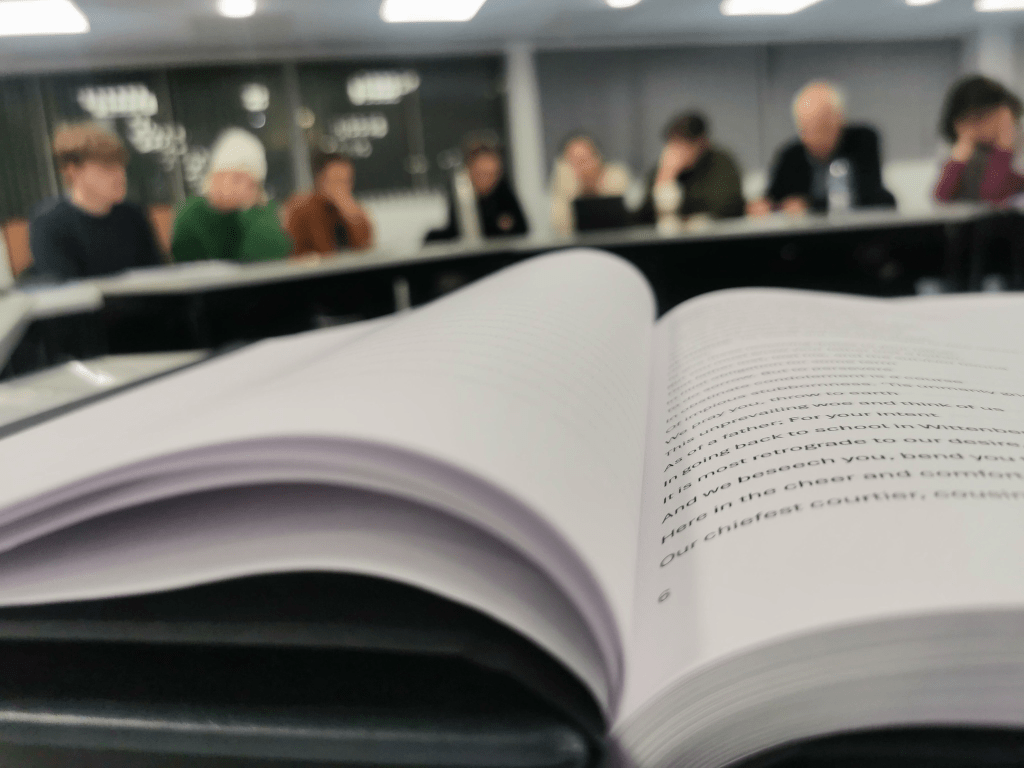
The play was rehearsed out of order, something necessitated by the availability of cast members, to ensure we were using our rehearsal time as best we could. Having a double-cast, with Aoife leading the show on Tuesday 10th June and Laurence on Wednesday 11th, meant that rehearsals had to be split. Initially, the plan was to rehearse with cast A on one night and cast B the next night, but we quickly realised that this was less than ideal – it was actually quicker to invite both casts on both nights, where cast B could watch cast A rehearsing, and then easily pick up the scene for themselves and vice versa. It made things run a little smoother, and prevented too many differences between the shows. Because the lighting and sound cues would be the same for both performances, aspects such as entrances and exits had to be as similar as possible, to make it easier for our technical crew, which were also being led by community volunteers (Ash on sound and Rachel on lighting).
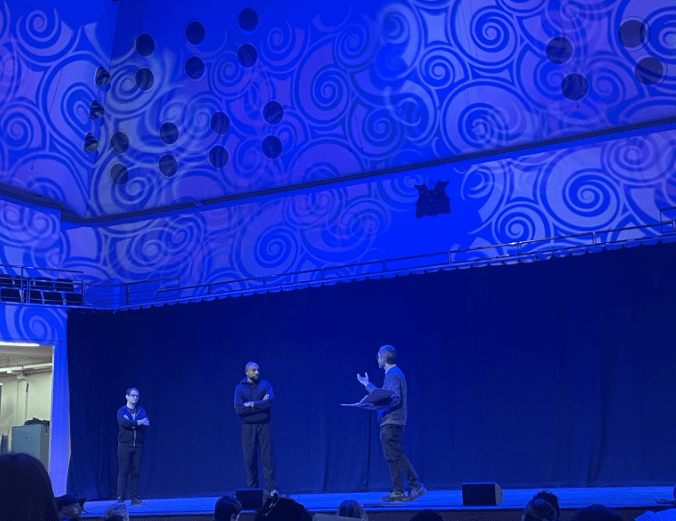
These logistics aside, however, it quickly became apparent that the two performances would be very different, partly due to the way it had been cast. A female Hamlet/Laertes/Horatio made for a very different dynamic compared to the male-heavy Wednesday cast, and also brought new meaning to some of the lines. The way that lines were delivered was very different – Matt’s Claudius was more emotional and quick to react, whilst Richard’s felt more calculating and calm. Relationships between characters were also different – George’s Laertes was very protective over Lily’s Ophelia, compared to Sophie and Jess who felt a little more conspiratorial and on equal footing. Age and experience of the actors also played a part – Zoe’s Fortinbras felt stronger and more commanding, compared to Louis who played the role with a slightly naive edge yet a youthful swagger.
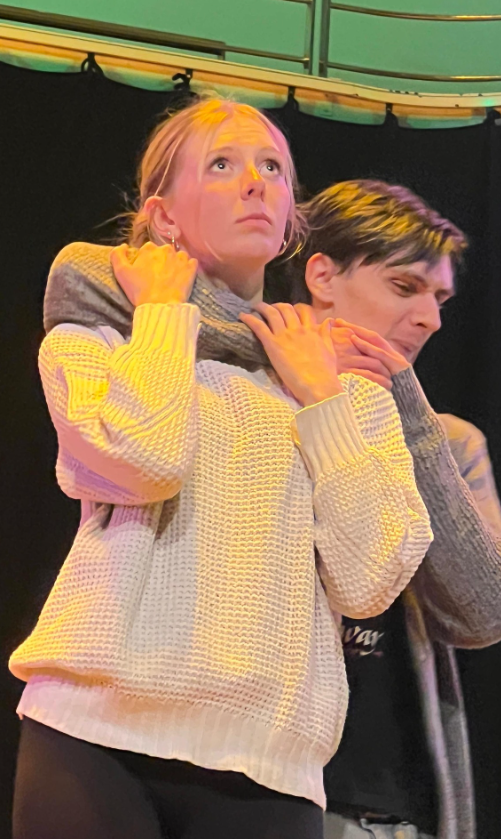
After running through each scene once, a Saturday rehearsal at Easter gave us the opportunity to run through the entire play in one go. The actors were nowhere near ready for this – people missed cues, or forgot where to stand on the stage – but this was a very useful exercise nonetheless, allowing us to really get a sense of the journey that the characters go on and the rise and fall of the narrative. This is especially important for Hamlet and Ophelia, who both experience different types of madness and grief as the story progresses, and it is difficult for the actors to get a sense of that when playing the scenes out of order or in isolation. It also helped us to realise where we felt bits of the story were “missing”, as Becky decided to add in an additional scene that allowed us to see Laertes process the death of her mother/his father.
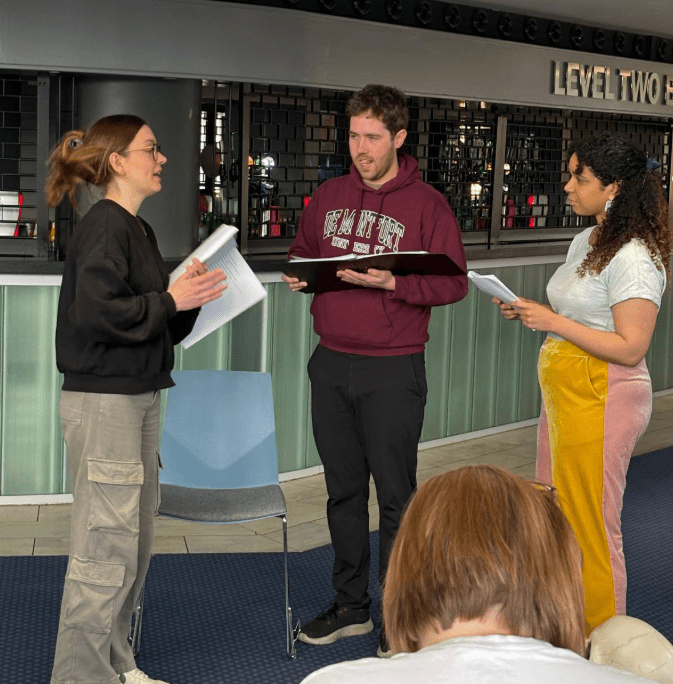
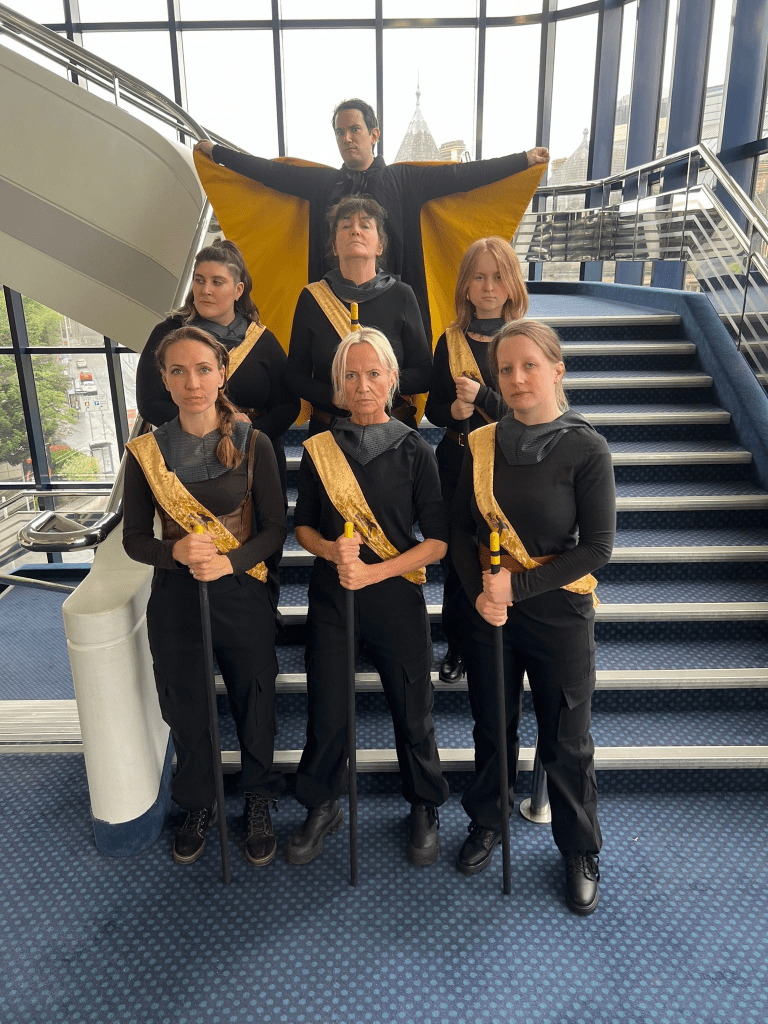
I was thrilled to have the opportunity to work with the Night’s Watch (Emma, Kim, Monica, Toni, Molly and Suzy), who took on the roles of Marcellus, Barnardo and Francisco. In the original play, these characters only appear in the opening scenes as Hamlet is confronted by the ghost of his/her father, but we extended the roles to allow them to assist in different scene transitions. Thankfully, when devising these scene transitions, the actors were full of plenty of ideas, which made my job a lot easier. Not every idea we developed ended up in the finished piece, but it was exciting to explore these smaller moments in more detail, and work out how to make the transitions between scenes much smoother (there are a lot of scenes in Hamlet!).
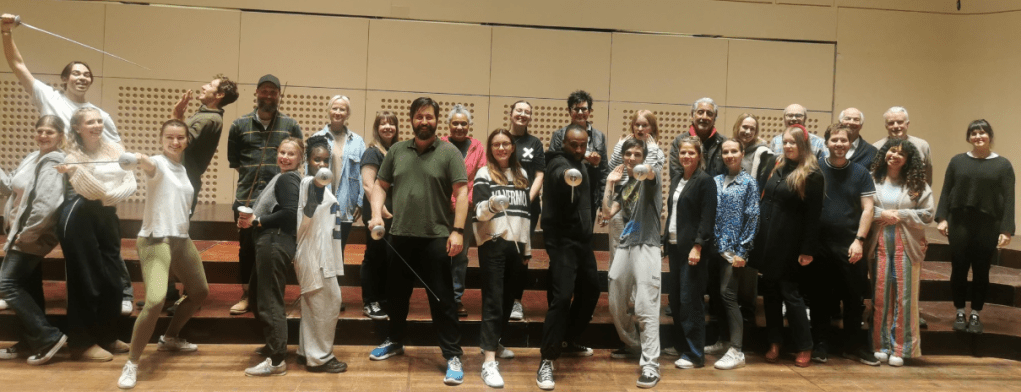
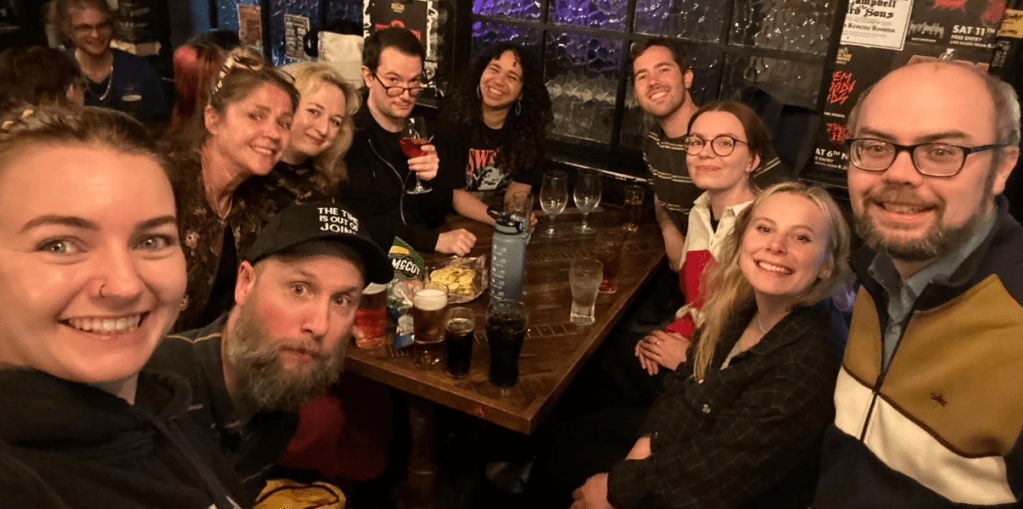
Other moments of note in rehearsals included a sword fighting workshop with RSC Fight Director Tom Jordan, who took some of our leading cast members through some very simple steps to make the final fight scene look realistic. We also had lots of fun with ‘The Mousetrap’ scene, reimagining it with silly music that helped to bring a bit of comedy to proceedings. And throughout it all, the post-rehearsal pub trips were not to be missed!
As rehearsals went on, we started to struggle a bit with cast absences (and I am also guilty of this, missing a few rehearsals to attend various press nights at different theatres). It shows that a project that goes on for as long as this one does make it difficult for people to commit properly. Usually an amateur rehearsal process only lasts a few months, and people are often able to plan holidays and other commitments around those rehearsals. When the rehearsal process lasts for almost a year, this becomes more difficult, and that was exactly what we saw here. This process has taught me that, whilst I am very glad to have been involved in this production, in future I would prefer to be involved in productions with much shorter rehearsal periods. Long-term commitments might work for some people, but not for everyone, and I think lots of us didn’t grasp how full-on this project would be at the beginning of the process.
As we got closer to the performance date, rehearsals moved from the Nelson’s Suite to the concert hall stage, a vast space that caused us some difficulties, both in terms of movement (much longer distances for actors to travel!) and volume. The volume was a particular issue, as actors’ voices were swept away by the acoustics of the auditorium, which was designed for music rather than spoken word. We found that, as soon as an actor turned their head slightly, their voice got lost, meaning we had to re-choreograph some scenes to ensure that those speaking were always facing the front. This made it particularly difficult for some scenes between Hamlet and Ophelia, so we made the decision to give those actors’ microphones, which gave them a little more freedom of movement.
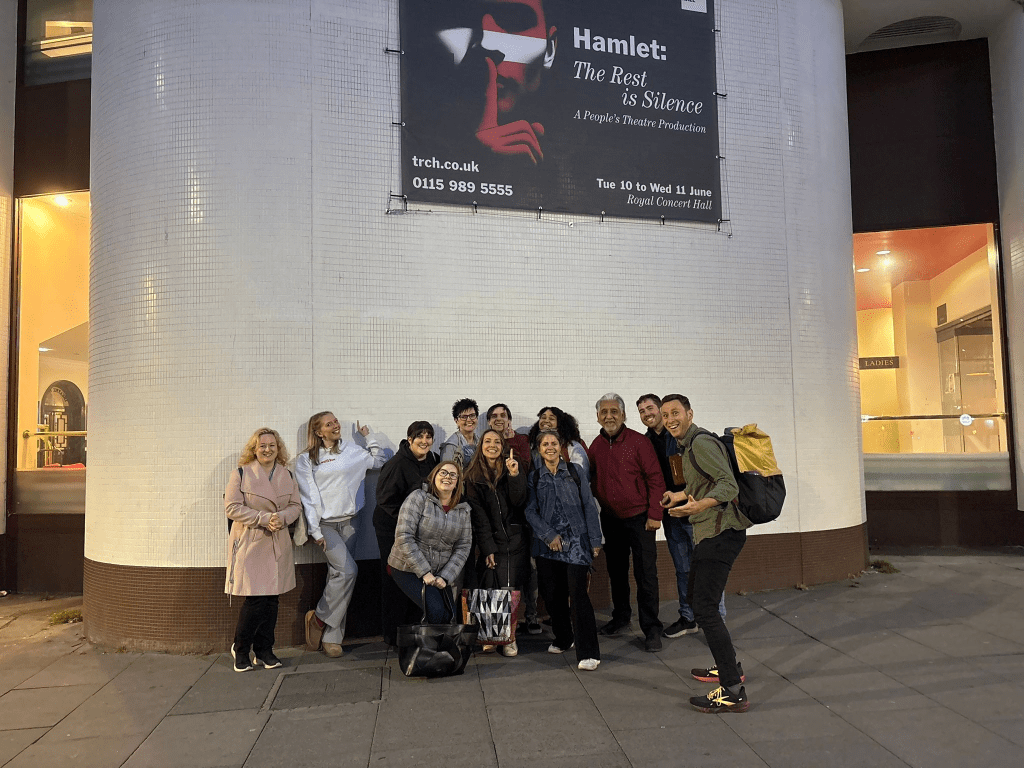
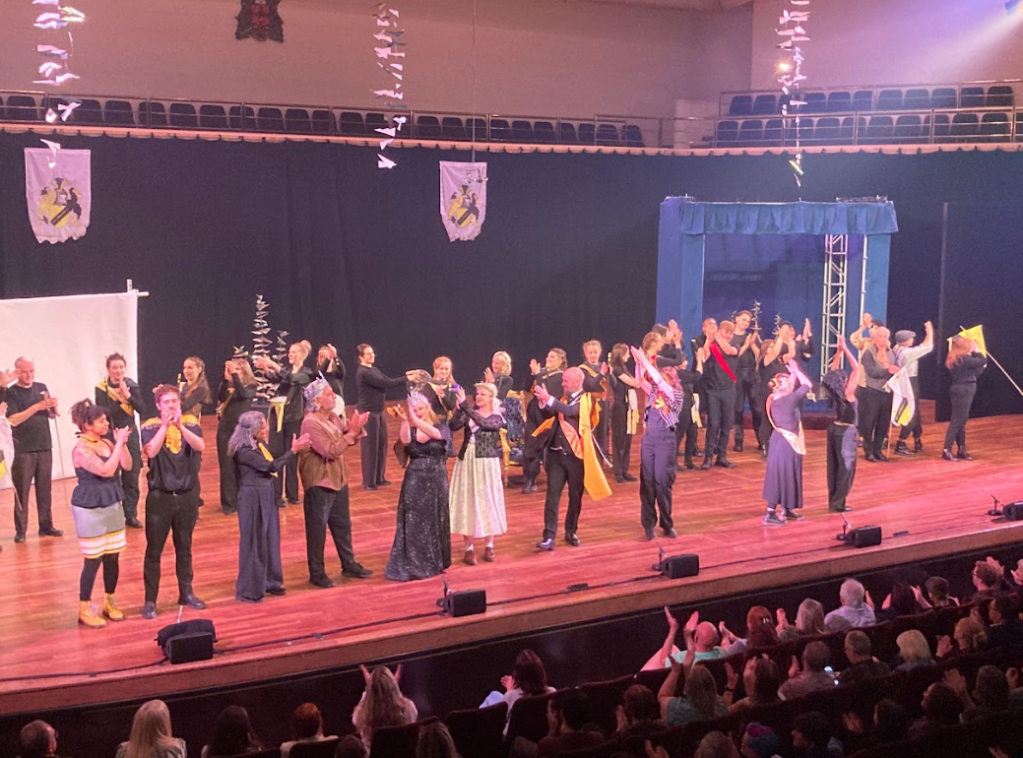
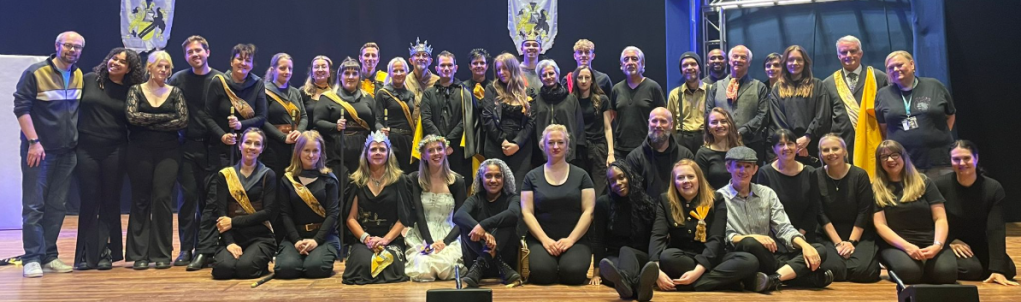
Finally, show week arrived, with two very busy days in the concert hall setting up the stage and doing rehearsals with the technical crew. This was one of my favourite bits of the process, with the cast and crew practically living in the concert hall for a few days. This was the point where everything came together, we all felt like part of a team, and (most importantly) everyone was there! The performance week itself felt a little strange, with one cast celebrating after the Tuesday show, and the second cast still in anticipation for the upcoming performance. It was an odd feeling, but thankfully we had an after-show party on the Wednesday where everyone could join in the celebrations.
The show was well-received, with great reviews from Elemental Theatre, East Midlands There and Kev Castle. Seeing the reactions from audience members made the long process worth it, and I was lucky enough to sit in the audience for both performances and experience the audience reactions first-hand. For me, the most exciting thing about this process has been meeting lots of new people and learning about their own amateur groups, and as a result I have had trips to see Karen in East Bridgford Drama Group, Louis in Derby Youth Musical Theatre, Hatty in NUH Panto, Cibele in Beeston Musical Theatre Group, and Gurmej, Charlotte, Emma and Eden in Lace Market Theatre. I have also gained some new theatre plus-ones, and had the honour to attend George’s infamous “bad movie nights”, which I hope is a tradition that will continue.
And the excitement doesn’t stop there. “Hamlet – The Rest is Silence” resulted in a new group called the Theatre Royal Players, that have continued to produce community theatre for the Theatre Royal’s Third Stage, including a rehearsed reading of George Bernard Shaw’s “Pygmalion”. But perhaps that is for another blog post…
Tom Morley, December 2025










 Broken Legs Blog