
This blog post was written for East Midlands Theatre
Derby Theatre’s latest ‘Made in Derby’ production takes us back to 1920s New York, and the lavish lifestyle of self-made millionaire Jay Gatsby in this adaptation of F. Scott Fitzgerald’s novel. Directed by Sarah Brigham and adapted by Elizabeth Newman, “The Great Gatsby” follows the plot of the novel closely, partly narrated by David Rankine’s Nick Carraway who presents a calm, grounded protagonist that is likeable if a little gullible. Carraway moves in next door to Gatsby’s mansion, and immediately becomes obsessed with him, sucked into Gatsby’s world of fancy parties and underhand deals. This slow-burning plot kicks up a gear in the second half, as Gatsby’s carefully created world begins to collapse around him, culminating in a superbly delivered monologue by Rankine in which he realises that Gatsby’s dream, to reclaim a perfect past, is ultimately unattainable. It is a suitably downbeat ending to a play that gradually reveals the cracks underneath Gatsby’s glittery façade.

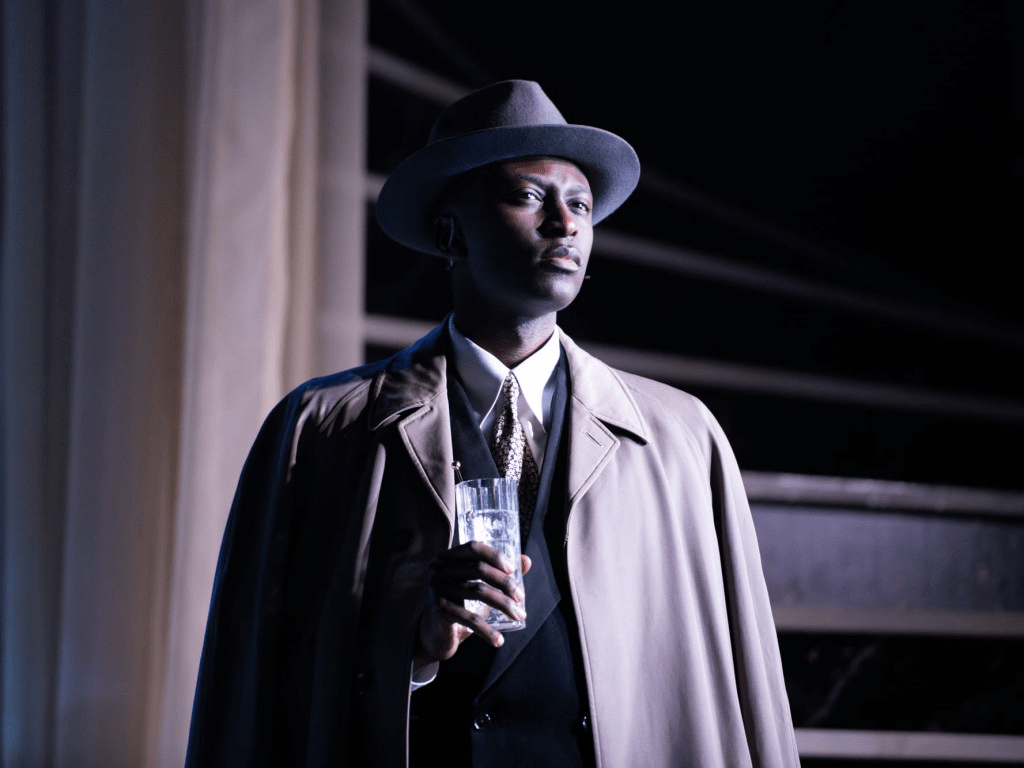
The play spends the first twenty minutes or so fleshing out Carraway’s world, introducing us to his cousin Daisy Buchanan (Fiona Wood) and her husband Tom (Tyler Collins), with only brief mentions and teases of the infamous Gatsby that gets us excited to finally meet our romantic, yet tragic, hero. When Oraine Johnson finally swaggers onto the stage, he struggles to live up to these high expectations. Despite some fancy footwork, his Gatsby is played rather reserved, lacking the charisma required of such a suave, enigmatic individual. He rushes through some of his lines, and presents a character who is a bit too laid back that we struggle to buy into the fact that he has fought all his life to build his way up from nothing.
Gatsby’s relationships with other characters also leave much to be desired. The burning passion between Gatsby and Daisy is supposedly one of the driving forces behind Gatsby’s desire to be rich, and yet there is a distinct lack of chemistry between them, meaning we struggle to root for the happy ending that we are destined to be denied. Gatsby’s friendship with Carraway never seems to progress past the awkward-first-meeting stage, with the two characters a little too standoffish and wary of each other to be believable as close allies. When Rankine’s Carraway breaks down after discovering Gatsby’s ultimate fate, it comes across as false and forced.
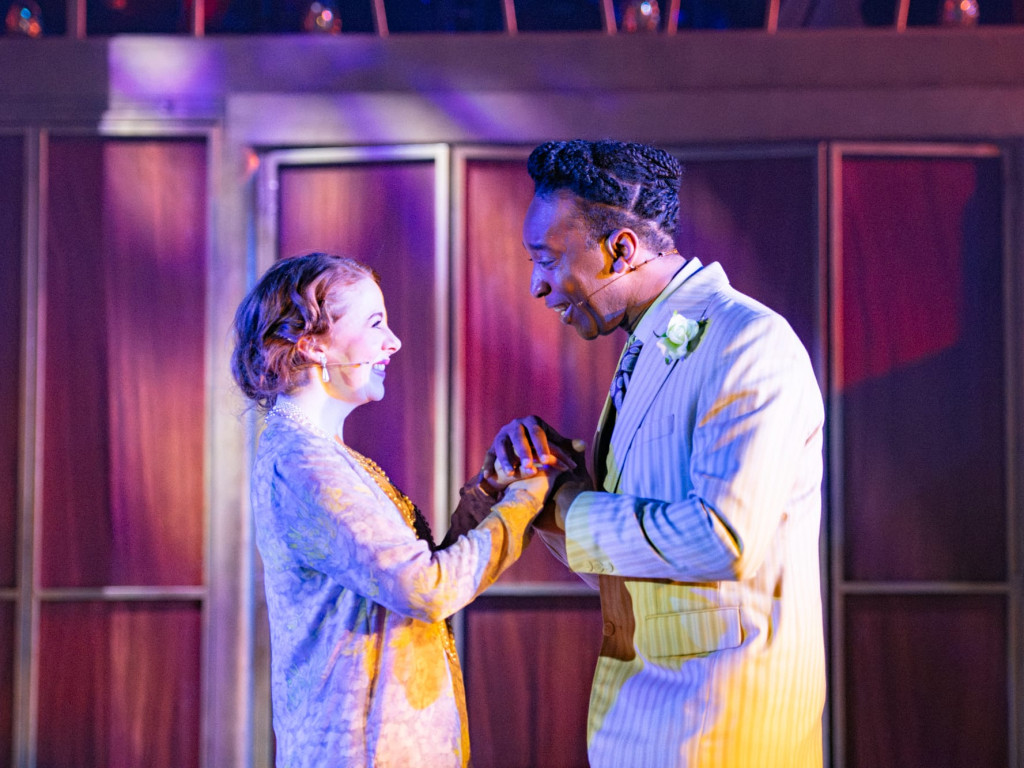
The standout character is Collins’ Tom, the hot-headed husband of Daisy who is having an affair with Celeste Collier’s Myrtle. Tom is quick to anger, and his spats with Gatsby and Carraway in the second half of the play prove to be some of the most engaging scenes. Still, Gatsby and Carraway’s responses feel oddly reserved, squashing some of the tension here. Under Brigham’s direction, the two characters are so determined to remain calm and cool in any situation that they lose any agency in the emotional stakes.
The set is simple yet stylish, calling back to the 1920s with its art deco style that perfectly recalls the spirit of the jazz age. Long net curtains are adjusted to help distinguish one scene from the next, although there is a bit too much faffing around, and the curtains are not always hung symmetrically to create the neat image that the design is striving for. The net curtains are not quite see-through enough to always allow us to see the detail of what is going on behind them, although this doesn’t necessarily detract from one’s enjoyment, occurring only a handful of times throughout the play. Gatsby’s car, which, for those who know the plot, plays an important role, is a little too cartoonish in its realisation, and ruins the audience’s immersion when it first appears, although a scene in the second act which sees the car involved in a tragic accident is portrayed well.
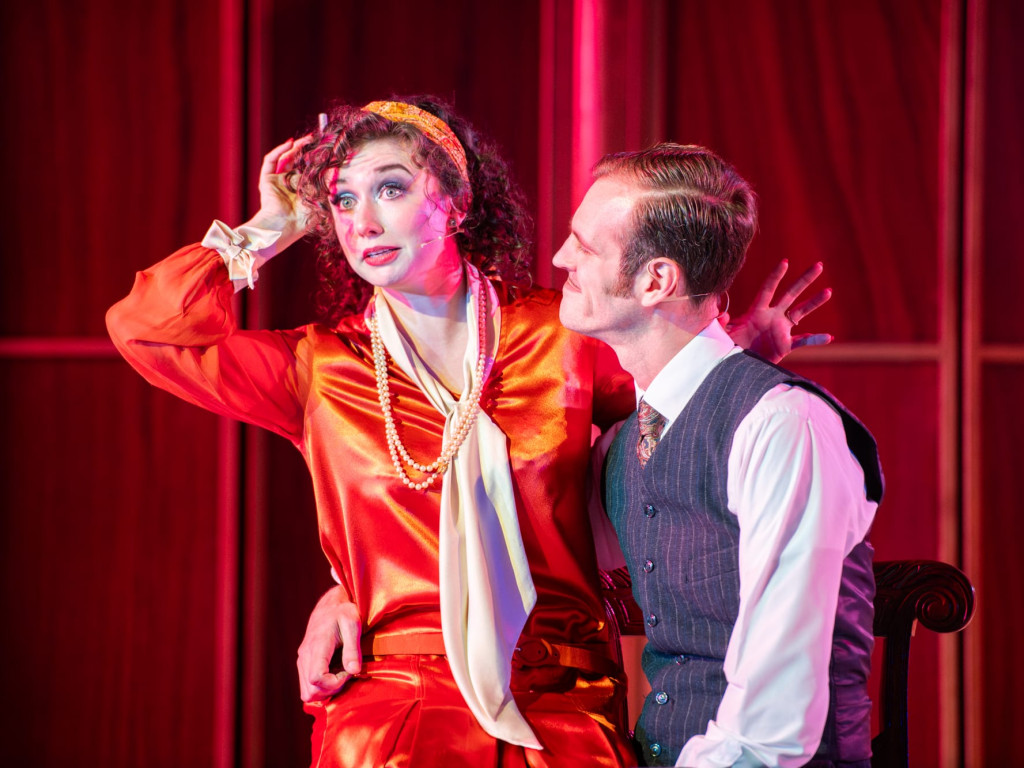
Music is played throughout by the actors, who retreat to a band area placed on a balcony that floats above the stage. The music, directed by Shonagh Murray, perfectly combines with Ivan Stott’s sound design, as we seamlessly switch from live music to pre-recorded whenever actors need to leave their instrument and take part in the scene. The music is from the era, as one would expect, and the show could do with a lot more of it – the transitions are often over too quick, and the actors’ musical ability leaves the audience wanting more. These musical transitions are often accompanied with choreography, courtesy of movement director Sasha Harrington, which occasionally switches to slow-motion, adding an otherworldly aspect to the show that reminds us that the so-called American Dream is little more than that – a dream that one can never hope to fully realise. We are left to question whether certain moments of the play are really happening, or whether this heightened reality is being embellished in Carraway’s retelling.
The actors effortlessly switch between numerous roles, although this can at times be confusing – we are only just introduced to April Nerissa Hudson as Carraway’s romantic interest Jordan Baker before she appears as a different character that bears too many similarities to Baker for the difference to be immediately apparent. Thankfully, Louis Newman, who probably takes on the most roles throughout, presents a much more varied selection of characters, and is a joy to watch whenever he appears onstage.

Overall, for fans of the novel, this is a close and accurate rendition of the original story. Where the play struggles is in its characters, who seem to be merely going through the motions of reliving this tale, which makes the play difficult to invest in. This is a stylistic piece, with musical interludes that are perfectly performed, but sorely lacking in substance. A play that shows much promise, but in the end starts to crumble, just like Gatsby’s dreams.
Tom Morley, October 2025
For more information on how I decide on star ratings, see here: Star ratings – Broken Legs Blog
Review Round-up:
Elemental Theatre – The Great Gatsby, Derby Theatre – 3 stars from ETC, who were much more impressed by the set: “Jen McGinley’s set design deserves applause […] the ever-present thin net curtain becomes a striking motif, a gauze between illusion and reality”
The Guardian – The Great Gatsby review – 3 stars from the Guardian, who reviewed the show earlier this year at the Pitlochry Festival Theatre who point out that, as “the tone grows darker and the frivolity abates, [the play] underplays the tragedy”
West End Best Friend – The Great Gatsby – Also from Pitlochry Festival Theatre, this 4 star review from WEBF describes this as “a beautiful adaptation of a terribly sad yet enduringly hopeful story”


 Broken Legs Blog
Leave a comment