
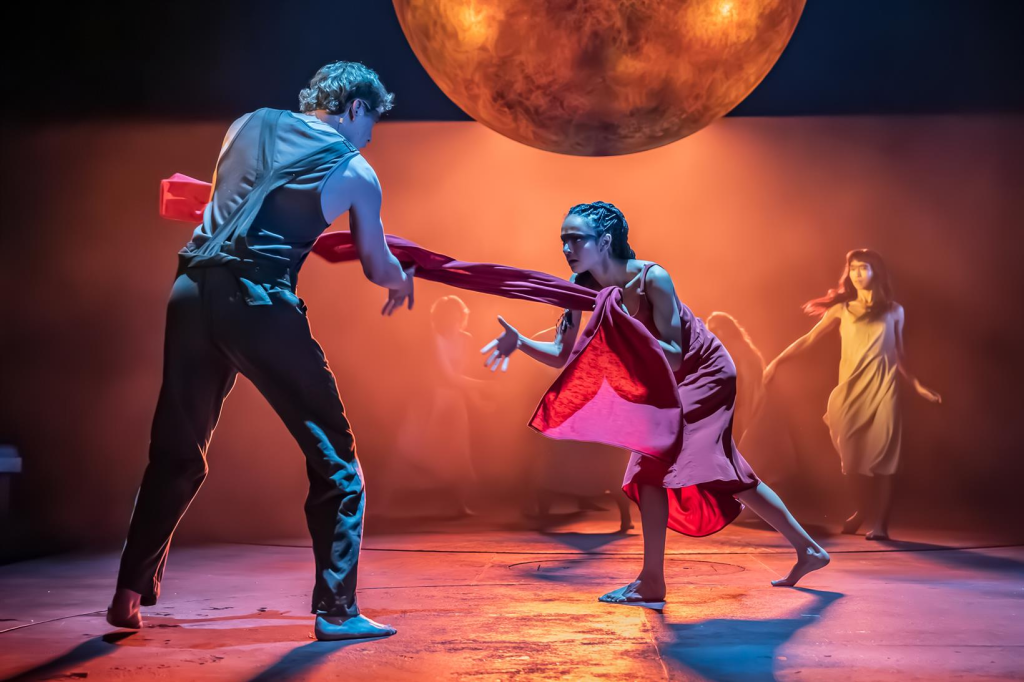
It may seem an odd time of year for “The Winter’s Tale”, but the RSC’s latest production leans in to the wintertime themes with a superb lighting design from Tim Lutkin that makes the Royal Shakespeare Theatre feel oddly cold and reminds one of the dark nights drawing in. That is, for the first half at least. Directed by Yaël Farber, the opening act feels sterile and precise – actors rattle through their lines, and every movement is carefully choreographed. Soutra Gilmour’s set design features a large, hypnotic moon that hangs over the stage, various clouds swirling within reminding one of a snow globe and adding an ethereal aspect to proceedings, foreshadowing the magic to come at the end of the play. The second half moves the action forward by fourteen years, and is set in Bohemia – the grey costumes of Sicilia are replaced with more flamboyant affairs, drums and violins introduce more lively aspects to the Bohemian rituals, and the moon transforms into a glorious golden sun, reminding us all that winter is over, and summer is definitely here.
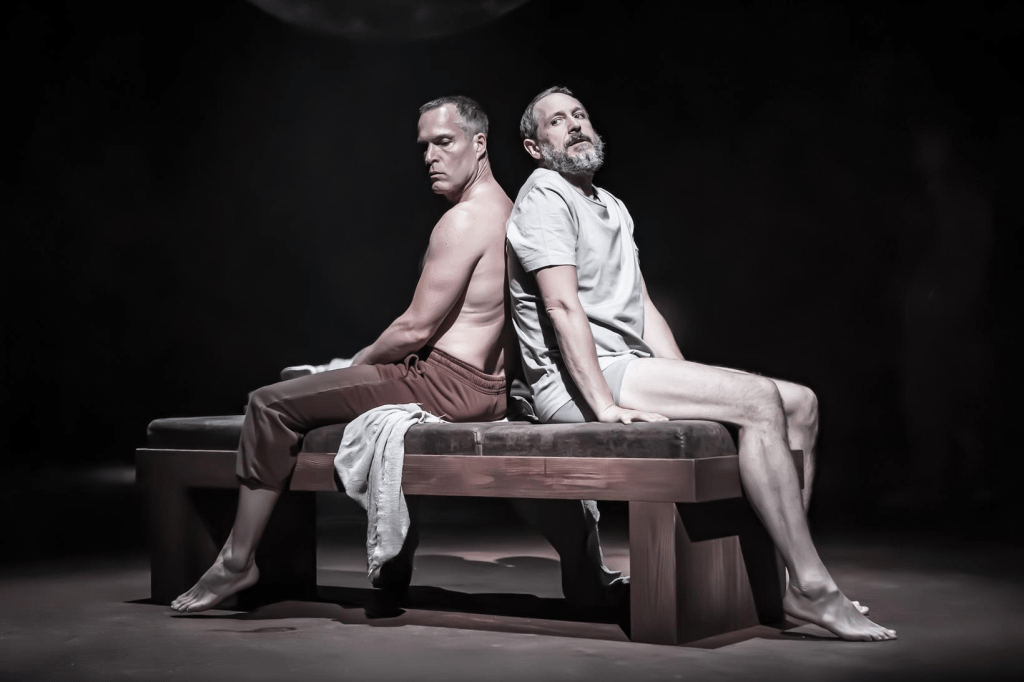
The story begins with Bertie Carvel’s Leontes accusing his wife Hermione (Madeline Appiah) of having an affair with his friend Polixenes (John Light), and this is the driving plot of the first act. Carvel is mesmerising as a King who is wracked with paranoia, his movements are quick and sudden, his actions impulsive. He switches from quiet and seething to pure, terrifying outrage. His outburst at Hermione’s newborn daughter draws gasps from the audience. He commands the audience’s attention, and his absence for the majority of the second half is keenly felt. Appiah presents a strong, focused Hermione, one who is not easily broken by her husband’s unfounded accusations, although there is an underlying fear that is ever present, whilst Light’s Polixenes serves his role but is ultimately overwhelmed in a play brimming with more interesting characters.
Leontes enlists the help of Camillo (an intense Raphel Sowole), in an exchange that is filled with so much tension that one must remind themselves to take a breath. On Hermione’s side is her old friend Paulina (Aïcha Kossoko), who speaks up for her when Leontes has her imprisoned. Kossoko gives a steady, compassionate performance – her presence is grounded and comforting, a light amidst the chaotic court of Sicilia.
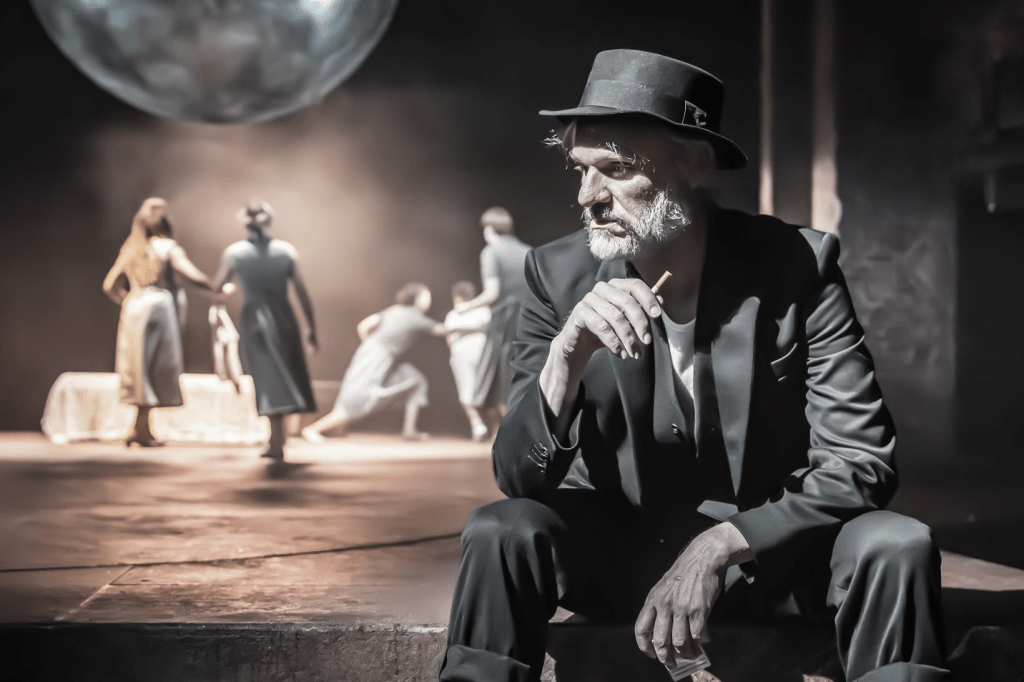
The set is surrounded by a shallow moat that is used by various characters throughout – the young prince Mamillius (Isaac Fox) sails a paper boat in it and Antigonus (Matthew Flynn) takes shelter in it during a storm, but mostly it serves to separate the action from the audience. The presence of Trevor Fox’s Time, who often paddles barefoot through the moat between scenes whilst smoking a cigarette, enhances this idea – it feels that we, along with Time, are watching the action unfold from outside reality. This impression is broken during Hermione’s trial however, as house lights come up and the audience are treated as the jury, brought into the action despite the show previously going out of its way to remove us from it. It feels like an odd choice.
Fox is mysterious, foreboding and incredibly cool – Time is given additional lines throughout the first act that foreshadow what is to come, but the play jumps the shark a little in the second half, as Fox takes on the additional role of Autolycus, a thief who steals money from Ryan Duval’s young shepherd. There is precedent for this – references to Time being a thief, stealing ones youth, help to bridge this gap – but this is ultimately a case of less is more. Gone is the mystery of Fox’s Time, as he becomes a generic clownlike character, adeptly drawing laughs from the audience (with the help of a few cheeky adlibs) but undoing much of the groundwork of the opening act.
Music and sound play a big role in this production, thanks to composer Max Perryment and designer Dan Balfour, who ensure that the soundtrack barely lets up throughout the play’s 2hr 50 runtime. The sound perfectly matches the action, helping to ramp up the tension when necessary, and giving Bohemia an almost tribal feel at times. But the drawback of this is that many of the actors have to wear mics to ensure that they are heard, and the volume is a bit hit-and-miss. At some moments, actors speak without mic for one line, only to be amplified the next. Whether this was a mistake or intentional, it has the effect of making scenes feel disjointed, and pulls the audience out of the action for a brief moment.
The second half explores the life of Leontes’ daughter Perdita (Leah Haile), cast out by the King as a baby and brought up by Amelda Brown’s shepherdess instead. The Bohemian cast, along with Lewis Bowes’ Prince Florizel, drive most of the action for the second half, but they are not as engaging as the Sicilian characters of the opening act, and Haile and Bowes struggle to find any kind of interesting chemistry (a shame, as I’d particularly enjoyed Haile in last year’s Pericles). The story takes a detour as the Bohemian characters share tales of Greek myths of Persephone and Demeter, and parallels are drawn between the goddesses and Perdita/Hermione. The reasons for this are explained well in the accompanying programme, but are not particularly clear from the performance – although it is all beautifully choreographed by Imogen Knight and features excellent vocals from Rhianna Compton, meaning that the scene is pleasing to watch if a little perplexing.
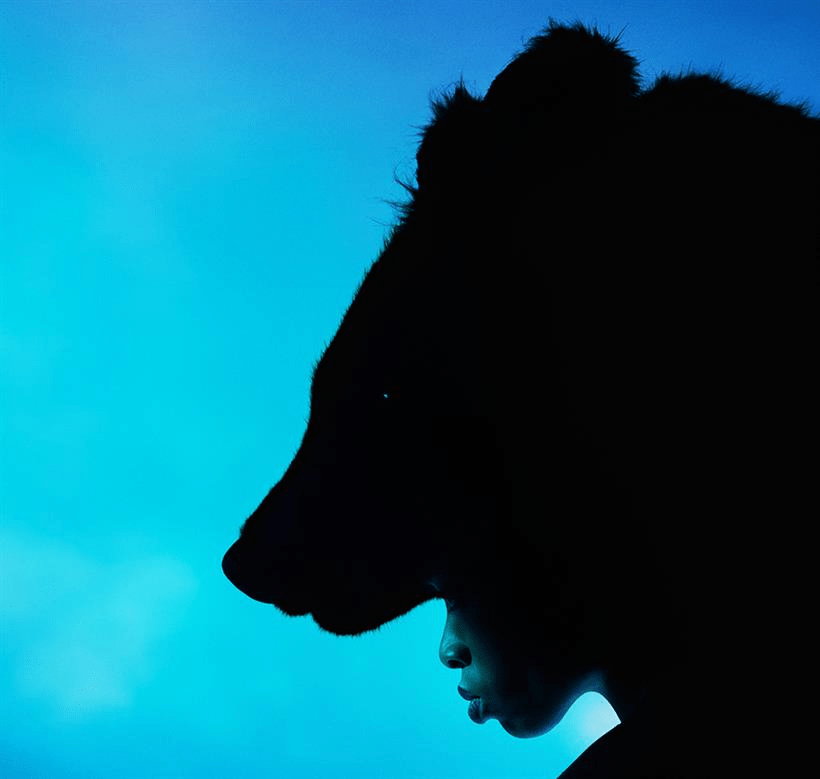
Overall, this is a slick production that makes for a compelling watch. The runtime flies by, and many will enjoy what is on offer here. There are a number of aspects that feel a little misplaced (and the less said about Antigonus’ death by bear, the better) but ultimately this a production that focuses on telling the story instead of relying on gimmicks, which can feel oddly refreshing amidst a number of retellings that seem determined to shoehorn modern day references into Shakespeare. Top-notch acting and an enjoyable evening of theatre.
Tom Morley, August 2025

Review Round-up:
West End Best Friend: Review: THE WINTER’S TALE, RSC – 4 stars from WEBF, who were clearly bigger fans of the second half than the first half, referring to the opening as “drab, half lit, with a droning underscore”, whist the ending is “a joyous and uplifting finale”
The Guardian: The Winter’s Tale review – The Guardian’s 3 star review discusses Antigonus’ pursuit by bear in a little more detail, calling it “beautiful but unclear”
The Arts Desk: The Winter’s Tale, RSC, Stratford – A particularly savage 3 star review which blatantly states that “there isn’t a lot to engage us”. At least they enjoyed Kev Waterman’s “extraordinary drumming”










 Broken Legs Blog
Leave a comment