

The RSC’s revival of W. Somerset Maugham’s 1926 play The Constant Wife updates the text slightly for a modern day audience, whilst still remaining in keeping with the original 20s setting. Laura Wade’s adaptation moves some of the action around, elevates some characters to greater heights, and finds new meanings in the context of 21st Century values. The play is unashamedly feminist, revelling in the conversation around the roles of wives, mothers and the importance of independence. Rose Leslie’s Constance is an interesting protagonist, in that she doesn’t ever try to rebel against her position in the house, but rather exploit it. This isn’t a play where feminism means overthrowing the patriarchy – rather, it means making a mockery of the patriarchy, and ultimately becoming the victors without attempting to challenge societal norms. For a play approaching a century old, it is a refreshing and fascinating take on a subject that often, and quite rightly, is the focus of many modern day productions. Writing in the aftermath of the 1918 Representation of the People Act, which granted women over 30 the opportunity to vote for the first time, it is easy to see how Maugham’s original production was trying to start conversation. Today, that conversation continues, with things like gender pay gaps often making the headlines. It is odd to refer to such an old play as timely, but that is exactly how this production feels – a serious, vital piece of drama wrapped up in the guise of a frivolous farce.
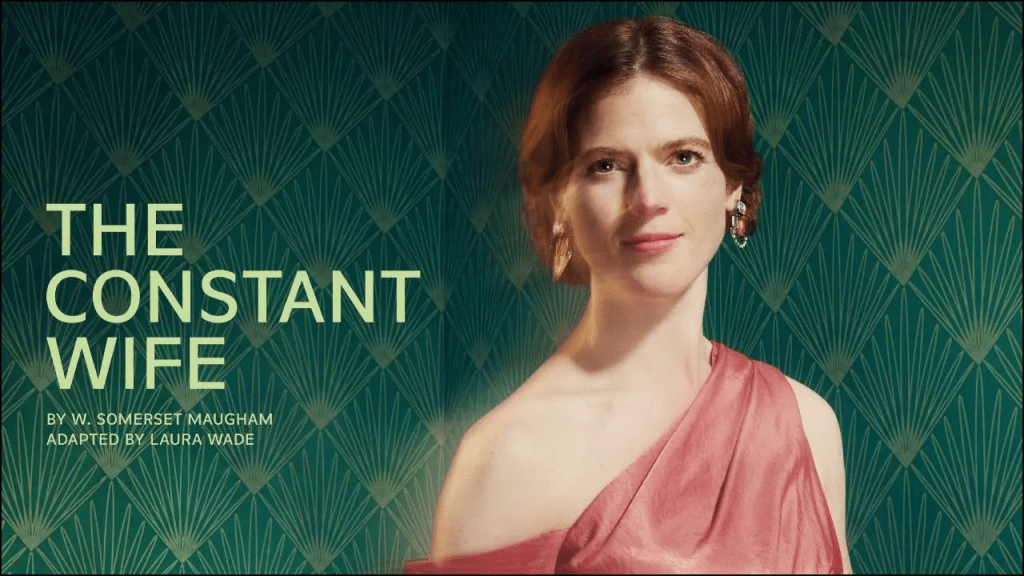
The story focuses on Leslie’s Constance, who discovers that her husband John (Luke Norris) is having an affair with her best friend Marie-Louise (Emma McDonald), yet chooses not to say anything for fear of being unable to support herself financially should John decide to divorce her. Instead, over the course of a year, she sets about making herself financially independent, working with her sister Martha (Amy Morgan) as an interior designer, and putting aside savings that eventually allow her to make her own way in the world should she choose. The ongoing farce is born from the fact that John and Marie-Louise continue to believe they are being very clever and secretive, and yet Constance knows exactly what they are up to. Leslie, Norris and McDonald all enjoy excellent chemistry together, and the scenes between the three of them are fast-paced and exciting to watch, the audience pulled along for the ride with Constance’s delightful deceit as she figures out the best way to play her husband at his own game.
The structure of the play is interesting, with the opening scene beginning on the day that John and Marie-Louise’s affair is about to be discovered, with both Martha and Marie-Louise’s husband Mortimer (Daniel Millar) figuring out exactly what has been going on, and preparing to announce it to the world. Constance’s realisation is told via flashback to a year earlier, and the transition into this scene is a marvel, Anna Fleischle’s set design slowly being deconstructed, as wallpaper peels from the walls, linoleum flooring recedes from the corners of the drawing room, and houseplants shrink before our very eyes. It is a shame that the play does not allow for more flashbacks of this nature, as the second act returns to a very traditional Wilde-esque comedy – there is nothing wrong with that, but the first act sets a standard that the second cannot hope to reach.

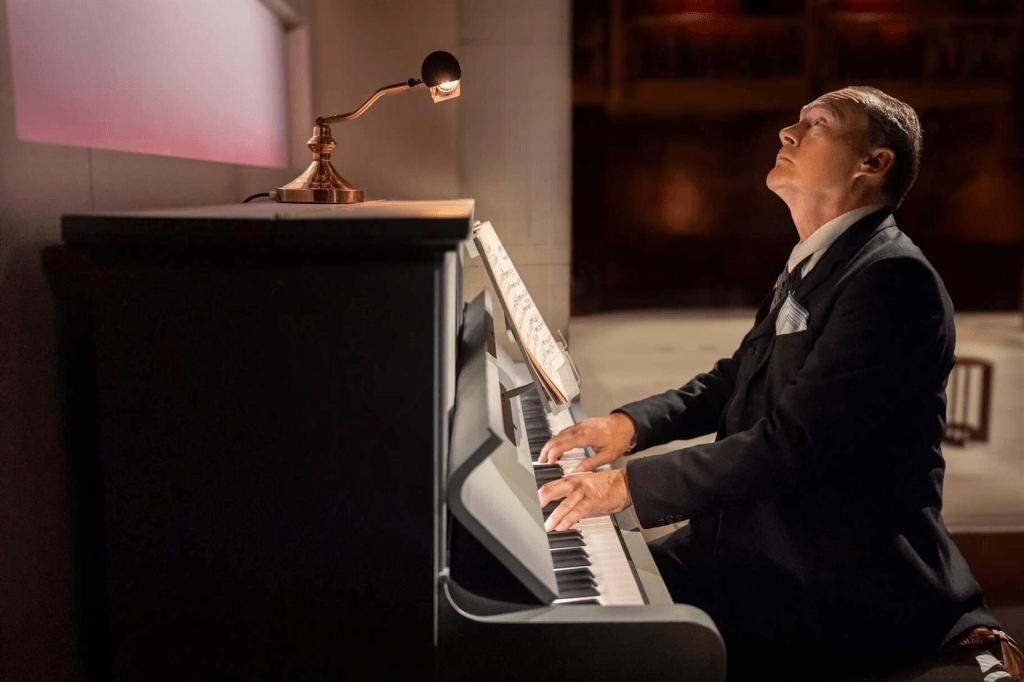
Each scene is broken up with jazz interludes, composed by singer-songwriter Jamie Cullum, as various characters come together to share brief dances that mirror their evolving relationships throughout the course of the play. These interludes give Constance’s butler Bentley (Mark Meadows) his chance to shine, casually breaking the fourth wall with the audience thanks to his all-knowing glances. Bentley seems aware of the audience, aware of the scene transitions, and aware of the trappings of the stage – in an interview with writer Wade, she explains that she sees Bentley as a character that helps to drive the plot, announcing arrivals and departures that push the story forward whilst remaining uninvolved in the story himself. Here, director Tamara Harvey takes the idea further, with Bentley almost acting as director for these scene transitions, ensuring that set and props are moved and placed appropriately, and preparing the stage for the next course. It is an interesting concept, although at times it feels a little out of place amid the more traditional tones of the play.
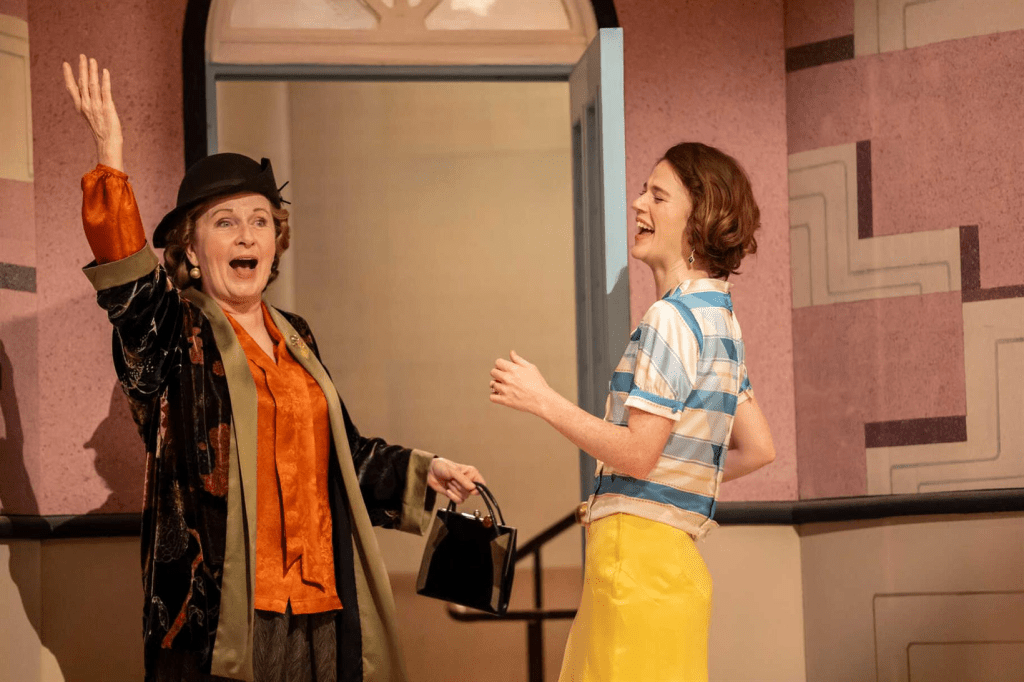
As Constance’s mother, Kate Burton is superb, drawing many laughs from the audience thanks to her witty putdowns and tongue-in-cheek remarks. Burton is clearly having a ball here, enjoying her casual side glances to the audience and going the extra mile to ensure every line draws a laugh. Yet it is Morgan’s Martha who is the easiest to connect with – her character is the most down-to-earth, almost modern in Morgan’s approach. Whilst other characters gabble their dialogue at incredible speed, Morgan’s delivery feels more natural and less rehearsed. A particular speech at the beginning of act two is sure to be a standout, and even earned Morgan a round of applause by the end. She helps to ground the play, dragging it back from certain realms of pomposity that could otherwise hamper the production.
There is a lot to enjoy here, and if you are a fan of classic farce, this is sure to be right up your street. Where the play struggles is in a narrative that feels vaguely circular. The play is very clear about the messages it is trying to get across, and yet it feels the need to hammer these home to the point where the audience feel slightly spoon-fed, without being given the opportunity to draw their own conclusions. The second half fails to reach the comedic heights of the first, although it does culminate in an incredibly British showdown between Norris’s John and Raj Bajaj’s Bernard, in which Norris’s facial expressions ensure the evening ends on a high. The entire play, at over two and a half hours, feels too long, with too much time spent introducing, dismissing and then reintroducing characters, which continually slows down the pacing.
The play is gorgeous to look at, Ryan Day’s lighting design bringing a bright and airy feel to the beautiful Swan Theatre, whilst Fleischle and Cat Fuller’s costumes retain the 20s style and yet have a modern edge to them. Harvey’s direction makes excellent use of the Swan’s thrust stage, and the set is practical and uncluttered, yet with certain touches (including a see-through back wall that allows us to glimpse the stairway down to the front door) which help to elevate it. This is a great night of theatre – yet it is a night that feels strangely lacking and a tad soulless.
Tom Morley, July 2025
For more information on how I decide on star ratings, see here: Star ratings – Broken Legs Blog
Review Round-up:
WhatsOnStage: The Constant Wife with Rose Leslie – A 4 star review from WoS, who say the play is “beautifully acted by the entire cast” and “directed with finesse and flair”
Theatre and Tonic: The Constance Wife at Swan Theatre – T&T go one step further, awarding the show 5 stars and calling it a “perfect production for a warm summer evening”
West End Best Friend: THE CONSTANT WIFE, RSC – Another 5 stars from WEBF, who, whilst acknowledging the play has “predictable laughs”, applaud the “unexpected poignant and emotionally stirring moments” which leave “a lasting impact”







 Broken Legs Blog