

Based on Khaled Hosseini’s novel, and adapted for the stage by Ursula Rani Sama, “A Thousand Splendid Suns” tells the story of Laila (Kerena Jagpal), a young girl growing up in 90s Afghanistan. The story is dark and brutal, giving an eye-opening account of what life was like for women and girls growing up in a country where they had little freedom and few civil rights. The play feels even more prescient now given the current situation in Afghanistan. Occasionally, the story can be a little too dismal, forcing the audience to treasure the calmer, happier moments which are few and far between. This is a captivating watch, but is difficult viewing at the same time.
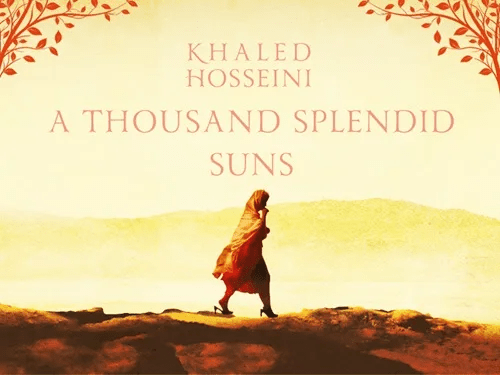
The play begins with Laila sharing poetry with her father (David Ahmad), including the poem which the play takes its title from, which describes Kabul as hiding a thousand splendid suns behind its walls. It is a fitting title, as the play remains grounded in Kabul for the majority of the story, exploring how life in the city changes across the decades, with the story ending in the early 2000s and featuring several flashbacks to life in the 70s. The poem is not referred to again after the first scene, although it lingers in the mind for the rest of the production, and Laila’s book of poems serves as a constant connection between her old life and the new one she is thrust into after a rocket hits her house.
Laila is taken in by Rasheed (Jonas Khan) and Mariam (Rina Fatania). Khan’s Rasheed becomes the villain of the story, sometimes a little too stereotypical and on-the-nose in his outbursts. He is easy to dislike, but lacks the layers and depth of some of the other characters – his motivations are very surface-level, and although Khan grows into the role more during the second act, it is a shame that the character’s backstory is not afforded more time in the same way as some of the other characters. As Rasheed’s wife Mariam, Fatania is the true star of the show, delivering a superb performance throughout in a character that grows and changes over the course of the two-and-a-half hour play. Her relationship with Laila, which is initially fraught but becomes more mother/daughter-like as the play goes on, is one of the strongest aspects of this production. After the fast-paced plot of the first thirty minutes, the play is able to slow down and allow us to enjoy Laila and Mariam together, learning how to cope with the situation that they find themselves in.

Mariam’s story is told via flashbacks, instigated via swift about-turns from the cast which are clear to understand and mean that the story never comes across as confusing. Under the direction of Roxana Silbert, the story feels straightforward and simple – despite the multitude of characters that we are introduced to, the storytelling is incredibly clear. These flashbacks also allow us a glimpse Laila’s previous relationship with Tariq (Jonny Khan). Although they are afforded a very small amount of stage time together, Khan’s Tariq is instantly likeable, and his scenes with Jagpal prove to be some of the more memorable moments of the evening, a brief light against the darkness that pervades the rest of the play.
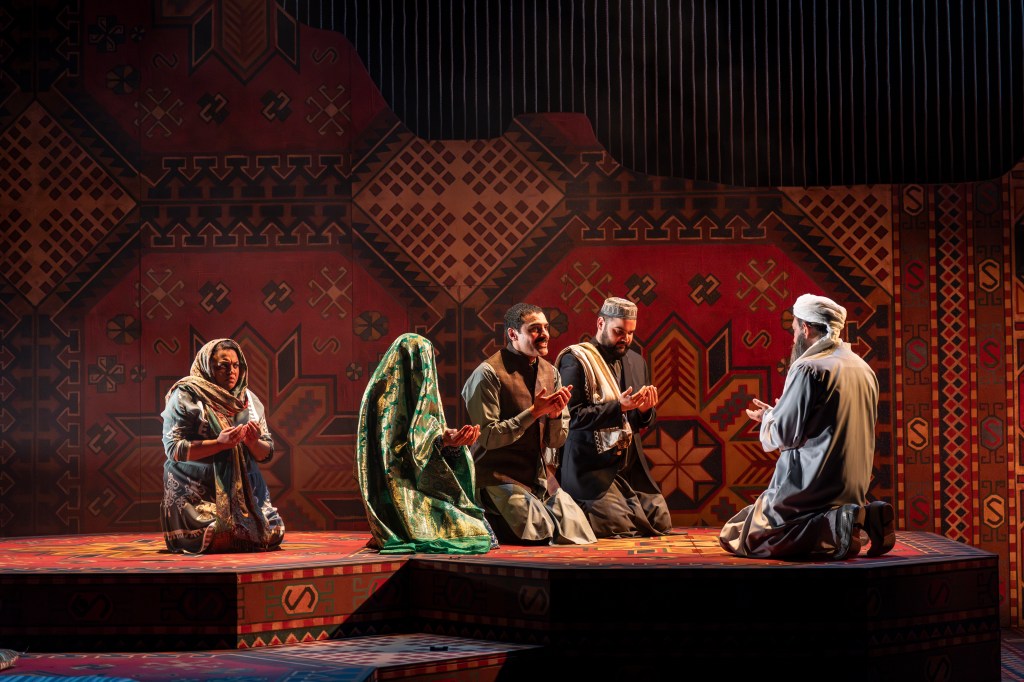
The second act, which moves the story further into the 90s as the Taliban take over Kabul, is noticeably stronger than the first – by now we know the characters better, and the actors have settled more into their roles. Some moments don’t land quite as well as others – particularly, the play seems to miss the mark in moments of high tension or crescendo. Clive Meldrum’s sound design feels too detached from the play, music interfering with various climactic points, and taking the audience out of the world rather than enhancing it. Simon Kenny’s set design is influenced by the Afghani carpets, and offers different levels which the actors use well. A scene in the second act covers the stage in thin blue fabric, giving the audience opportunity to experience life from Laila’s perspective, hidden beneath a burqa. The transition is seamless, and offers a little variety in a production that is mostly about the actors and the story rather than more technical endeavours.

Overall, this is a very strong production, enhanced by Sama’s superb adaptation of the source material. It is the story that shines here, and the production gives it plenty of opportunity to, not trying to overcomplicate things with too many transitory moments. This is a fascinating, yet horrifying, evening of theatre, and the final hour is so superb that you can forgive some of the mis-steps of the opening act.
Tom Morley, May 2025
For more information on how I decide on star ratings, see here: Star ratings – Broken Legs Blog
Review round-up:
WhatsOnStage: A Thousand Splendid Suns Review – A review taken from earlier in its tour, WOS give the play 4 stars, calling this a play that “hits us emotionally again and again”
Elemental Theatre: A Thousand Splendid Suns – Review – Another 4 star review from ETC, who say that the play is “urgent, moving, and beautifully performed”
Fairy Powered Productions: A Thousands Splendid Suns Review – A 5 star review from FPP, who “recommend that you also take tissues along to the show there are teary moments a plenty”











 Broken Legs Blog