

This blog post was written for East Midlands Theatre.
Based on Alan Bleasdale’s BBC TV series, and reimagined for the stage by playwright James Graham, “Boys from the Blackstuff” transports us to 80s Liverpool, telling the story of five roadworkers (the titular ‘blackstuff’ refers to the tarmac that they use on the roads) who find themselves out of work, and unable to find a job. The story explores how the sudden loss of their jobs impacts them in different ways, set against the backdrop of Thatcher’s Britain, as economic recession results in unemployment rates reaching three million.

Whilst the play is a thoroughly ensemble piece, it is Chrissie’s story (George Caple) that seems to form the main plot, his tale both beginning and ending the play. Chrissie is caught in a difficult position, offered a legitimate job by the dodgy Mr Malloy (the excellent Sean Kingsley, who plays a multitude of characters throughout), but reluctant to accept the offer due to recent events concerning Malloy and the other boys. This culminates in a gripping scene in act two, where Chrissie’s wife Angie (Amber Blease) finally confronts him. The two actors do a brilliant job in building the tension, and it is mostly thanks to the groundwork laid in previous scenes that the audience care so much about the characters and their outcome.
The original BBC drama was made up of five episodes, each following a different one of the main characters. The play attempts to tell all of these stories at once, but it is here that it struggles a little, jumping around from one to the other so that some stories are difficult to follow and some characters get less stage time than others. This is notable in the case of Mark Womack’s Dixie, whose ongoing struggles to find work along with his son Kevin (Kyle Harrison-Pope), find him taking a cash-in-hand job as a security guard at the port, where he is forced into accepting bribes from smugglers. This is a compelling set-up (Dixie cannot turn to the police, as that would mean confessing to accepting dole money whilst also working), but the storyline is seemingly forgotten about in later scenes, and we see Dixie so scarcely that it is hard to care about what is happening to him. Loggo (Jurell Carter) fares even worse – his storyline amounts to a running joke about the Shetland Isles, which is paid off in the final scene but does not feel like a particularly satisfying conclusion.
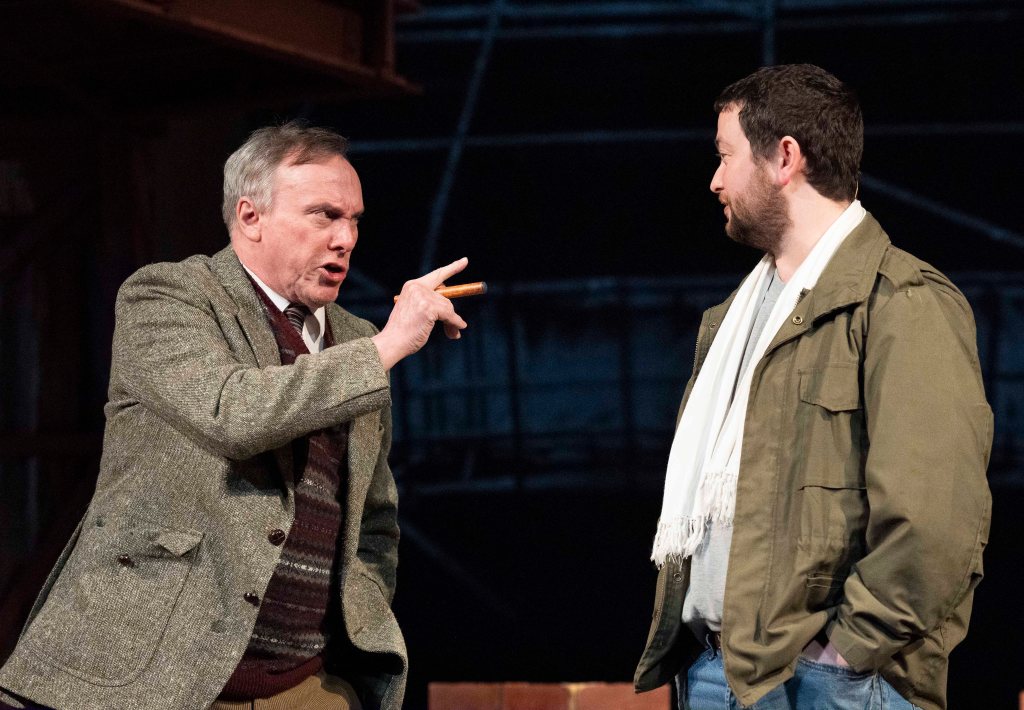
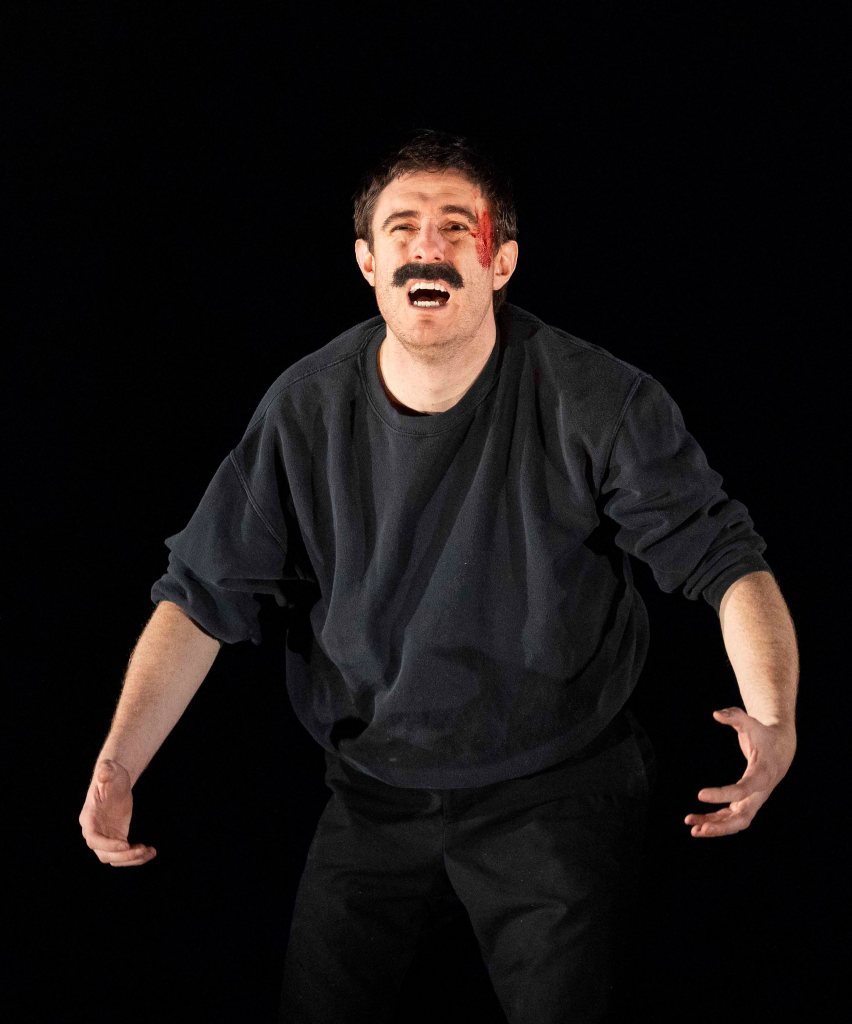
Where the play shines is in the character of Yosser (Jay Johnson), who is not being offered any work, legitimate or otherwise. This is initially played off as a joke – an early scene sees Yosser reprimanded for being a poor bricklayer, and Yosser’s snarky responses draw laughs from the audience. But, as continual rejection begins to take its toll, we see a softer side to Yosser, who not only has lost his job but also his wife and kids. Yosser begins to turn to the church as a last chance saloon, which gives Johnson ample opportunity to show his acting range. The ending of Yosser’s story is suitably downbeat, if a little ambiguous, and will certainly give the audience something to think about on the way home.
Completing the set, George (Ged McKenna) is an older man who spends most of his time reminiscing about the days before the economic recession. His tales of Liverpool docks in their heyday conjure up some wonderful images, and McKenna is a born storyteller. George and his son Snowy (Reiss Barber) take on illegal work, where they come unstuck thanks to a lack of workers rights. The five main characters are all likeable, and it is this fact that makes the play enjoyable to watch, even if it can be slightly depressing at times. George’s story sees him on a dramatic downward spiral, although I won’t give any further spoilers here.
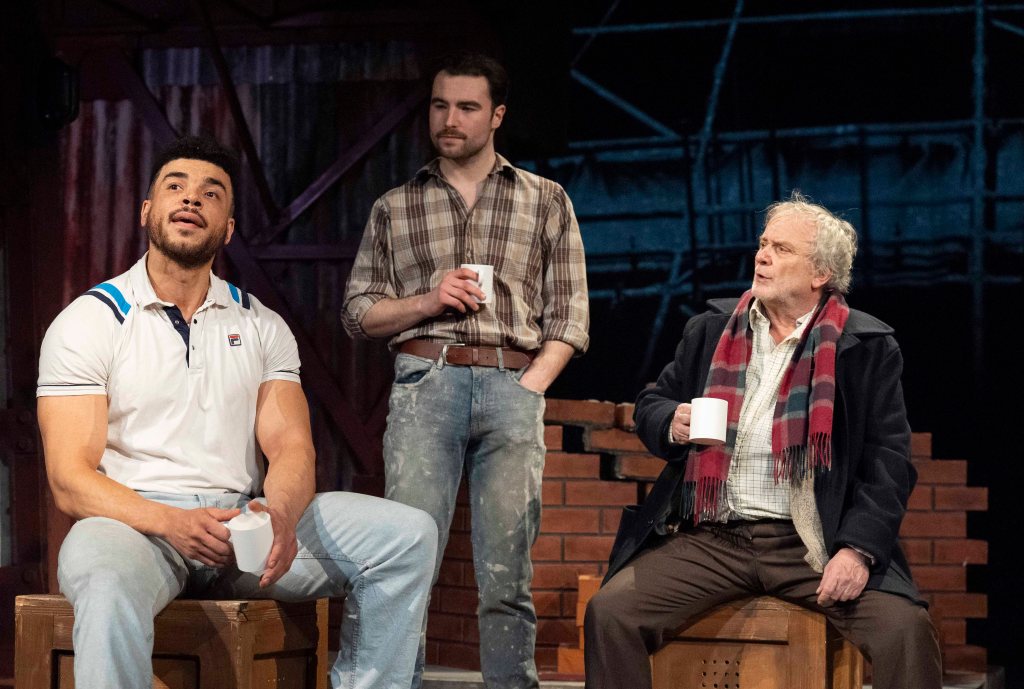
There is a lot to enjoy about this production. Under the direction of Kate Wasserberg, there are multiple interesting scene transitions as Amy Jane Cook’s set is transformed from the Liverpool docks, to a building site, to the offices for the Department of Employment. Slow motion fight scenes, choreographed by Rachel Bown-Williams, help to bring some extra excitement to proceedings, whilst the entire play is supported by a moving backdrop courtesy of video designer Jamie Jenkin.
Unfortunately, the play tries to do too much in too little time. The stories all feel incredibly separate, and it is obvious where one “episode” of the original TV drama ends and the next begins. It feels like a case of Graham not wanting to cut anything – which will please fans of the original drama, but makes for a night of theatre that feels disjointed and at times confusing. The saving grace is in the superb character work on display, and the choreographed transitions that make this production feel polished and helps to keep your attention. An interesting story that helps to shine a light on a section of society that often felt forgotten at the time, but will now hopefully be remembered for a long time to come.
Tom Morley, April 2025
For more information on how I decide on star ratings, see here: Star ratings – Broken Legs Blog
Review round-up:
Theatre and Tonic: Boys from the Blackstuff, UK Tour Review (2025) Theatre and Tonic give the play four stars, commending the “strong sense of working class community that echoes the comforts of other popular films and TV series such as This is England and Billy Elliott”.
All That Dazzles: Review: Boys from The Blackstuff (Richmond Theatre/UK tour) Another four star review from AtD, who saw the play in Richmond and call the play “poignant, biting, and at times bleak”.
The Spy in the Stalls: BOYS FROM THE BLACKSTUFF review The Spy in the Stalls discusses how the story still resonates today, their four-star review summing up the play as “the stories of ordinary people, told in an extraordinary production”.












 Broken Legs Blog