
Dennis Kelly’s Girls and Boys, performed by Nottingham-born actress Aisling Loftus, begins very much like a stand-up comedy, before becoming something much deeper, darker and, frankly, traumatising. The majority of the play is delivered directly to the audience, as Loftus’s unnamed woman tells us the story of her husband and her family. Throughout the two hour runtime, the story slowly builds to a scene that is surely one of the most heart-wrenching pieces of theatre I have ever seen, all superbly performed by Loftus, who is simply perfect in the role.
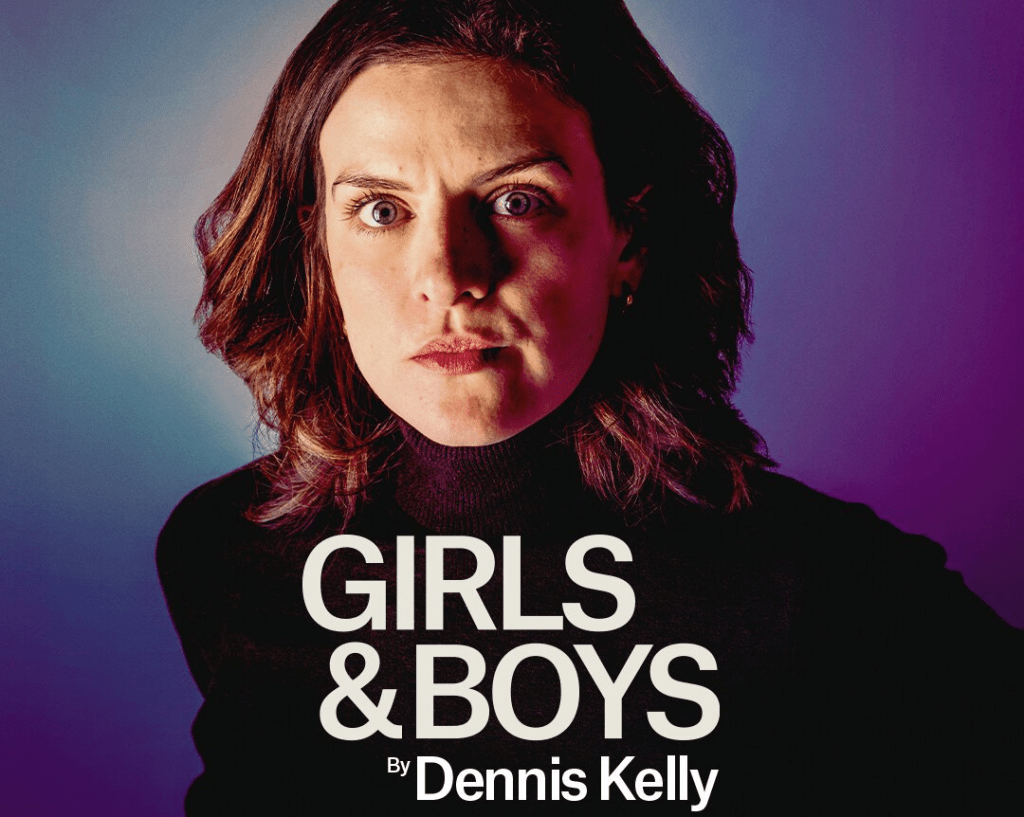
The play leads us into a false sense of security, Loftus delivering various anecdotes about how she met her partner, with stories that are incredibly funny whilst also fairly vulgar and almost childish in their comedy. Had the play continued in this tone, it would have quickly become tiring – after all, this is nothing new, these are the types of stories told by wannabe comedians across the country. Thankfully, the play quickly moves on, brief blackouts and bursts of music helping to separate the scenes, as we get a more naturalistic insight into the woman’s relationship with her two children, Leanne and Danny.
Leanne and Danny never appear onstage – Loftus is the only actor throughout – but their presence is felt strongly, as Loftus negotiates various different scenarios involving the character’s children. The dialogue from Leanne and Danny is left to our imagination, but clear from woman’s responses and reactions. These scenes naturally draw laughs from the audience; Loftus’s acting together with Anna Ledwich’s direction leaves us with very little work to do in order to picture where Leanne and Danny are meant to be onstage, and what they are doing. The scenes between Loftus and the children feel inconsequential to the plot, but they are necessary groundwork for when the story kicks up a gear later on, and they are incredibly fun to watch.

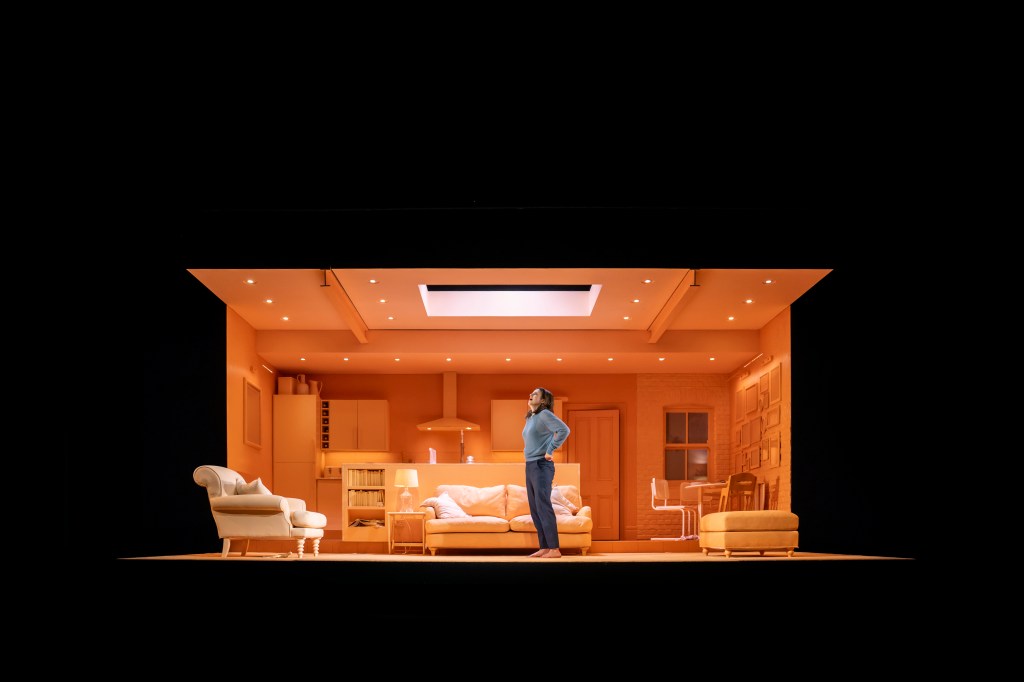
As the play continues, blackouts are used less frequently to separate the scenes, instead relying on a brief shift in lighting and a subtle change in Loftus’s demeanour. The set design (Janet Bird) gives Loftus plenty to play with, as she negotiates her simple-yet-spacious apartment, complete with hidden cups of water – much needed for such a lengthy one-woman performance! The lighting (Matt Haskins) combines soft pinks with baby blues, making the stage feel homely and safe, and helping the audience relax yet again into that false sense of security.
The play is a master of misdirection, never quite letting the audience in on what it truly is, although hints of various themes to do with gender politics and violence are present throughout. The first sign of a darker plot at play comes about an hour in, with a revelation that is, not shocking as such, but more disturbing, making us realise that what we have witnessed so far has not been entirely accurate. As Loftus reminds us, we are only hearing one side of the story – but that’s what happens when the entire story is told by one character. Another reveal, which initially feels a little cliché, follows fairly quickly, but here is the genius of Kelly’s plot – as soon as we feel as though we are being led down a certain path much-trodden before, a twist arrives that scuppers our initial suspicions, and leads us into what feels like new territory for theatre.
I cannot say much about the final scene of this play, but describing it as simply “shocking” would be doing it a disservice. Loftus steps forward to provide a trigger warning of what is to come, stating: “If it gets difficult – and it will get difficult – I want you to remember two things: remember that this did not happen to you, and that it is not happening now.” Anyone who is a fan of Kelly’s previous work (which includes TV series Utopia) will be aware that he is no stranger to brutal violence, but what follows here blows his previous writing out of the water. Loftus delivers this scene as matter-of-factly as possible, but underneath there is an emotion bubbling within her that she struggles to hold back. It is a masterclass in acting, and one that punches the audience in the gut, so much so that they still feel winded as they file out.
Every part of this production comes together perfectly. Kelly’s script is sheer brilliance, and Loftus’s performance elevates it to unimaginable heights. This is a play that has a lot to say about the power dynamics of men and women – a piece of theatre that will leave the audience with lots to talk about on the way home. That is, assuming you can catch your breath.
Tom Morley, February 2025











 Broken Legs Blog
Leave a comment