

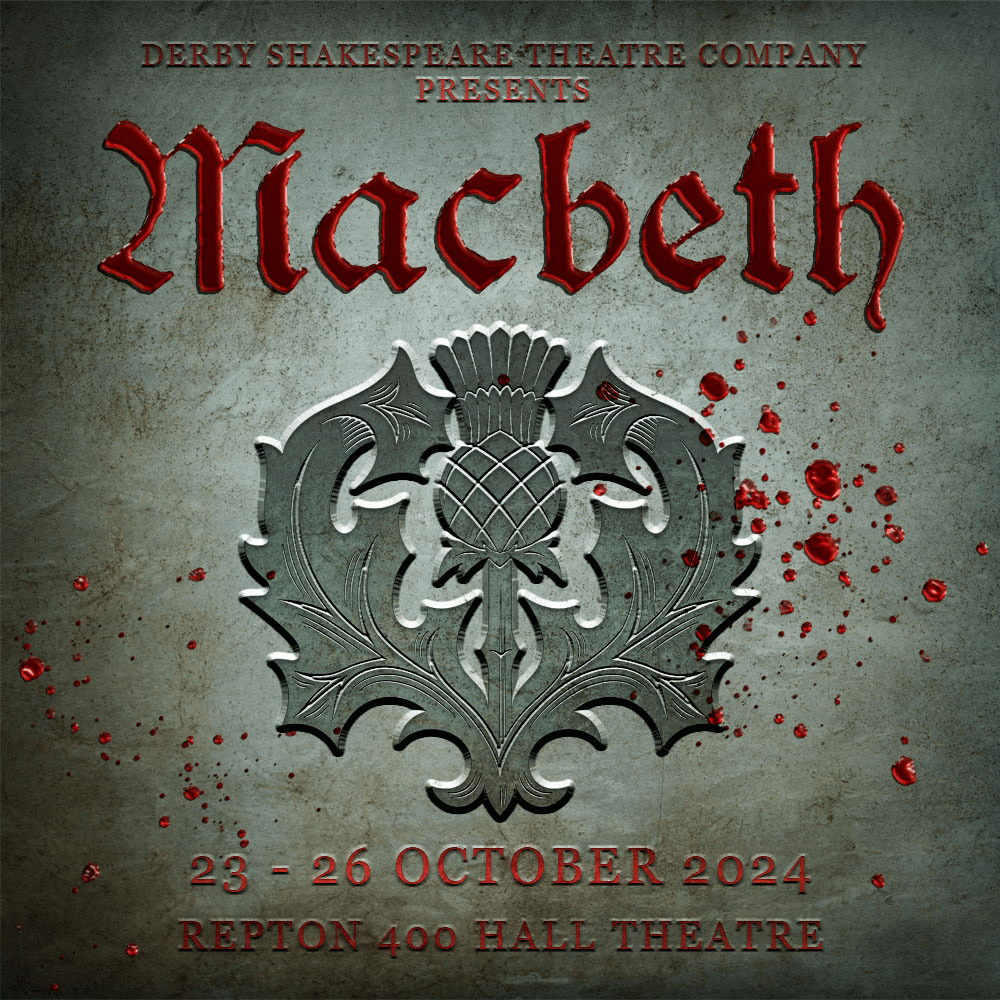
Derby Shakespeare Company jumped straight from “Romeo and Juliet” to “Macbeth”, with auditions taking place in the middle of the rehearsal period for R&J. Despite Macbeth being one of my least favourite Shakespeare plays (I think this is partly influenced by having to study it at school), I was still keen to be involved as I had really enjoyed being part of R&J, so I searched through the script for a monologue to perform at the audition. Clearly I got bored after page 2 because I selected the Captain’s speech, which is a decent-sized monologue that serves as an introduction to the character of Macbeth, as the Captain reports on how Macbeth won a battle against a Norwegian army.
James, the director, asked me to perform the speech a few times, changing my performance slightly each time, to see how well I could respond to direction. A couple of weeks later, I received a phone call to say that I had been successful in securing the part of the Captain (although I can’t imagine there had been much competition for the relatively small role!). There was no break between R&J and Macbeth – in fact, the final performance of R&J took place on the Saturday, and the read through for Macbeth was on the Monday. Unfortunately, I missed the read through since I was at press night for “An Officer and a Gentleman”, and because of the way the rehearsal schedule was organised, this meant it was quite a while before I’d actually met everyone in the cast, since there were some people that I didn’t share any scenes with.
The cast was a mix of people I’d met during R&J, members who had been part of the group for a while but not in R&J and brand new members. It was a fairly big cast – which is necessary for Macbeth, since so many characters are introduced and murdered within the same scene! James’s rehearsal schedule meant that we would be working through the script in broadly chronological order, so my scene was blocked during the very first rehearsal. We spent some time discussing the words, to make sure that I understood what the speech meant, and then spoke about how the Captain might feel to be presenting his news to the King, opting for a more excitable tone despite the fact that he had been injured in the preceding battle.

James had a very clear vision for this production, setting the play in the 1890s and heavily influenced by Dracula, using music from the film soundtrack throughout. The witches were replaced with vampires, and Macbeth became paler throughout the show, flinching away from sunlight in the final scenes. Because James’s vision was so clear, it meant that the play came together very quickly, and felt like it was blocked out in record time, allowing us quite a bit more time to focus on character and iron out any difficult scenes.
I was involved in a few more scenes following on from my speech in Act One Scene Two. One of these scenes was the notorious banquet scene, which caused us a great deal of problems throughout the rehearsals. First was the issue of getting a table long enough for everyone to be sat at (Phil happily offered to not take part in the banquet scene to ensure there was an even number – possibly a wise decision given the trouble it caused the rest of us!). The other problem was around bringing chairs on for everyone to sit at (at one point, it was meant to be benches, but this was deemed too complicated). Thankfully, I was not in charge of any tables or chairs, and was instead given the role of “mingling” at the front of the stage to mask the set change in the background. I was more than happy to simply watch on from the front of the stage, whilst the rest of the cast and crew struggled with the logistics of getting the set on in time.

The gabble saw James introduce Star Wars music for our speed-run, and the dress rehearsal will forever be remembered as the rehearsal where Roger’s kilt fell down. The group managed to secure a BSL interpreter for one of the performances, and so we did a script-in-hand rehearsal, which was recorded, to allow the BSL interpreter to prepare for their role. On the night that the BSL interpreter was onstage, Leni warned me to be careful what I was mouthing during the banquet scene, in case there were any audience members that could lip-read!

The show was a success, with decent audiences for all performances. The set really helped to create a spooky atmosphere, and looked amazing, with two tiers allowing the short scenes in the final act to smoothly flow from one to the next, almost seeming to take place simultaneously at points. The impressive costumes also helped to add an extra layer of professionalism to the show.

Since performing, the group have done their usual post-show “fish and chip” night (I was more prepared this time, performing a spoof of the opening song of “Hamilton”), and a Christmas party (my team came last in the quiz, but I blame the other team members). I have also attended several Saturday morning workshops, organised by Ian. Derby Shakespeare Company have been an incredibly welcoming group, with lots of things to get involved in. It is unfortunate that their March production will be performed when I am on holiday, but I hope to audition for their productions later in the year. In the meantime, I’m sure I’ll be able to keep myself busy with a small production called “Hamlet: The Rest is Silence” (more about that in tomorrow’s blog post!).
Tom Morley, December 2024








 Broken Legs Blog