

Tim Carroll’s production of “Othello” opens with the sound of a semantron, a wooden plank instrument that steadily calls the actors to the stage and encourages a gradual silence to fall across the audience. In fact, “steady” and “gradual” are two words well-fitted to this production, which strips the play to its bare bones, the stage devoid of furniture and the supporting music, to bring focus to the actors and Shakespeare’s words.
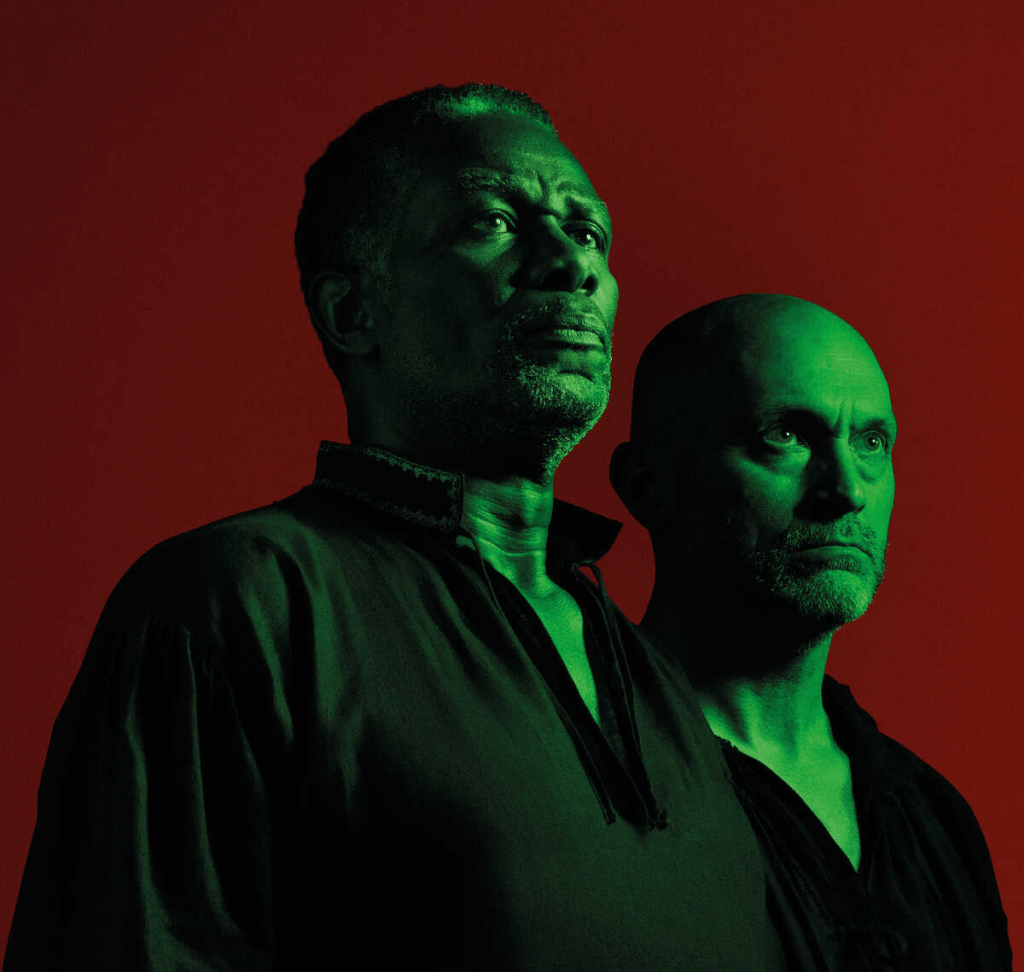
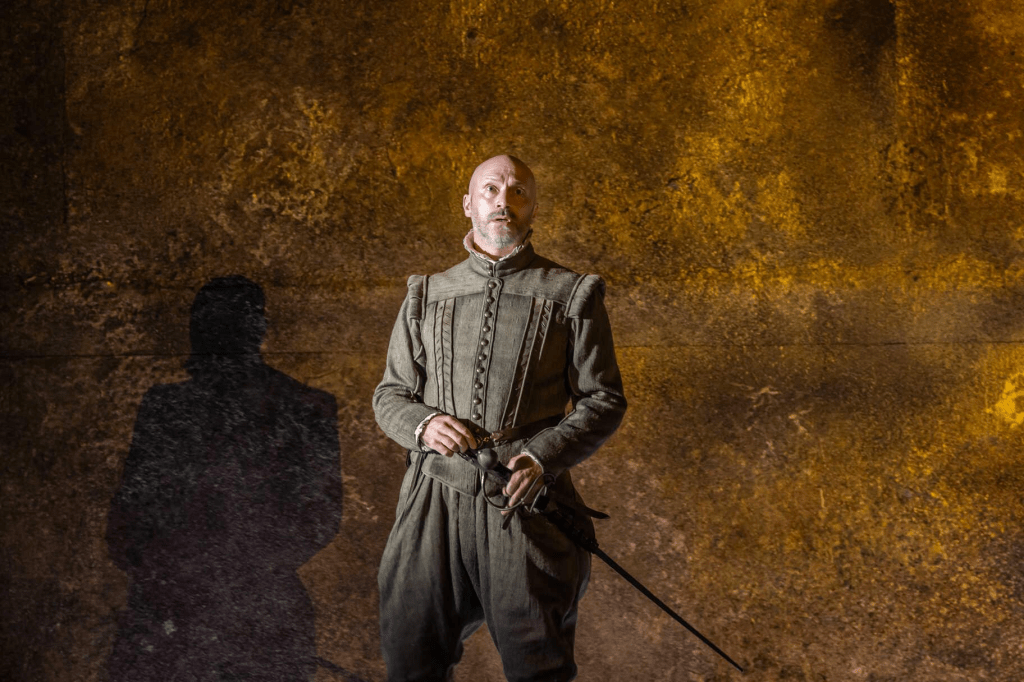
The play opens with Iago (Will Keen) and Roderigo (Jethro Skinner) waking Brabantio (Colin Hurley), a Venetian senator, with the news that his daughter has married a “moor” – a term used to describe someone of African or Arab descent. The speech is delivered at a breakneck pace, any flair in the language is glossed over, and actors enter and leave with hardly any transition between scenes. This is a play which does not lose itself in needless exposition – the actors rush through their dialogue with hardly time to draw breath. Keen’s Iago in particular is fairly understated. His barbed comments are delivered as afterthoughts, his asides to the audience are exactly that – cast aside as though they are unimportant. This does not make his performance any less captivating. Iago comes across as too quick for his own good, never pausing to contemplate or second guess himself. There’s an arrogance to him that becomes his eventual undoing.
The moor, John Douglas Thompson’s titular Othello, on the other hand, is much more driven by emotion, his occasional outbursts shattering the otherwise still nature of the play. Sometimes, Thompson’s Othello, with his vague American lilt, can come across as a little overacted, some of his speeches delivered to the heavens rather than directly to the audience, but on the whole he portrays a sympathetic character that successfully wins the audience to his side. Whilst Iago definitely shares a more intimate connection with the audience, it is Othello who we care about, and his love for Juliet Rylance’s Desdemona is clear to see.
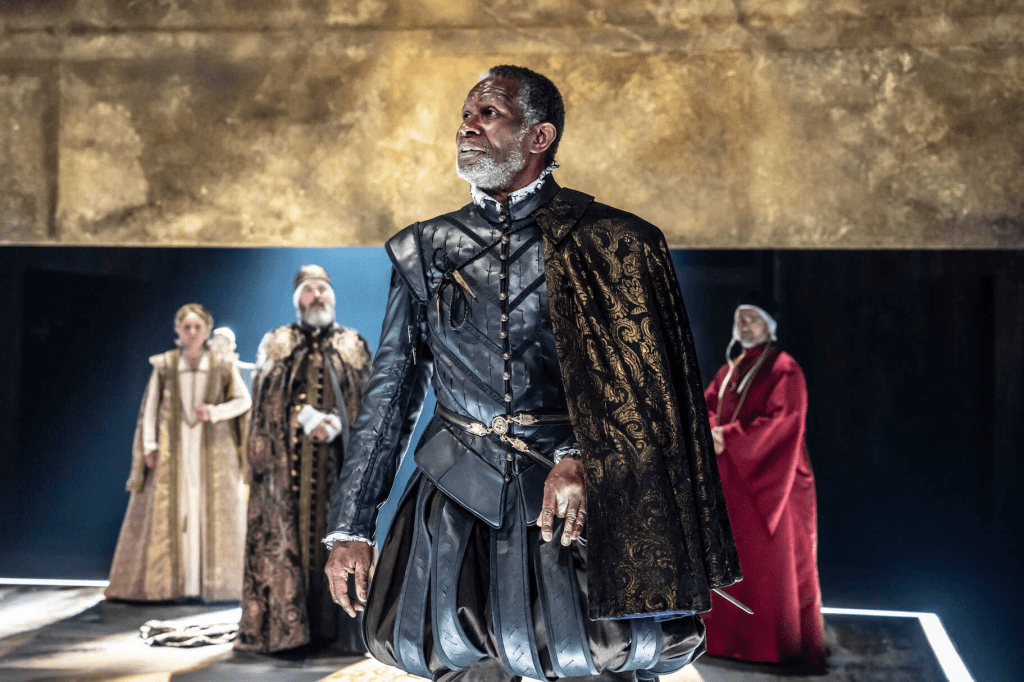
Together, Rylance and Thompson present a more mature version of the pair, two characters who clearly have their heads screwed on, but who are undone by being too trusting. Rylance’s scene with Emilia (Anastasia Hille) as she gets ready for bed, not realising she is going to her death, is one of the highlights of the play, deftly delivering the true force of Shakespeare’s words without the need of any additional frills in the form of set, music or even costume – Rylance is stripped of her regalia and her hair is undone as she prepares to meet her maker.
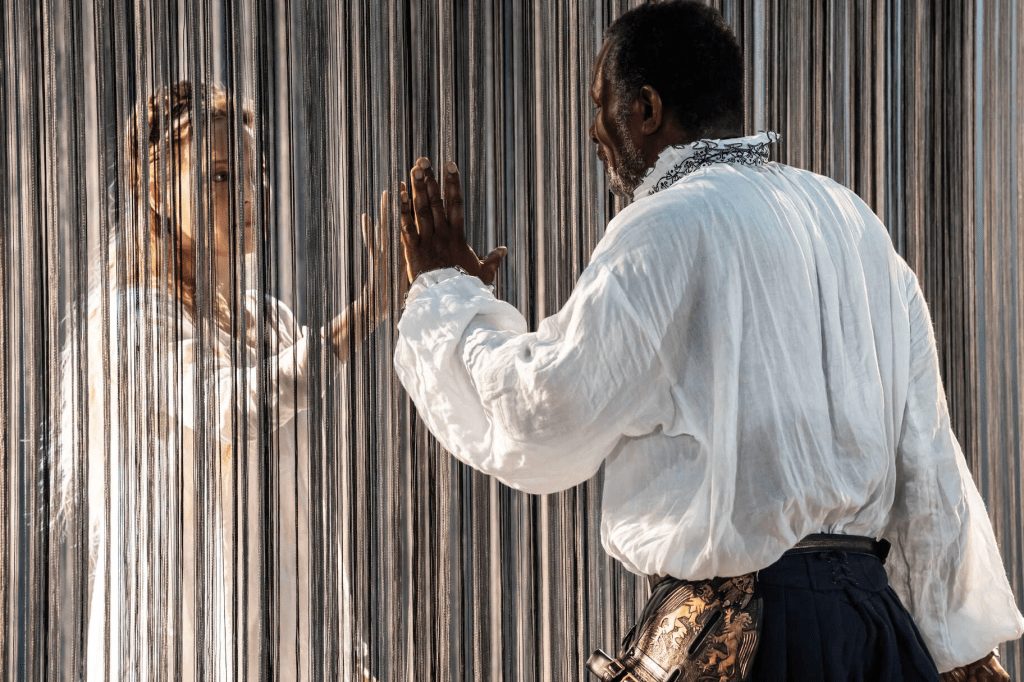
Speaking of additional frills, the final scenes introduce a tasselled curtain behind which Desdemona finds herself trapped as Othello approaches to murder his wife. The curtain presents a stark image, as Othello circles Desdemona as a lion stalking its prey, before becoming a metaphor for the afterlife, Desdemona welcoming Emilia and Othello shortly after to join her behind the curtain. I felt this was an effective way of delivering a more abstract look at life and death, without the need of any graphic fight choreography (Desdemona’s death is carried out in complete darkness), however the nature of the scene means that Rylance’s face is masked for her final scene, which definitely detracts from her superb performance.
I have spoken much about the stillness of this production, but it is the main factor that sets this apart from other recent RSC productions. The power of silence, and of a stage stripped bare for the majority of the action, allows for a true focus on the story and the characters at play. Not all aspects of this production work – a moment during the voyage to Cyprus stands out as a little over-engineered – but on the whole, this is a production to be commended for its bravery in losing all of the additional aspects that we have come to expect from RSC productions.
Finally, a special mention should go to the integrated BSL interpreter Clare Edwards, who featured in the production that we saw. Present throughout, Edwards smoothly navigated her way amidst the cast, and was brought into the action on occasion, with Iago treating her as an accomplice at times as he delivered his soliloquys. The accessibility provided by the RSC, who also provide audio descriptions, captioned performances, and relaxed performances, should not be ignored – they are truly leading the way in ensuring that everyone can enjoy theatre.
Tom Morley, November 2024


 Broken Legs Blog