
This blog post was written for East Midlands Theatre.
On 4th April 1968, Dr Martin Luther King Jr was shot and killed. “The Mountaintop”, from award winning writer Katori Hall, takes places the night before this fatal shooting, as King arrives at the Lorraine motel in Memphis, after giving his final speech I’ve Been to the Mountaintop. But “The Mountaintop” is about much more than just King and his final hours – it is a play that expertly navigates sensitive topics, finding comedy amidst tragedy and exploring themes of faith, legacy and death.

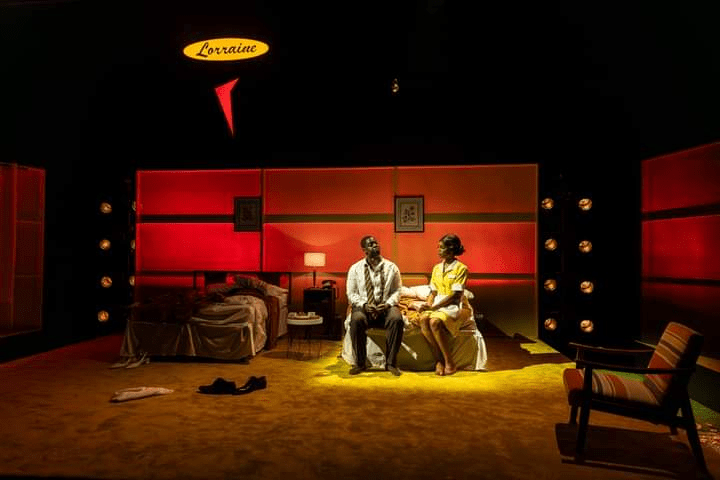
Before the play has even begun, the audience are treated to the set, a faithful recreation to exact specifications of the now famous motel room, which has since been turned into a museum following King’s assassination. Thunder cracks and rain pours as King (Ray Strasser-King) enters the stage, clearly energised from his most recent speech, and still saying parts aloud to himself, Strasser-King’s portrayal of the charismatic leader immediately recognisable, his voice a near-perfect imitation. Almost immediately, however, the façade drops away, as King’s paranoia takes over, and he begins ripping the bedroom apart, looking for hidden microphones and wires. The play gives us a fascinating insight past the man we recognise from his sermons, making him feel real and human. He is not a “perfect man”, and the play highlights his flaws as much as his merits.
The arrival of motel worker Camae (Justina Kehinde) certainly livens things up, as her and King share a cigarette together, and discuss his recent work, the striking sanitation workers and the Vietnam war. There are moments of foreshadowing, including a discussion about Malcolm X, who, when it is pointed out that he was killed aged 39, King responds with “Same age as me”. There is an element of flirtation between King and Camae, and Kehinde doesn’t hold back – she is confident, outspoken and unafraid to challenge King. She brings a lighter presence that nicely contradicts King’s more serious nature, a highlight being when Camae borrows King’s shoes and jacket, stands atop the bed and gives an imitation of one of his speeches. Together, the pairing is formidable and captivating, the chemistry between Strasser-King and Kehinde is magnetic.
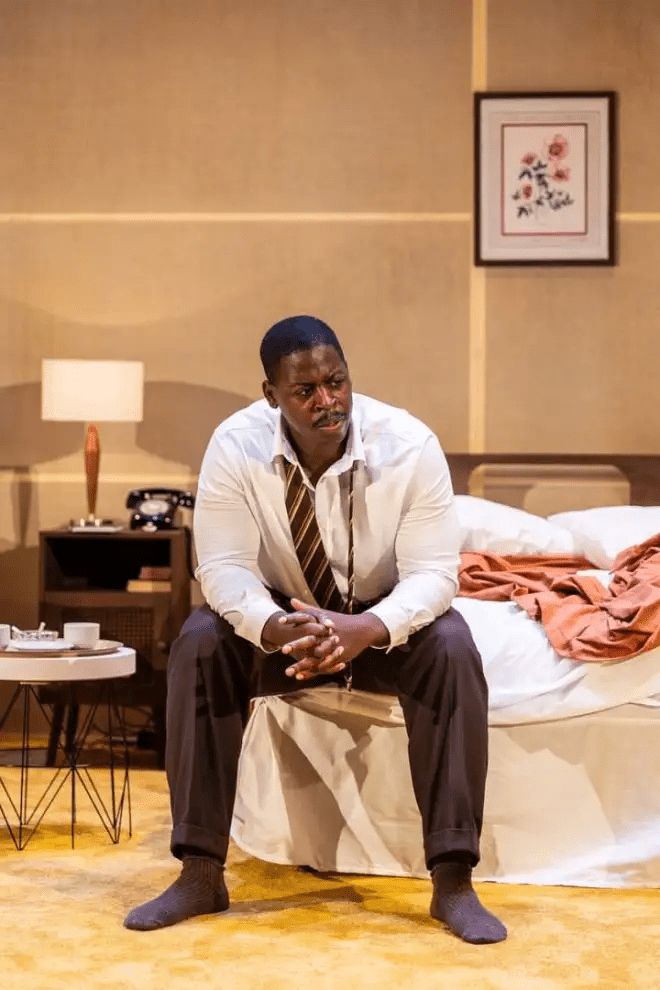
There remains an underlying tension throughout. King finds out that the address of his motel has been leaked in the press. He jumps at every thundercrack, loses his temper quickly when Camae says something against his God. This is a man on edge, and Strasser-King paces the stage delivering his lines with such ferocity that you can feel the fear in his voice. A call from his wife reminds us of his impending doom – his final goodnight to his daughter not letting us forget that the preacher is on borrowed time.
Halfway through the play, just as the audience may be wondering how the story can possibly be sustained for 90 minutes, a revelation is made about Camae that changes the nature of the story, as the set cracks open and everything becomes more ethereal. At first, the change in tone and direction feels a little alarming, and it takes a while to adjust to this new aspect of the play. King is forced to confront his fears, and the power dynamic shifts to leave Kehinde in control of the stage, masterfully taking the reigns as Strasser-King is reduced to tears when the true gravity of his situation overwhelms him.
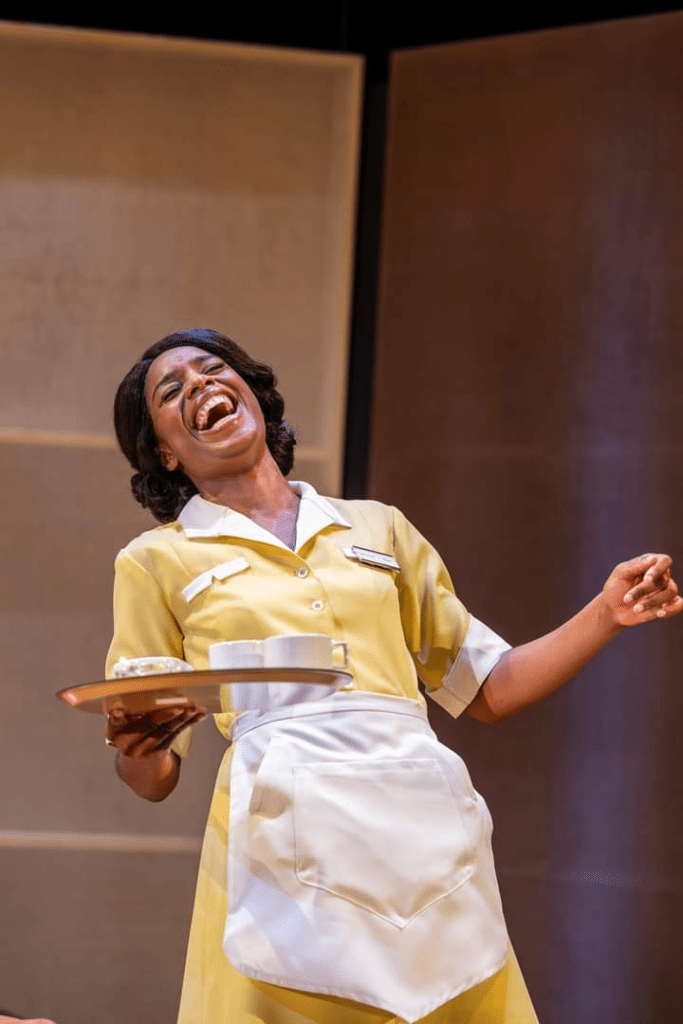
The stage design from Lulu Tam is a marvel – not only is this a faithful recreation of a famous setting, it is so much more, walls moving to reveal heavenly grass and flowers, and becoming transparent to enhance the dreamlike concepts at play. Under Nathan Powell’s direction, both actors are electric, commanding the stage and finding light, shade and hidden depths in Katori Hall’s excellent dialogue.
Towards the end, Kehinde gives a speech about King passing the baton to others, and behind her a montage of images and videos are perfectly timed to her words (a marvel considering Kehinde is facing the audience and can’t see the projection), displaying prominent black figures – artists, musicians, politicians, activists – as well as major events occurring in years following King’s death. Kehinde offers no commentary on these figures and events, simply names them, both good and bad, allowing the audience to make their own judgements. The baton passes on. The images bring us right up to today, with clips of Trump’s dangerous rhetoric and riots last month across Britain bringing Kehinde’s jaw-dropping speech to a momentous climax. And just when we think it’s all over, Strasser-King steps up and matches Kehinde’s performance with a stunning rendition of King’s I’ve Been to the Mountaintop speech. Except this is no longer a simple imitation of King’s speech. This is something more. This is Strasser-King speaking to us today, making us understand the progress we’ve made, and see just how much more there is left to do.
An extraordinary, moving piece of theatre. Educational, entertaining and utterly captivating.
Tom Morley, September 2024











 Broken Legs Blog
Leave a comment