

The RSC’s “The School for Scandal” offers a heap of comedy amidst a social commentary that’s every bit as relevant today as it was in the 1770s when Richard B. Sheridan’s play was first performed. The play begins with a speech from Lady Sneerwell (Siubhan Harrison), specially written for this production, that explains that, whilst the original intentions of the playwright was to provide a critical satire of “gossipy journalism”, this version is more a celebration of that culture, acknowledging the fact that, in today’s world, gossip and news often go hand-in-hand.
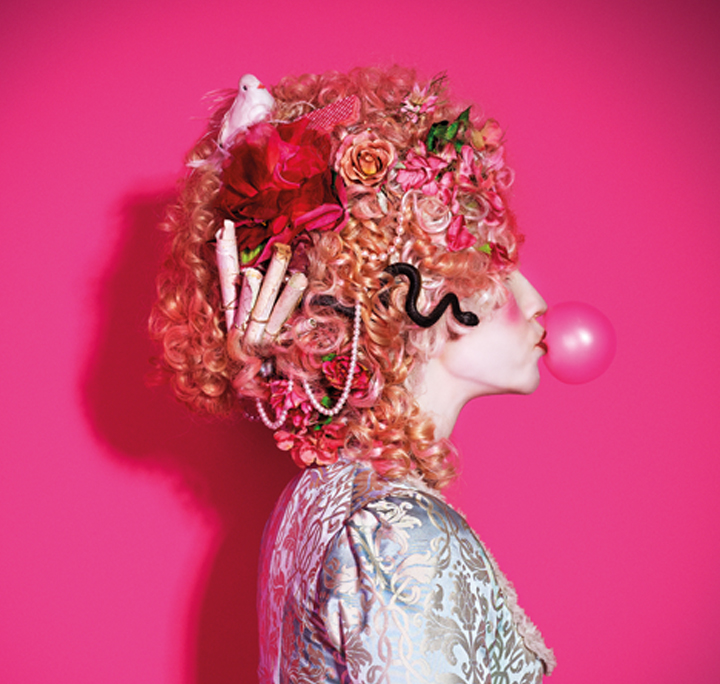
The play features an extraordinary amount of characters, but this production does a fine job of introducing them all. Whilst Sneerwell and Snake (Tadeo Martinez) discuss recent events, characters appear as they are mentioned, helping the audience to match faces to names and making the convoluted nature of the story much easier to digest.
The main plot follows the Surface brothers, Joseph (Stefan Adegbola) and Charles (John Leader), who are both vying for the inheritance of their rich uncle Sir Oliver (Wil Johnson), who neither of them have met before. Sir Oliver conspires to disguise himself in order to make a fair judgement on which of the brothers he should leave in his will. Johnson is excellent comedy value, as Oliver adopts the alter-egos of both the rich investor Mr Premium and poor needy relative Mr Stanley. Thus follows a very Shakespearean style comedy, in which different characters share various asides with the audience to help us keep track of who is privy to different pieces of information.
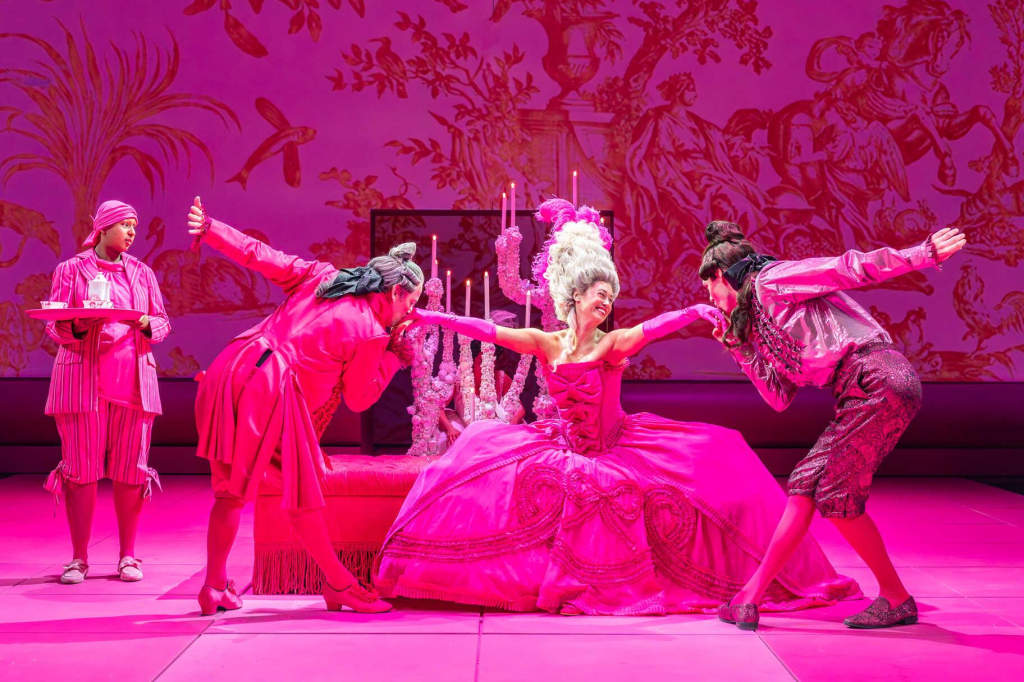
Joseph and Charles are polar opposites, with Joseph’s various speeches being treated with a spotlight and angelic music, whilst Charles is more of a party animal, with his costume (from designer Alex Lowde) being the closest you are likely to get to drag queens in the 1700s. In fact, the costumes throughout are a marvel, borrowing from traditional 18th century fashions, and adding in splashes of neon colour. Sneerwell’s gown is something else entirely, with a skirt so wide she is forced to walk sideways whenever entering or exiting the stage.
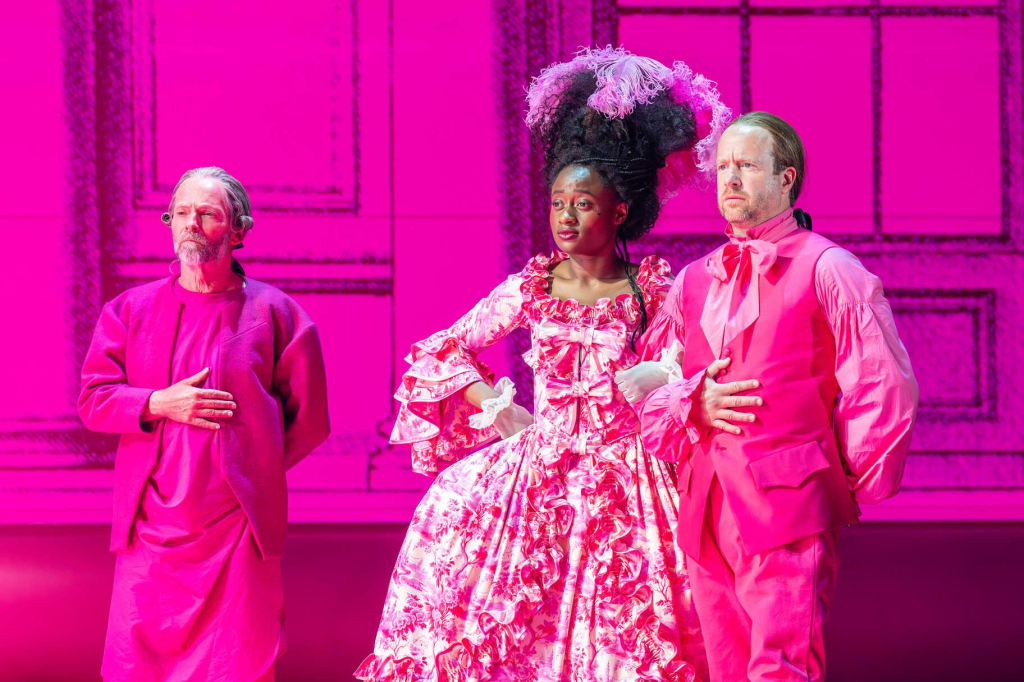
One of many subplots focuses on Sir Peter Teazle (Geoffrey Streatfeild) who has recently married the much younger Lady Teazle (Tara Tijani, as your 18th Century equivalent of a modern-day WAG). Their spiky relationship offers many comedic situations, with Sir Teazle arguing that Lady Teazle should be happy to be his wife, to which she retorts she would be even happier to be his widow. With the arrival of Teazle’s old friend Sir Oliver, he is concerned that he will be mocked for finding himself in an unhappy marriage. His only possible solution – he must pretend to be happily married to his wife! Which of course leads to even more laughs, as Teazle is forced to agree to his wife’s demands through gritted teeth.
This review only scratches the surface of this complex comedy, which never lets up throughout its 3-hour runtime. Patrick Walshe McBride puts in a delightfully sassy turn as Sir Benjamin Backbite, who enjoys the gossip just as much as the ladies, and Emily Houghton as Mrs Candour clearly relishes the marvellous wordplay that she gets to spout when delivering the latest scandalous news. But it is Jessica Alade’s housemaid Lappet who gets the loudest cheer, as she finally works up the courage to tell her boss to stick his job and leaves via the trapdoor, flashing middle fingers to the bewildered Sir Teazle.
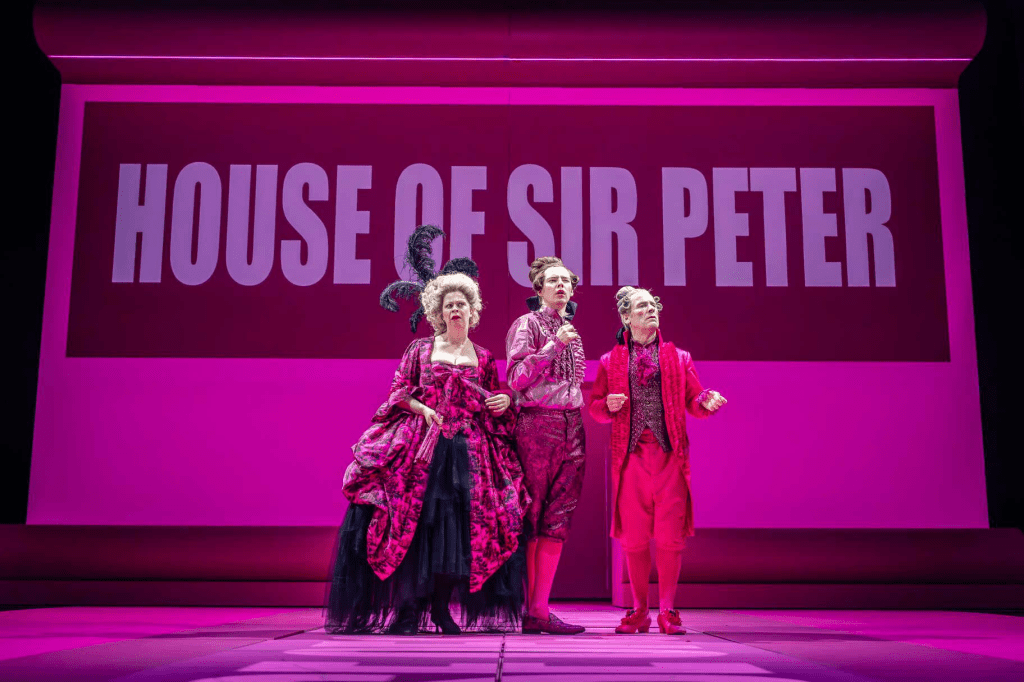
The music (from composer D.J. Walde) is heavily influenced by modern pop, whilst strobe lights bathe the stage in pink throughout. The backdrop displays the setting of the current scene (e.g. HOUSE OF LADY SNEERWELL) which again helps us to follow the convoluted plot. Normally I wouldn’t be a fan of this sort of thing, but the captions are used to great effect here, with different fonts helping to give an indication of the type of homes inhabited by the various characters.

This is a play that is simply bursting with fun and joy. Each of the characters are incredibly well-formed, and the dialogue provides a very accurate portrayal of how gossip and rumours can grow out of hand. If you are looking for a laugh, and a play that doesn’t take itself too seriously, then this is the production for you.
The play ends with a wedding, as Maria (Yasemin Ozdemir) is able to win the heart of Charles Surface. Maria’s final speech, as the wedding party continues into the wings, leaves us with a very pertinent message, especially in this age of social media and celebrities: live your own life, and don’t worry about what other people say or think. And I suppose that leaves my review redundant.
“The School for Scandal” plays in the RSC’s main theatre until 6th September. Tickets are available here.
Tom Morley, August 2024














 Broken Legs Blog