

One of Shakespeare’s lesser-known plays, “Pericles” has rarely been performed. This is only the sixth production at the RSC since the company was formed in the 60s, and the first for eighteen years. This production also marks the directorial debut of co-artistic director Tamara Harvey, so I approached this production with some excitement at discovering a new play that I previously knew very little about.

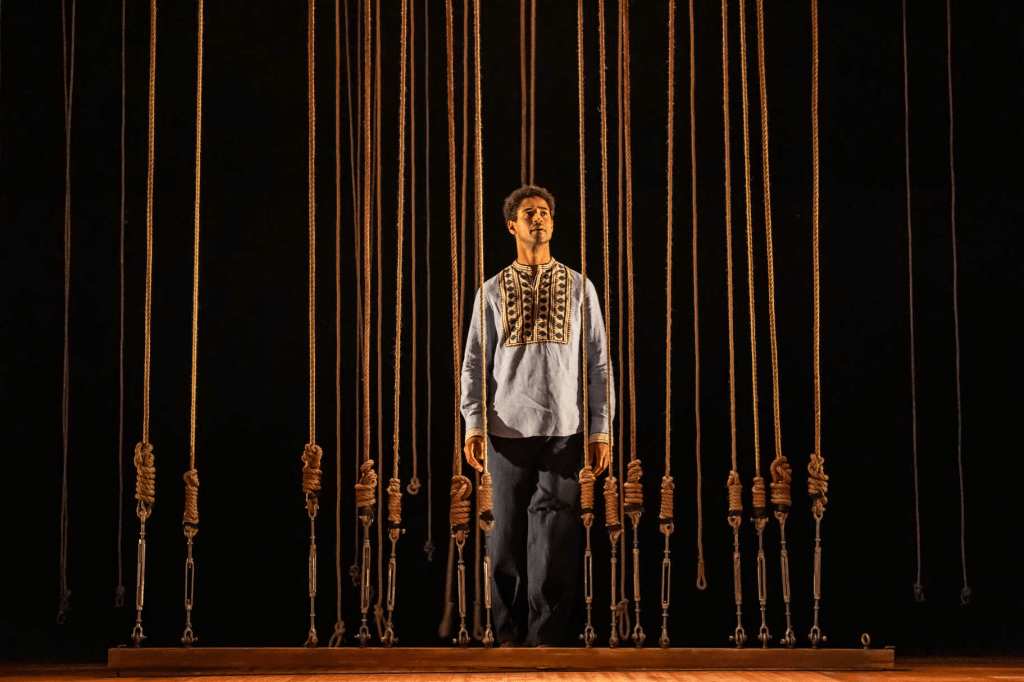
To begin with, the play feels very complicated, with an almost overwhelming amount of exposition provided by our narrator Rachelle Diedericks (more on her later). We are introduced to Pericles, Prince of Tyre (Alfred Enoch), and an entire storyline focusing on King Antiochus (Felix Hayes) and his daughter (Chyna-Rose Frederick) is rushed through at breakneck speed, resulting in Pericles fleeing Tyre. Of course, this production cannot help the confusing nature of the initial act (some believe the weaker opening to be written by George Wilkins rather than Shakespeare), although I felt that the superfluous nature of some of the supporting players in this scene, providing what can only be described as interpretative dance alongside the narrative, served only to confuse matters further rather than help the audience make sense of the story.
Thankfully, this storyline bears little impact on the rest of the play, with Antiochus and his daughter killed offstage and Hayes and Frederick quickly getting sucked into subsequent scenes as different characters. The play really begins to settle into a steady rhythm with the introduction of King Simonides (Christian Patterson) and his daughter Thaisa (Leah Haile), who Pericles meets after being shipwrecked at Pentapolis. Patterson is very funny in this role and his hilarious asides to the audience bring some much-needed laughs to proceedings. Thaisa and Pericles begin to fall in love, and their relationship is incredibly sweet to watch, as Pericles first impresses the princess with a dance, and later with his flute-playing.
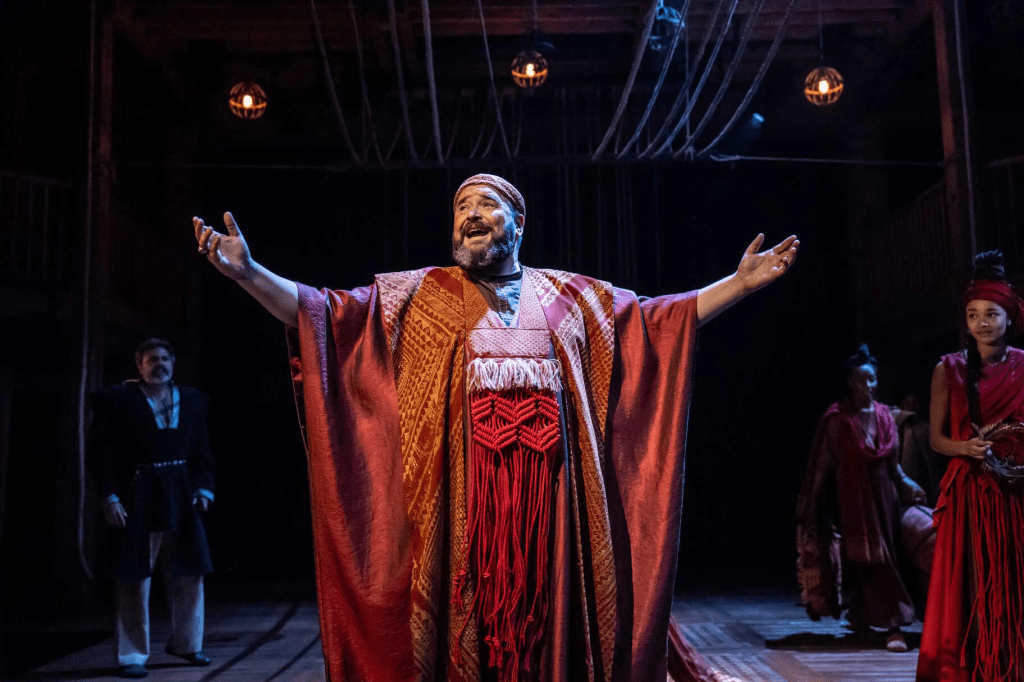
There is a lot to enjoy here. The action slows down to become a more character-driven piece, and Simonides watches from the sides, a father first and a king second. When Pericles gains permission to marry Thaisa, it is a true punch-the-air moment, and it is credit to Enoch, Haile and their chemistry that the audience are so engaged in their relationship.
Learning of Antioch’s death, Pericles sets sail for Tyre with his new wife, but during a storm, Thaisa dies during childbirth, and the first half ends on a sombre note, as Pericles is forced to bury his new wife at sea. The emotional beats here are strong, thanks to the time spent building up this relationship in the previous scenes. As Pericles casts his wife’s coffin out to sea, the underscore of music (from director Elinor Peregrin) serves to heighten the trauma, and, overcome with grief, Pericles entrusts his newborn daughter Marina to Governor Cleon (Chukwuma Omambala) and wife Dionyza (Miriam O’Brien).
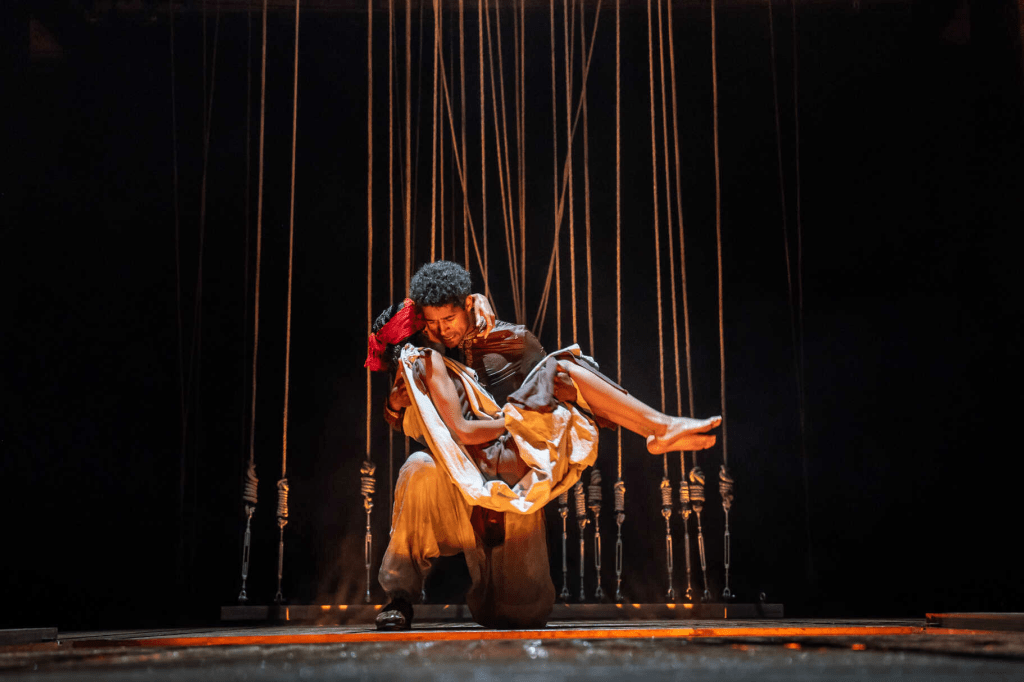
The second half begins on a hopeful note, with Thaisa’s body washing up on the shores of Ephesus, where she is revived by Cerimon (Jacqueline Boatswain). The revival is met with a cheer from the audience – Haile’s Thaisa is clearly loved by the audience, and it is easy to see why.
The hints of hope propel us into the second half of this play, which zooms ahead by 14 years, and sees Dionyza plotting to kill a grown-up Marina. Rachelle Diedericks, previously our narrator, now takes on the role of Marina, and some added lines help to smooth this transition – the switch is easy to understand, and a nice touch. Marina becomes our main character for this second half, and it feels a natural move – the audience is already used to her. Diedericks is a true revelation in this role. Her childlike wonder and naivety make the horrors that she has to endure even more deadly, and her story of kidnap by pirates, and sale to brothel-owner Bawd (Boatswain), are truly harrowing.
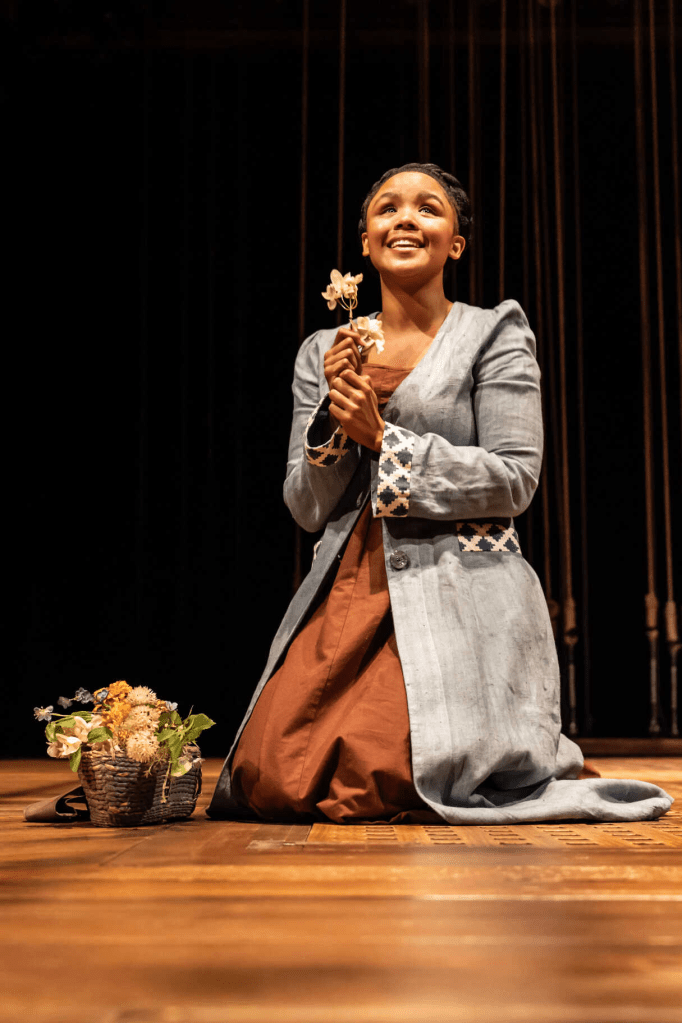
Marina is clever and cunning, and Diedericks performs her lines with a knowing glance at the audience, aspects of her role as narrator still present in her portrayal. She uses her chastity to her advantage, ruining Bawd’s business whilst also impressing Governor Lysimachus (Kel Matsena, who makes quite an impact for a character introduced so late in the play – his character arc from brothel-regular to Marina’s love interest is particularly enjoyable to watch).
The play ends, as it must, with Pericles being reunited with both his daughter and then his wife. It is the reunion with Marina that is most affecting. Enoch and Diedericks truly excel here, playing all facets of their complicated history whilst ultimately telling the simple story of man and daughter, the love between them clear to see. This is the high point of the play, and any praise lauded on these two actors would not be enough. The second half of the play strips out any of the nonsensical interpretive dance and more artistic aspects, instead focusing on the story and the plot, and thank goodness it does. This goes to show that the actors are enough to tell this story – there’s no need for any additional gimmicks.
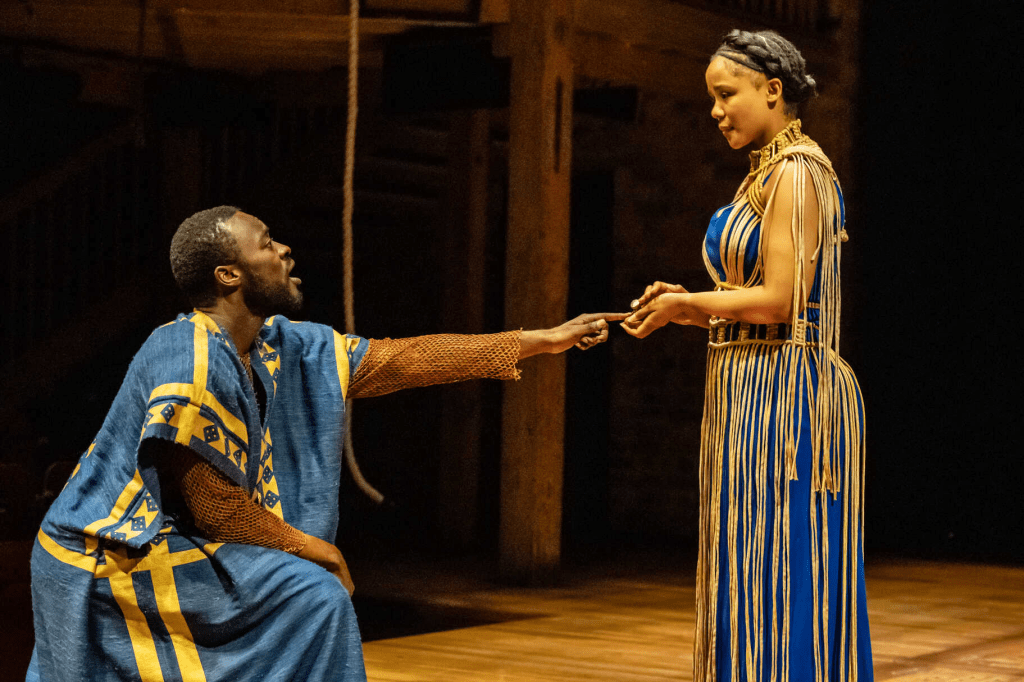
“Pericles” is an odd show. The beginning is naturally very difficult to stage, and this production does not do a brilliant job with it. But once that beginning is passed, this production grows to heights many other RSC shows have failed to reach in recent years. It is true testament to the actors (Enoch, Diedericks, Haile and Patterson all stand-outs in their roles) that this show excels. Ignore the beginning and enjoy the rest – this is truly a work of art.
Tom Morley, August 2024














 Broken Legs Blog