

Telling the story of the landmark 1997 Kyoto Climate Conference (COP 3, or the third ‘Conference of the Parties’), “Kyoto” sees the RSC’s Swan Theatre transformed into a conference room, with the stage replaced by an extensive conference table, around which sit delegates from various countries (and some audience members).
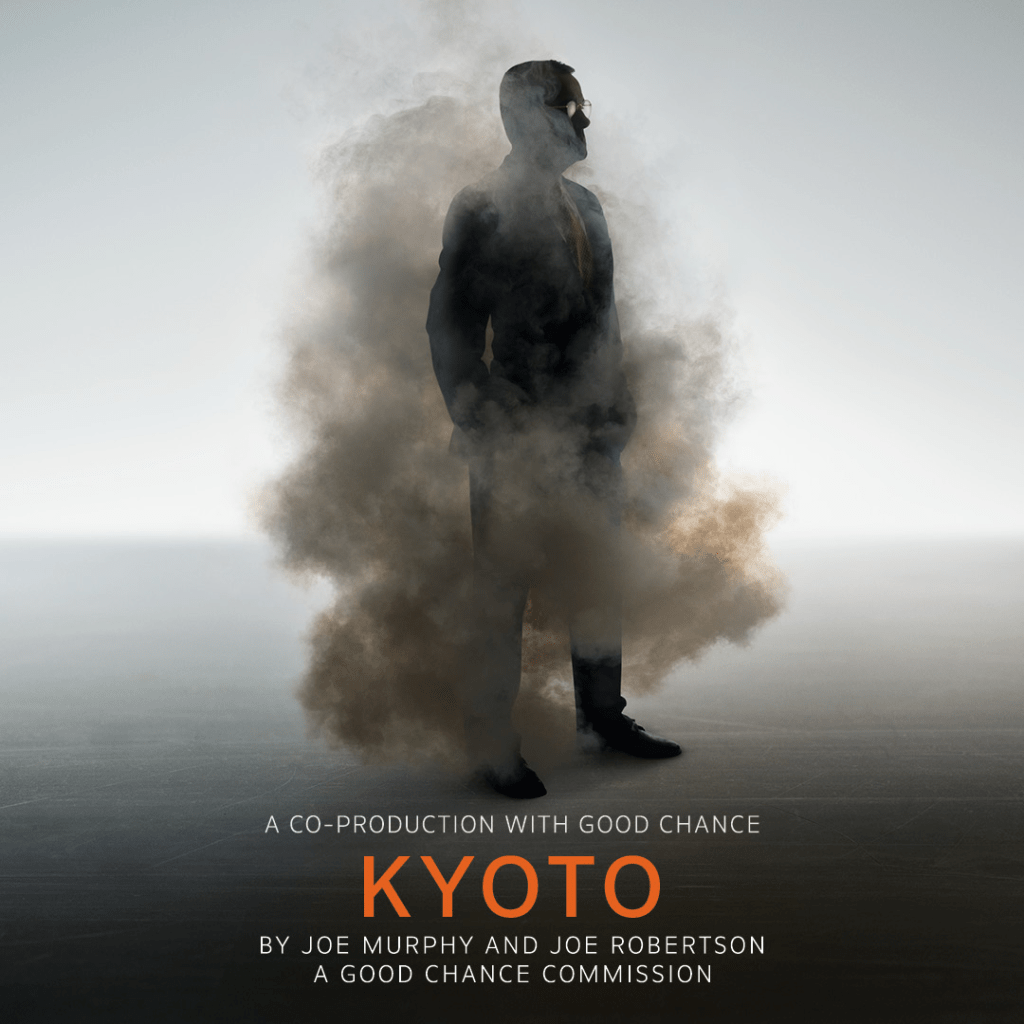
The focus of the play is the story of Don Pearlman (Stephen Kunken), an American lawyer who tries to prevent the countries reaching a consensus on climate pledges and emissions targets. Kunken gives a stellar performance as this inherently unlikeable lawyer. On the surface, Don appears to be motivated by bribes from oil companies, but underneath there is clearly an animalistic desire to win. Whether Don truly doesn’t believe in the science of climate change is never properly explored, and his incentives are never spelled out clearly to the audience – although this doesn’t detract from this fascinating character study.
Don’s main rival is Raul Estrada-Oyuela (Jorge Bosch), the Argentinian chairman of the climate committee who is determined to reach an agreement. Bosch brings a little more light-heartedness to proceedings, although is able to ramp up the tension in the final act, as he begins rattling through article after article in order to finalise agreements.
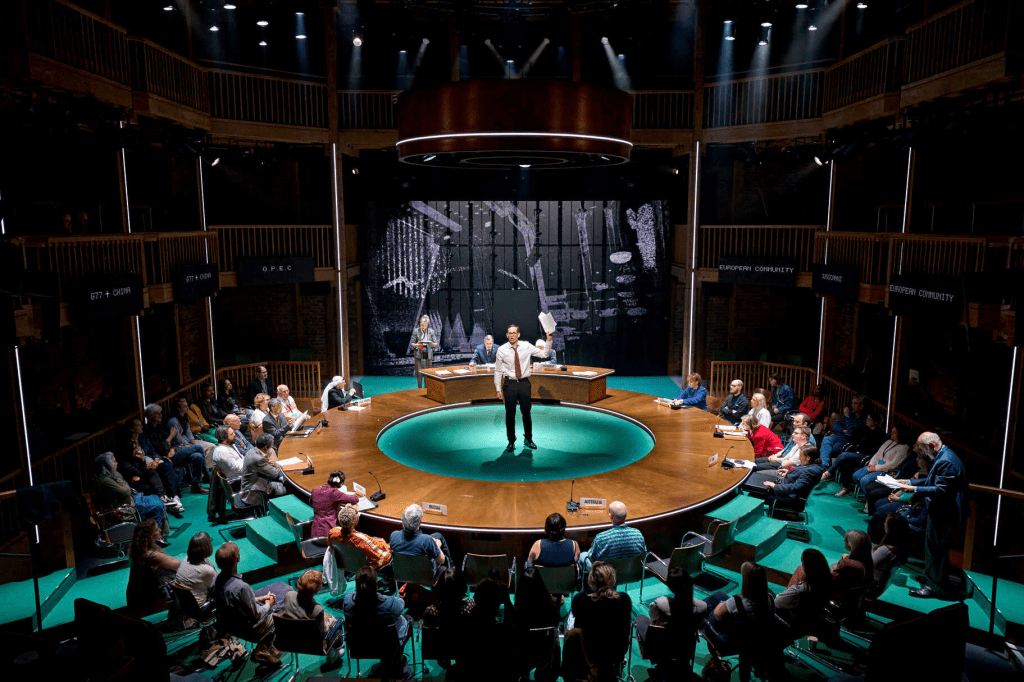
The intricate politics are explained clearly for audience members who may not be familiar with the history of the COP conferences (such as myself). Since initial legislation did not define whether decisions would be made by majority consensus or otherwise, all countries must agree to the treaty, and thus begins endless arguments over wording, punctuation and brackets. This may sound dull, but the discussions are intense and absorbing – I never thought I’d be so engrossed in a discussion over the use of the word ‘would’ vs. ‘could’ vs. ‘should’.
The first half of the play focuses on the events that lead to the Kyoto conference. Countries are split into blocs, but this causes issues for the delegate from Kiribati (played by Andrea Gatchalian), who finds her country lumped together with other developing countries, such as Saudi Arabia (their delegate portrayed by Raad Rawi) and China (their delegate portrayed by Kwong Loke), who do not necessarily best represent Kiribati’s concerns. Kiribati teams up with other countries to form the Alliance of Small Island States (AOSIS), and Gatchalian gives a phenomenal performance as a small fish in a big pond, holding the more powerful countries to account as she spells out, in no uncertain terms, that rising sea levels would mean death for her country.
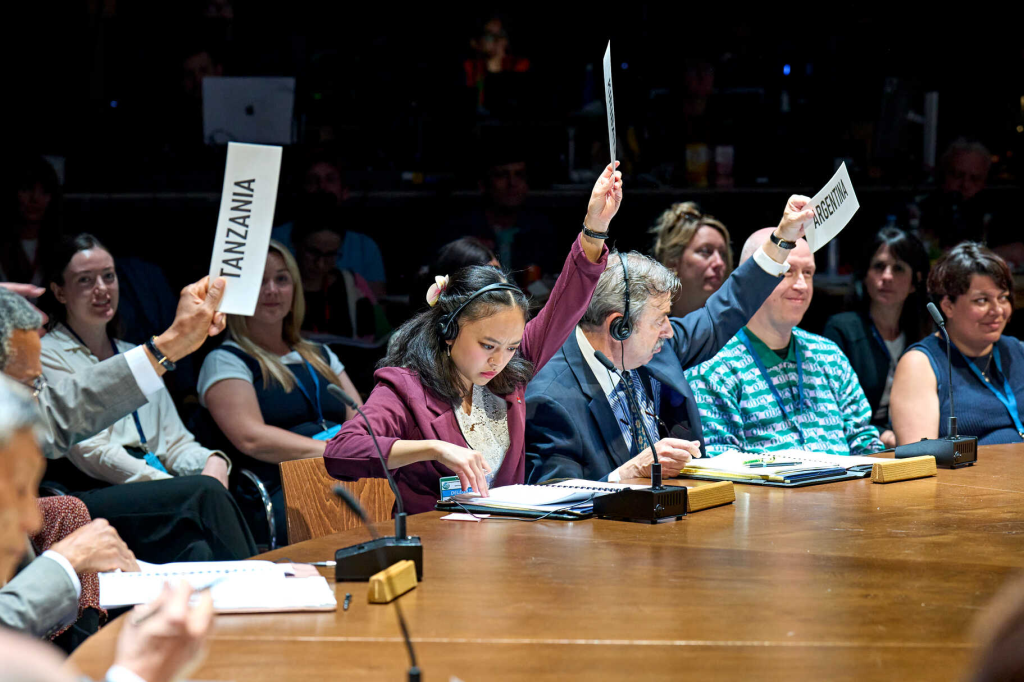
The Kyoto conference sees some well-known European characters enter the story, such as John Prescott (Ferdy Roberts) representing the UK and Angela Merkel (Ingrid Oliver) representing Germany. Al Gore (Dale Rapley) is also dragged into proceedings as US vice president. These characters all feel more pronounced than others – such as Japan’s delegate (played by Togo Igawa) and Tanzania’s delegate (played by Jude Akuwudike), who, whilst clearly based on real life people, did not elicit such strong reactions from the audience.
The play, written by Joe Murphy and Joe Robertson and directed by Stephen Daldry and Justin Martin, uses some fairly clever theatrical techniques to bring the story to life. At one point, negotiations almost dissolve into football chants as each country tries to get their point across, whilst at another point, after translators abandon the conference, the actors all revert to their native languages, leaving simple gestures and facial expressions to tell the story. One particularly effective moment sees Don’s wife Shirley (Jenna Augen) contend with an exploding chandelier at the same moment that Don has to contend with Raul’s renewed attempts to force a consensus.
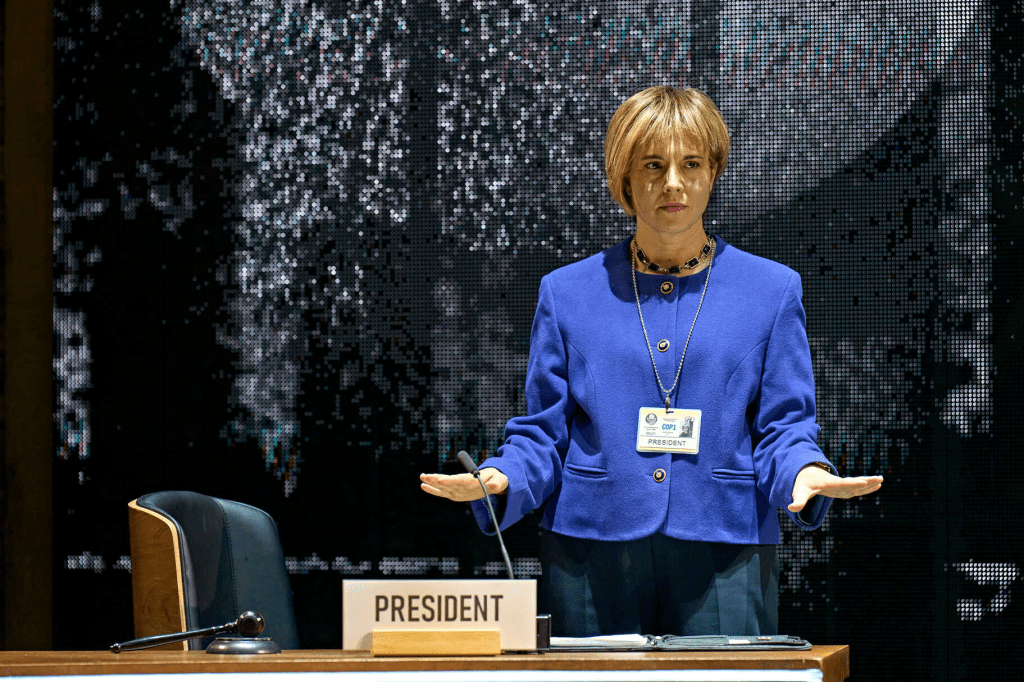
Overall, this was a fascinating play that expertly told a complicated story. I didn’t know anything about the history of this conference, and enjoyed reading about it in the programme afterwards. However, I felt that the play was overly long (almost 3 hours), and became repetitive at parts. A further edit would have improved the show – not all scenes felt necessary in getting the point across. A final, drawn out monologue, delivered by Shirley, describes Don’s life (and death) after the Kyoto conference, but Don’s character almost feels superfluous to events by this point, and the choice to end on this seems a little odd. A few stumbles over lines from actors also didn’t help proceedings. Although, this didn’t stop the standing ovation that the cast received from the majority of the audience at the end of the evening.
Tom Morley, June 2024









 Broken Legs Blog