

Set in Afghanistan and spanning over 25 years from 1974 to 2001, “The Kite Runner”, based on the novel of the same name by Khaled Hosseini, begins as a tale of two boys who enjoy flying kites, and then descends into something much darker.

The play revolves around Amir (Stuart Vincent), a young boy who grows up to be a novelist, and so it is fitting that he also acts as the story-teller of the piece, breaking out of character to talk to the audience and move the story along. Vincent never leaves the stage throughout the show, expertly moving between Amir’s younger and older selves and forming the kind of connection with the audience that a show such as this requires. He has a difficult job to do – not only bringing the audience along with him on this heavy, emotional journey, but also explaining the context of Afghan history in such a way that it doesn’t feel too expository. Vincent does this perfectly, striking all the right notes and keeping the audience engrossed throughout.
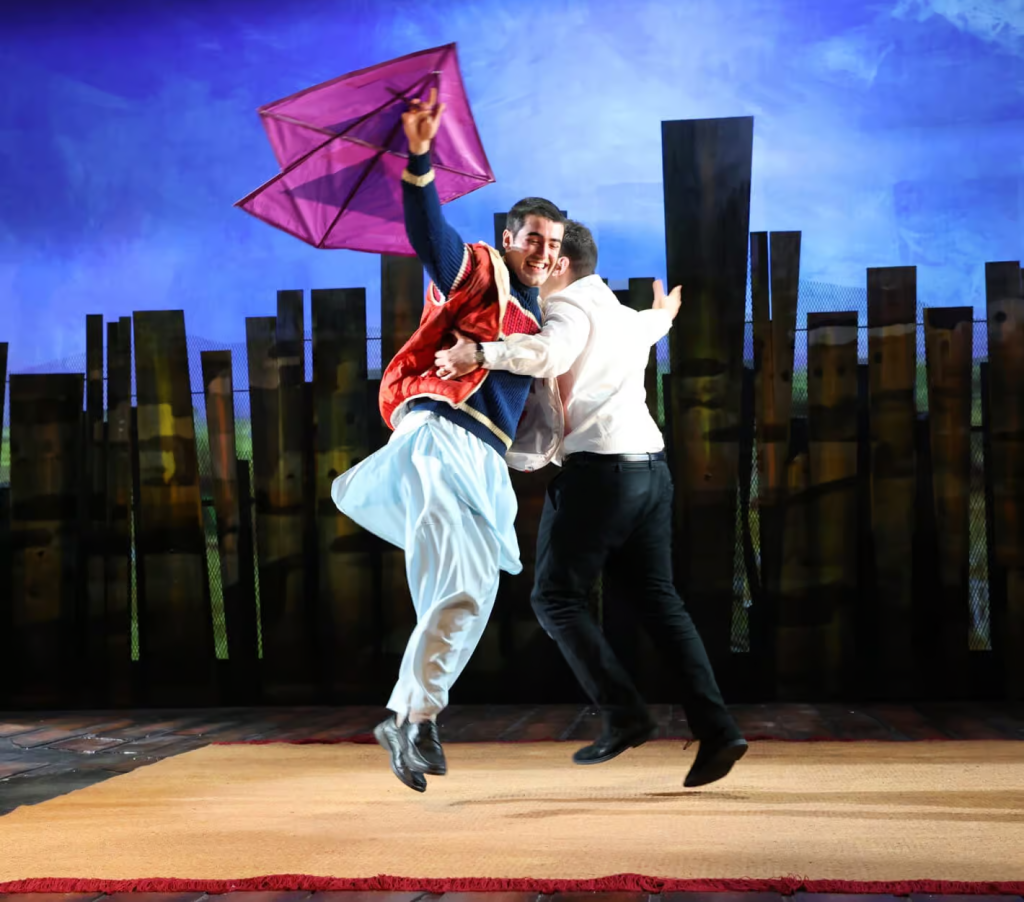
Amir is a Pashtun, who lives in a large house with his wealthy father (Dean Rehman), known only as Baba throughout. Amir’s family have servants in the form of Ali (Tiran Aakel) and his son Hassan (Yazdan Qafouri). Both are Hazzaras, continually persecuted by the Pashtuns due to their ethnicity – although, as children, Amir and Hassan don’t understand their differences and the show begins by building their friendship, which culminates in them entering a kite flying contest. Vincent and Qafouri form a brilliant partnership, and if the show had been solely about their blossoming friendship, the audience would have still gone home satisfied.
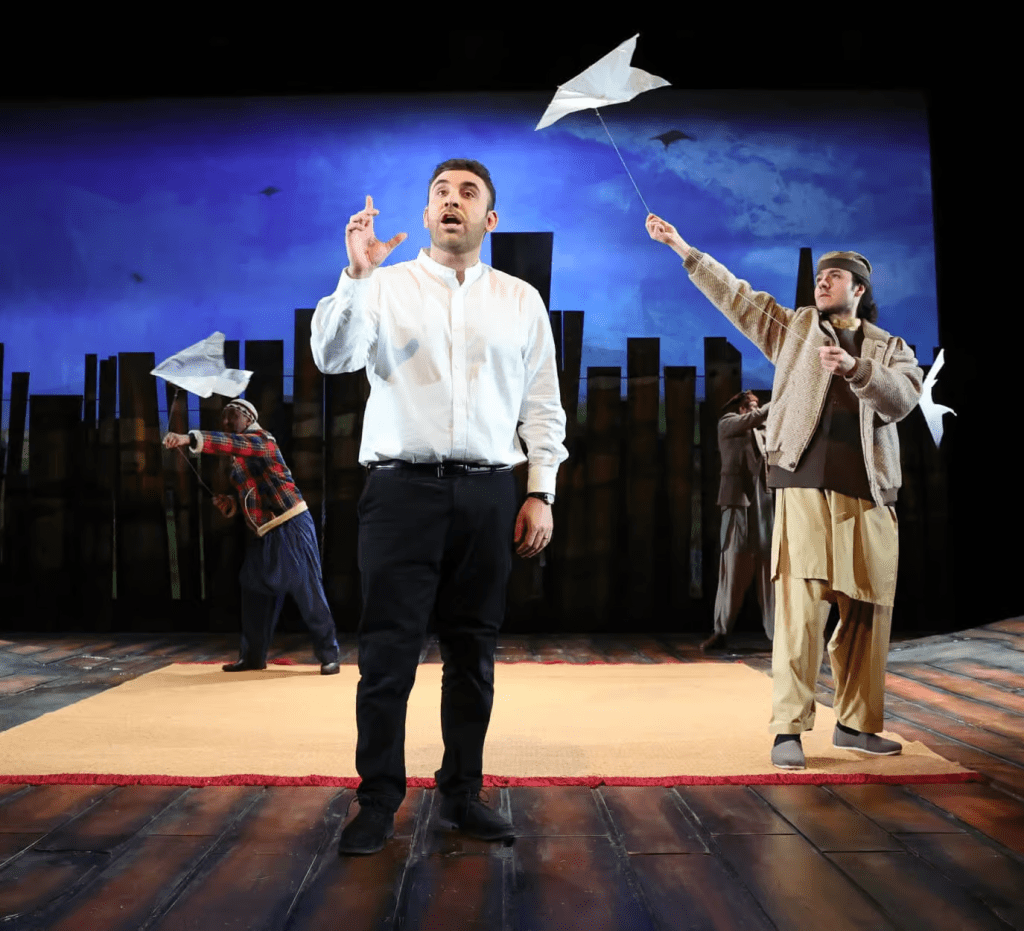
The show takes many dark turns however, as Hassan is attacked by Assef (Bhavin Bhatt), a villainous, yet still childish, Pashtun. From that moment on, the lives of the two boys change forever – and to say any more would be to give too many spoilers.
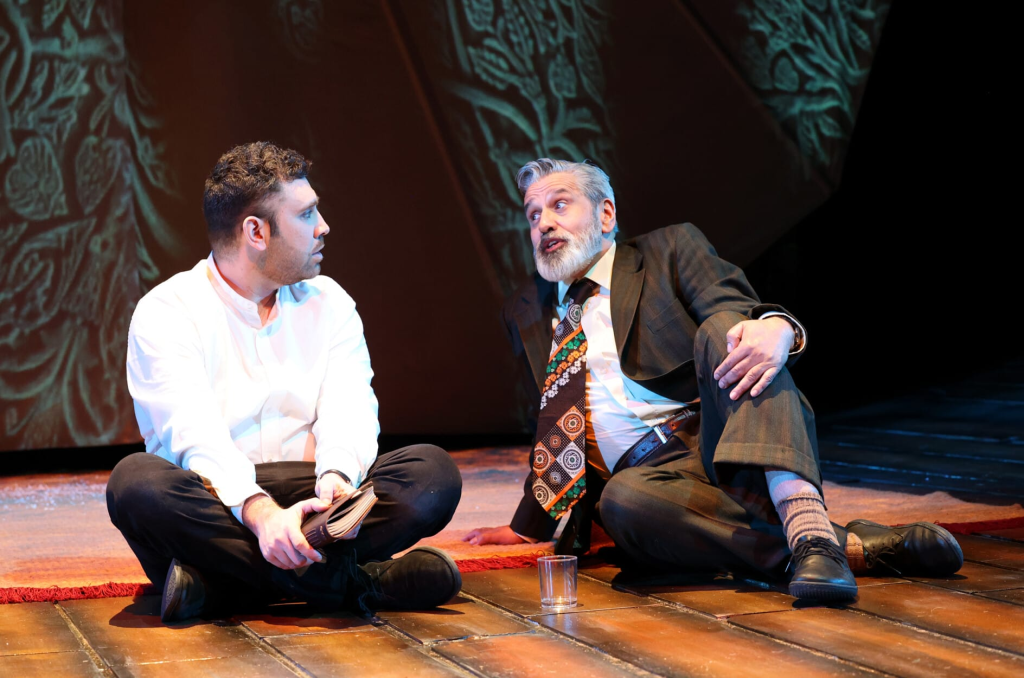
The action in the second act moves to America, as the intervention of the Soviet Union in Afghanistan force Amir and Baba to flee. The music reflects this – the sound in the first act is all organic, made by the actors on the stage, but as soon as the action moves to America, the stage is filled with pop music. It is in the second act that Rehman comes into his own, portraying a man at various stages of decline as Baba suffers with his health.
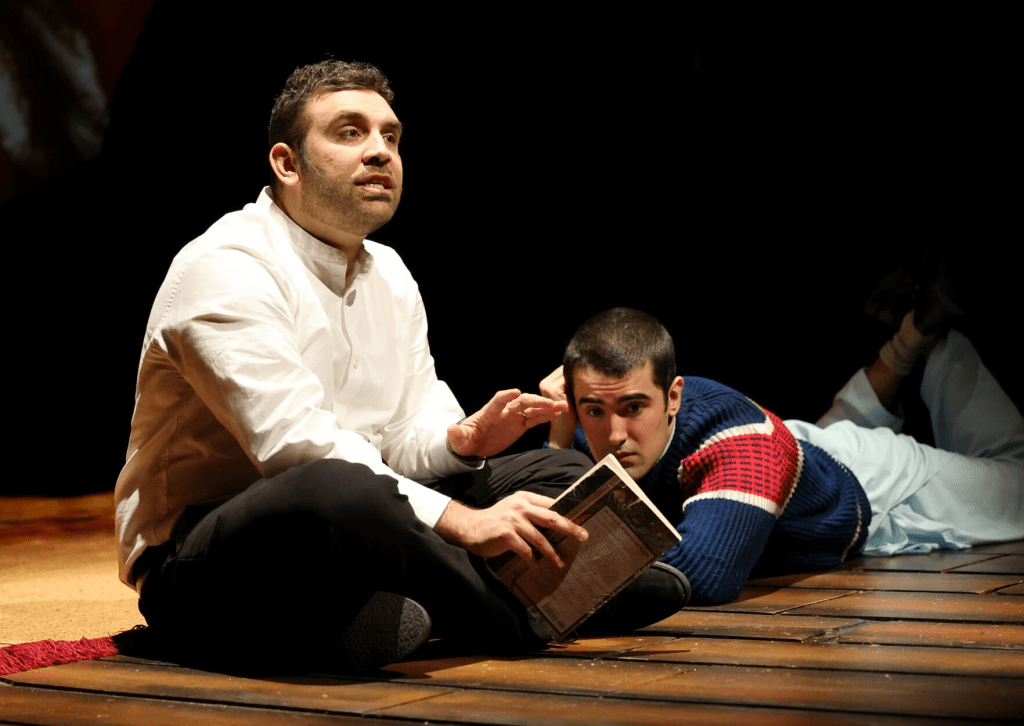
The final act of the play returns to Afghanistan in 2001. Now under the control of the Taliban, Afghanistan is a very different place and this is particularly noted by the fact that “no one flies kites here anymore”. Qafouri returns to the action, this time portraying the role of Sohrab. The character, in many ways, is similar to Hassan – but Qafouri plays him with subtle differences in his voice and movements that makes it clear that he is portraying a completely different character.
The play deals with many adult themes, but these are all handled carefully. Topics such as rape and suicide are never re-enacted by the actors (thankfully), but rather described via Amir’s narration, spoken about in a matter-of-fact way that makes the scenarios even more horrifying, without being too egregious.
This is a fantastic play – the story keeps you absorbed from start to finish, and despite having a long run time (over two and a half hours), the play is over in the blink of an eye. The play doesn’t spend too long telling you how to feel, or how to react to scenes – it simply tells you a story, and what a thoroughly enthralling story it is.
Tom Morley, April 2024








 Broken Legs Blog