

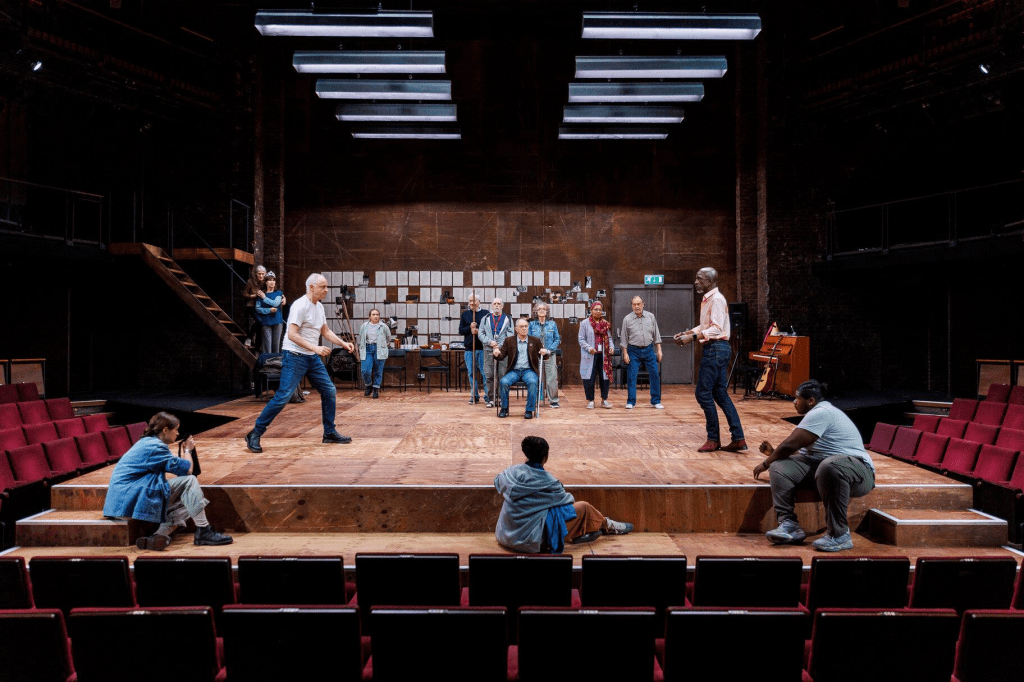
The RSC’s latest production of As You Like It casts over-70s in the roles of the young lovers, in a new spin on the usual tale. The play takes place in a community centre, the stage adorned with bare floors, trestle tables and strip lighting – the Royal Shakespeare Theatre has never felt so small and intimate!

The “idea” behind this production is that a group of actors who first performed As You Like It in the 70s are revisiting the production. This idea has to be explained by Michael Bertenshaw (who appears in the play as Oliver, brother of Orlando) to make sure the audience understand what is going on. The play is also presented as “amateur” – there is no set or costume, and the other actors gather round to watch each scene play out as though in a rehearsal room.
I would have much rather seen a traditional production with over-70s cast members, than this faux-amateur production. There were some additions (admittedly funny in places) where characters missed their cues, over-acted or tripped over their lines. But this seemed to diminish from the rest of the production – almost as though the play were mocking these “old folk” because they were past it.
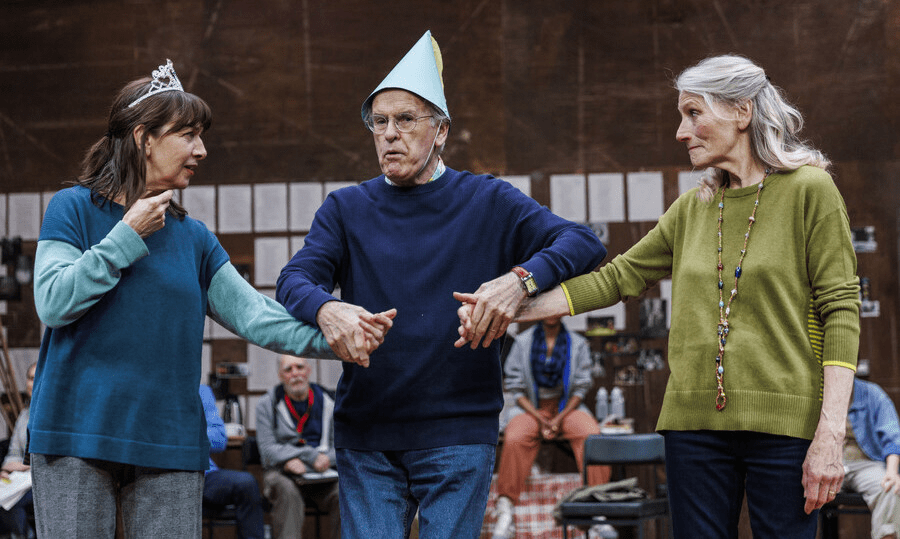
The play excelled in places where the scenes were taken more seriously – in particular, in the blossoming romance between Orlando (Malcolm Sinclair) and Rosalind (Geraldine James). However, it felt as though there were significant cuts to their scenes together – indeed, they seemed to fall in love extremely quickly, and whilst Rosalind has the most lines of any Shakespearean female character, she often felt overshadowed by her cousin Celia (Maureen Beattie).
The plot is fairly simple – Rosalind falls in love with Orlando, but is subsequently banished from court, where she goes into hiding in the Forest of Arden, disguised as a boy. When Orlando finds her, Rosalind sets him challenges in order to test his love for her. And at the end, she reveals herself to have been his love all along. Because we were constantly reminded that we were watching actors in a play, it made it difficult to care about the story or to root for any specific characters.
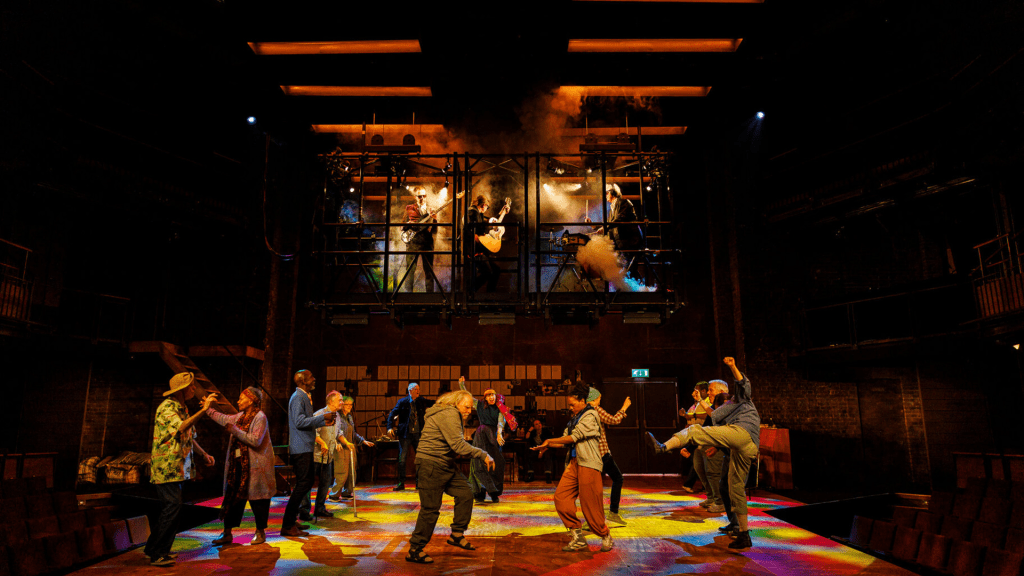
Thankfully, the play broke out (a little) from the trappings of the rehearsal room setting in the second half. The set begins to move to create new environments for the actors – a platform descends from the ceiling which Orlando hangs love notes from, and the strip lighting become swings for the lovers to sit on. The set design is all extremely clever, but these discoveries come too late in the show – the first act drags as a result, and even the cast watching from the back of the stage look bored.
The less said about Phoebe (Celia Bannerman) and Audrey (Cleo Sylvestre), the better. Both are almost caricatures – it is unclear whether this is a decision taken by the actors or the director. Silvius (David Fielder) is also a caricature, but at least he elicited some laughs.
The play undoubtedly belongs to James Hayes as Touchstone, who helped to cheer the audience up with his frequent asides and additions to the text, as well as some very funny physical comedy. Some of these additions may have been a bit much but they definitely helped to liven up parts of the show.
I loved the concept of this play. I really wanted to enjoy it. And, whilst the execution was handled confidently and the vision was clear, the play as a whole just didn’t work for me. There were far too many forgettable moments (I haven’t mentioned Oliver Cotton as Jaques simply because I forgot about him), and not enough laughs for a comedy. This was definitely a case of style over substance.
Tom Morley, July 2023








 Broken Legs Blog